A beautifully coordinated work, craft and musical ingenuity, easy to admire, with a hint of ambiguity thrown in too.
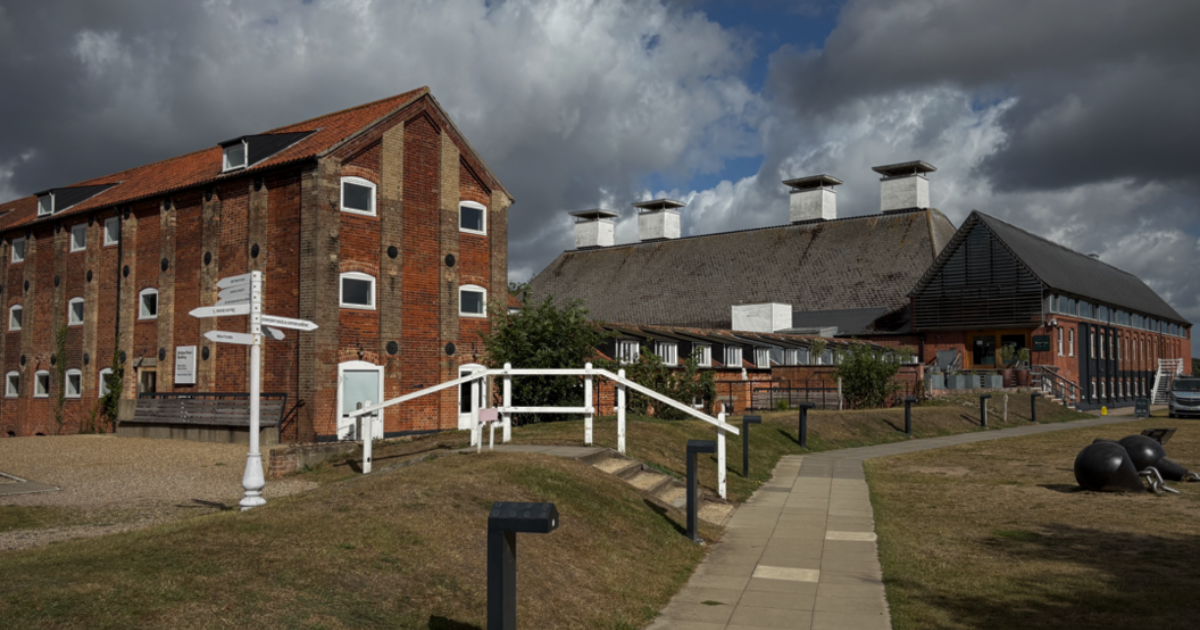
Colin Matthews’ first opera A Visit to Friends opened the 76th Aldeburgh Festival last night at Snape Maltings Concert Hall in Suffolk. A beautifully coordinated work of craft and musical ingenuity easy to admire, with a hint of Chekhovian ambiguity thrown in too.
The opera-within-an-opera played with layers of performance, examining the tension between actor and character, rehearsal and production, and fan versus flawed artist. Most memorable, and perhaps most prescient, was the disillusionment with the once admired lead Marcus (Marcus Farnsworth), acting as a metaphor for how performance itself can deceive or disappoint.
The conceit is simple, but the structure was complex, audiences guided by a dazzling production design and ingenious direction. Matthews’ score underpins the story with characteristic efficiency and invention, drawing on musical styles that root the imagined story in an authentic soundworld.

William Boyd’s libretto draws on two Checkhov short stories, A Visit to Friends (1898) and My Life (1896), to form the opera within the opera. The resulting text switches from rehearsal room drama to dress rehearsal efforts and eventual collapse in an intriguing timeline that defies convention. These frequent transitions from one time zone to another would otherwise cause some headaches were it not for the thorough direction from Rachel Hewer. She’s supported in turn by a rigorous attention to detail evident in all aspects of Leanne Vandenbussche’s set design which made good use of Snape’s boxy interior with a full revolving stage built behind a proscenium arch. The frequent movement from rehearsal room backdrop to the dilapidated house visited by Moscow lawyer Misha in the sub-opera, acted not only as an unequivocal reminder of what lens we were looking at the themes through but also as a potent symbol and metaphor for the shifting lines between real life and the stories we tell to make sense of real life.
There was a conscious inclusion of stage hands as members of the cast (invited to take a bow at the end of the performance) which in turn enhanced the feeling that we were watching a rehearsal and about a production. This made those moments when the dress rehearsal broke down mid-flow intensely disorientating: when the stage lights went white and characters dropped from the faces of singers, the audience was caught adrift wondering whether this in itself was a first night error. A clear indicator of the sound direction and persuasive design.
Matthews’ score plays well to modern-day audiences who may be attention-poor, with melodic ideas shifting quickly, mirroring the pace of Boyd’s libretto. The harmonic language in the internal sub-opera is rooted in early Scriabin, the Russian composer’s fourth piano sonata acting as a specific source of inspiration. This soundworld doesn’t stray much when we’re back in the rehearsal room, illustrating how score and direction is tightly entwined.
Elsewhere, Matthews’ charms and delights with deft vocal writing, an intricate vocal quartet offers a glorious but all too brief interlude. His pared back orchestra demands only 25 players, mostly strings, and sees the composer’s preference for middle and lower range notes creating a generous warm sound.
There is mastery too in the combination of rehearsal pianist line, featuring an on stage repetiteur playing accompaniment with Nadia for her aria, whilst Marcus and Vanessa reacquaint themselves elsewhere on stage accompanied by entirely different material played by the orchestra. The combination of time signatures should make the harmonies clash. Yet the combination is a beautifully contrived accident of music.
The transition between actor and character often occurred within seconds as performers moved from one side of the stage to another, or when the rehearsal breaks down and the on-stage director steps in to make suggestions. This places considerable demands on storytelling for each member of the cast, yet this was seamless and always compelling. The most successful of these transitions was between Natalie and Marcus / Nadia and Marcus. Marcus Farnsworth switches effortlessly from the swaggering cocksure Marcus into the rehearsal room into the charming if disconnected Misha in early 20th century rural Russia. This depiction of the actor depicting the character, prompted a reverse reflection: memories of those times an admired performer turns out in real life to be deeply disappointing. Everyone’s a performer, nearly everyone succumbing to performative acts.
Vocally, Lotte Betts-Dean and Marcus Farnsworth are a match made in heaven, Betts-Dean with a cool crisp and assertive sound that was a particular a joy to listen to. Edward Hawkins as Gregor leaned heavily on an all-embracingly burgundy tone, depicting a mildly disconnected and generally flummoxed on-stage director who, come the denouement, had his eye firmly fixed on reputations more than art. Gary Matthewman as rehearsal pianist Chris was well-cast and, considering his career to date as conductor and song pianist, played a critical role providing moments of levity with the most modest of interjections.
William Boyd’s libretto was tight and fast moving, providing opportunities for back story that made the characters in the rehearsal room three dimensional and, ultimately, flawed. This made for a rich setting, even if the narrative arc failed to pack the grand emotional pack we were hoping for. The lack of an interval in what was billed as a near 120 minute work acted as a sound dramaturgical choice in this regard, helped to ensure attention by denying the opportunity to disengage. Maybe that ambiguity was the point, and a Chekhovian reference in itself.
Come the end the lack of resolute change made this work of craft, depth and remarkable coordination something difficult to feel but easy to admire. In doing so, it opened up further discovery of Scriabin, of Chekhov and to Matthews himself.