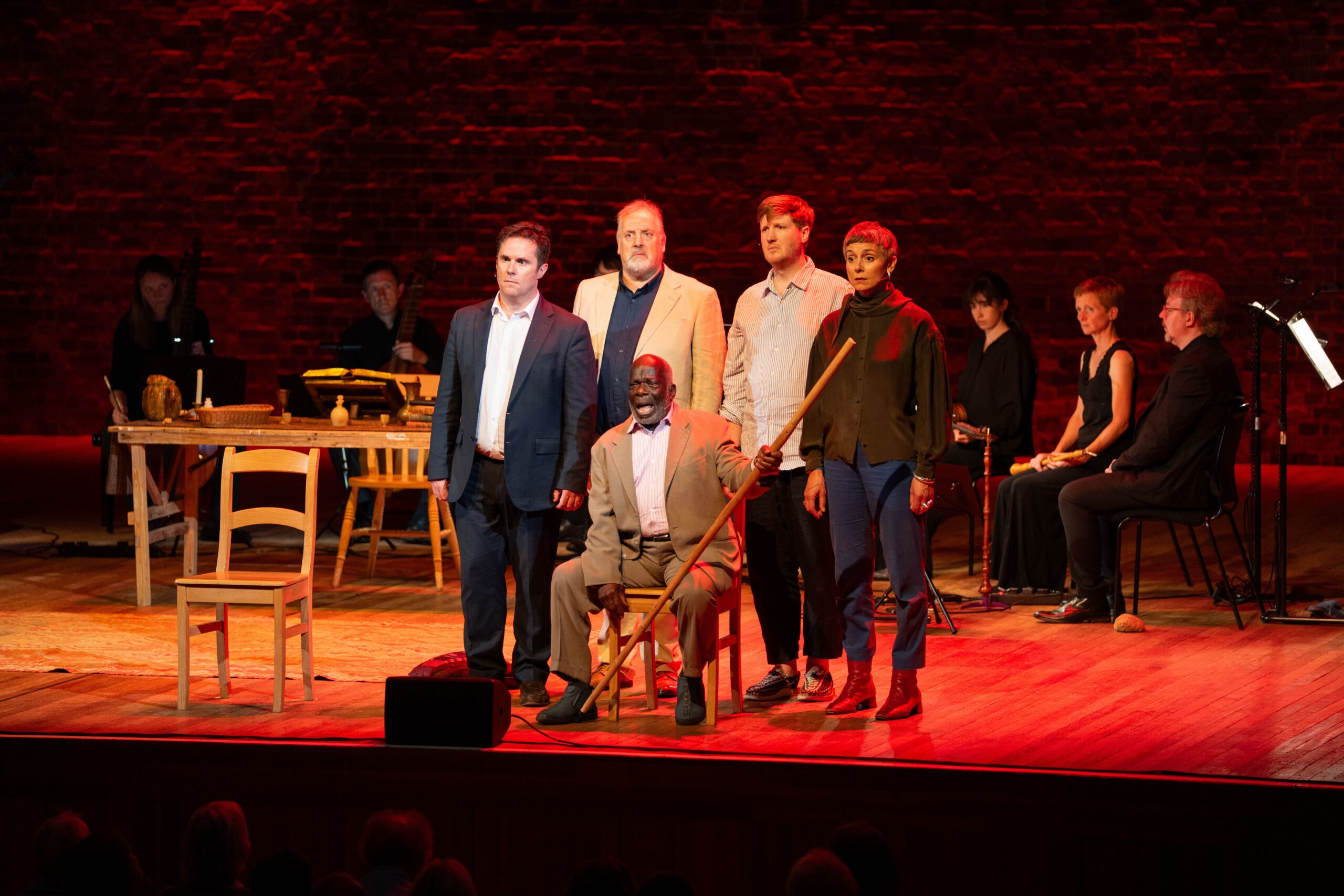
Bach’s Markus-Passion from Dunedin Consort: phenomenal, enthralling, and profound
Dunedin Consort’s staged performance of a reconstruction of Bach’s Markus-Passion at Aldeburgh was phenomenal — an enthralling and profoundly moving telling of the Passion according to St Mark.
There isn’t much to go on for Bach’s ‘missing’ Passion. A libretto survives from 1768, along with fragments and possible musical sources, but little else. Past reconstructions have drawn on pre-existing Bach works to assemble a version of what might have been. This latest reimagining takes a different musicological starting point, using the same compositional principles Bach employed in his parody works — not simply pasting in familiar movements, but reshaping them in light of the surviving libretto.
Far from an academic exercise, this performance was immersive and emotionally potent, weaving well-loved and lesser-known material into a richly textured whole. A newly written narration for the Evangelist, delivered by Joseph Marcell, cast the chorus as a dynamic supporting cast, bringing the Gospel narrative vividly to life. Marcell’s spoken contribution carried weight, rhythm, and colour in every phrase, rendering the silences all the more profound.
Voices – James Hall (countertenor), Matthew Brook (bass-baritone), and Nicholas Mulroy (tenor) were joined by soprano Anna Dennis, whose communication both physical and vocal shone consistently throughout.
There’s much written about the legitimacy of dramatising Bach, much criticism claiming it denigrates Bach’s original creation, that meaning should be conveyed through voice and harmony alone, and that anything added on top of that is distraction. Yet the case is clear, especially from this performance. Anything that makes the message more immediate, surely serves the original intent not distracts from it.
It’s a fast paced setting, that calls on surprisingly small forces on stage, belying the sound and power summoned. Incorporating musicians as cast members isn’t new, but it was highly effective. Particularly so, in the tenor aria Erbarme dich! where Peter is consoled by counter melody in the flute, the musician sat beside him depicted as emotional counterpart. Similarly, when violinist Matthew Truscott assumed centre stage in a duet with soprano Anna Dennis. Touching moments that emphasised the intimacy of the moment.
Some sequences saw a loss of cohesion. Notably in the final chorus of Part One Wir Hagen Eileen Gott der da hilfft where ensemble and chorus, all separated by some considerable distance on stage, were moving at noticeably different speeds. Solid physical performances from most exposed those who didn’t possess as great an acting range. In this regard some movement appeared stiff, limited, or unintentional comic. The opening of the counter-tenor aria Falsche Welt felt under-powered and saw a loss of clarity in text, though by the time this was repeated towards the end of the aria James Hall’s voice sounded more consistently discernible in the mix. His later aria in part two Mein Heiland was exquisite, so too Anna Dennis’s Welt und Himmel which followed later.
Regardless, at its heart Joseph Marcell’s performance made a remkarably focussed and urgent piece of storytelling. A production that demands being captured on film.