The finest of Dvořák’s symphonies is the one that not only demonstrates his characteristic use of evocative folk tunes, but also a mastery in creating an entire work that feels larger and more fulfilling. There’s a much greater sense of something being worked through in the entire symphony in comparison to that which has gone before. Also, the Royal Liverpool Philharmonic Orchestra under Hindoyan really are quite a special group.
Adolphus Hailstork An American Port of Call
Jennifer Higdon Blue Cathedral
Arturo Marquez Concierto de otono
Dvořák Symphony No. 9 in E minor ‘From the New World’
Pacho Flores trumpet
Domingo Hindoyan conductor
Royal Liverpool Philharmonic Orchestra
Percussionists from Liverpool PHilharmonic Youth Company and In Harmony Liverpool
🔊 https://www.bbc.co.uk/programmes/m002gdx6
A review of tonight’s concert is available at the bottom of this post.
New on Thoroughly Good
🆕 Review: Mahler’s Seventh Symphony — A sprawling, sometimes unsettling, ecstatic sound-world that asks only for your attention — and gives everything in return. Not for decoding. Unless, of course, you want to. ✒️ Read
Review
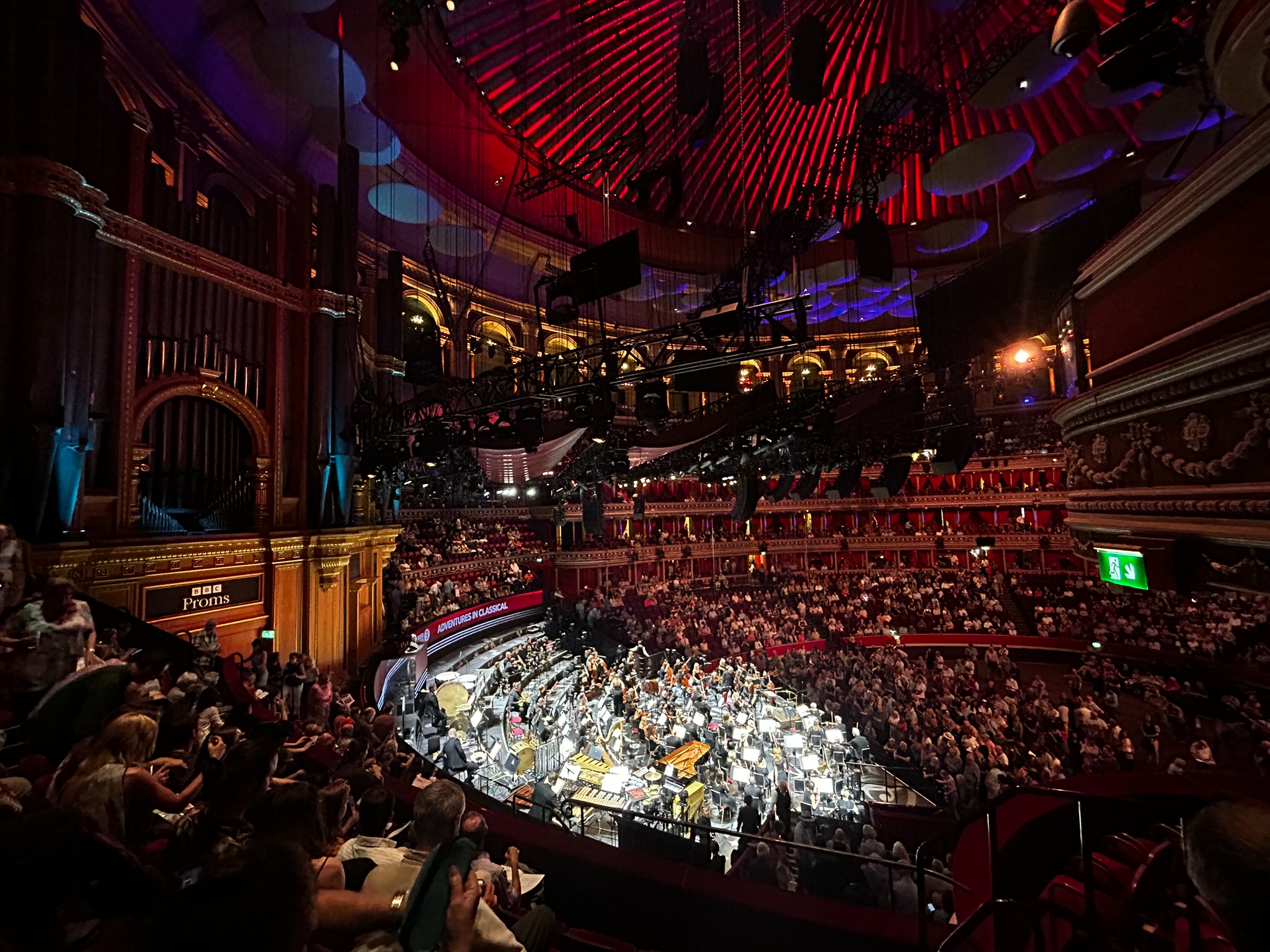
If you’re going to be a composer you need a name that’s good for search engine optimisation. Adolphus Hailstork meets this requirement in spades. His eye-popping concert opener – An American Port of Call – makes good too, bringing the image of a port buzzing with activity to the Royal Albert Hall stage. It’s an entertaining listen that combines a romantic style with an occasionally sharp edge. There’s a whiff of Shostakovich in the contrasting melancholic section, and some bravura Bernstein in the driving rhythms. This is no fishing port, it’s one catering for both commercial and passenger traffic with all the storytelling opportunities such a setting offers. Given this work is already 40 years old and this is its European premiere, it’s a wonder we’ve not heard of Hailstork before. I hope there’s more to discover.
Jennifer Higdon’s Blue Cathedral, written in memory of the composer’s late clarinettist brother, is a touching portrait that opens wistfully and grows into a burst of consoling sunshine, piercing the fog that loss brings with a yellowy-white sun against a clear blue sky. The percussion twinkles under the hands of the percussionists from the Liverpool Philharmonic Youth Company and In Harmony Liverpool, reinforcing the implicit message in this work: amid painful loss, a resolve to pass the joy of music-making on to the next generation, creating lifelong memories in the process.

Spectacular a musician as Pacho Flores is, Arturo Márquez’s Concierto de otoño leaves me distinctly cold. In the opening movement, there is little that distinguishes the composer’s harmonic lexicon from his well-loved but fundamentally nauseating Danzón No. 2. That language works as a bonbon, but hearing those same turns of phrase in the opening movement of a concerto makes the whole thing feel quite saccharine and a little too light. The second movement contrasts, with something a little more heartfelt and maybe even edgier, but the truth be told: I had to switch off mid-work. Yes, I missed the encore too.
Concluding the concert, Dvorak’s Symphony No. 9. This worked best for me on headphones (assuming you weren’t in the hall). There’s a nod to Tchaikovsky in the opening bars, but once things get underway Dvorak outdoes Beethoven on his pastoralness. Hindoyan made more of countermelodies than I’ve heard before in a taut, verdant, and spirited first movement, where basses rumbled and buzzed, and woodwind chirruped. The much-anticipated second movement didn’t get off to the steadiest of starts, though things settled down when they absolutely needed to come the plump comforting cor anglais solo. As in the opening line, Hindoyan resisted sentimentality, maintaining a sense of ambiguity. The clarinet solo responded in kind, meeting the cor anglais head-on in intensity and briefly transforming the moment into a duet. The same was true of the muted French horn and trumpet solos — divinely executed, no exaggeration. I don’t think I’ve ever heard the final two chords played quite like that. Fascinating.
In the Scherzo, Dvořák’s shifts in time, colour, and temperament make every line crackle with energy. Repeat listens essential. The contrasting middle section was conveyed with light touch grace, before quickly nipping back to the opening’s weightier material.
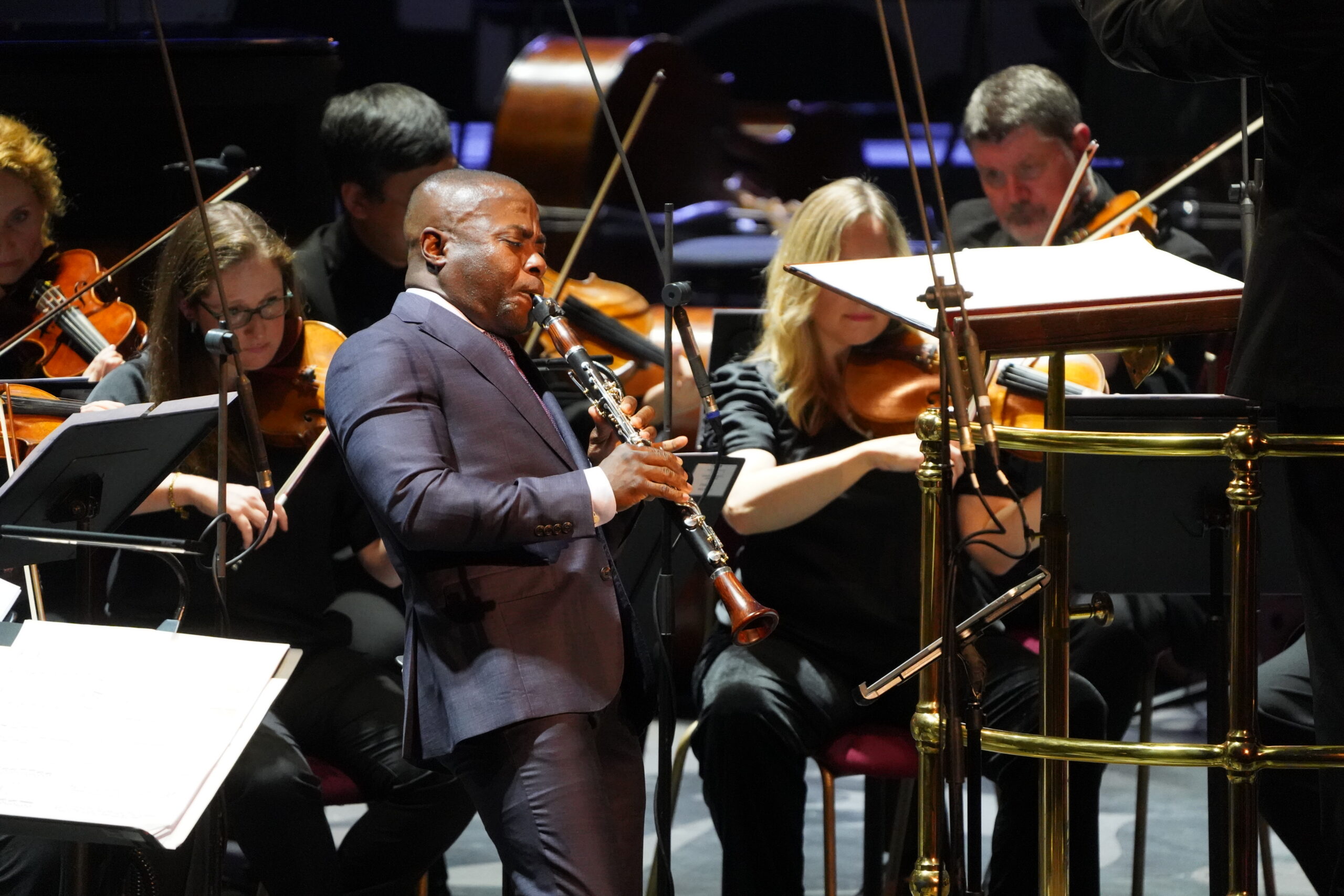
In the concluding movement, muscular string responses to the opening trumpet fanfares shone new light on the score. Listened to up close, the clarinet solo when it comes is exquisite in its unfussy legato. Later, the strings are consistent in their delivery a dry papery articulation, but also delicate high notes the tone and timbre of which don’t waver either.
If you feel like you’re a novice to listening for detail, consider the concluding bars of this quite remarkable work. After nearly two hours of playing a concert, the final bars conclude not with a bang but a final chord that dies away in the wind and brass. Its a tough ask and there’s not much wriggle room to get the intonation right either for the note that sends the audience on their way. I know where I’d rather be. In the auditorium.
[optin-monster-inline slug=”h11qypsvdjowbhlhhu7v”]
Gallery
📷 Chris Christodoulou / BBC


Stream Royal Liverpool Philharmonic Orchestra’s concert from the BBC Proms on BBC Sounds/BBC Radio 3
For the Avoidance of Doubt
Thoroughly Good is an independent website making the case for classical music — part commentary, part curiosity cabinet.
Classical music’s best friend, if it needed or wanted one.
Help Keep The Lights On
Support Thoroughly Good with a one-off contribution, or a modest recurring subscription.
It won’t change the world, but it might cover lunch. Maybe even a bill or two.