1452. Paris, Gare du Nord. The Eurostar has arrived bang on time. I’m first out of coach five and hotfooting it down the platform towards the exit, walking at pace to avoid getting caught up in a queue of ageing American tourists with oversized wheely cases, a line that seemed to be multiplying by the second.
The strategy for exiting Gare du Nord had formulated during the journey which, in addition to being full, had offered some vivid sights. Sat on the other side of the carriage from me, an American man with a wispy white beard retrieves beautifully laid out travel plans in a collection of freshly printed maps and spreadsheets all stapled together and contained in a clear plastic wallet. I admire such planning and attention to detail. Travel is, I find, a more self-assured experience when guided by a freshly printed collection of A4 sheets smooth to the touch. Calm purposeful travel manifest in an uncluttered layout: intention and anticipation tempting the imagination.
Across the aisle two older French women, jaunty scarves casually tossed around their necks, quilted jackets hanging from their shoulders. In the row in front of them a large Dutch man and his two British travelling companions. They’d finished the bottle of champagne they brought with them before the train entered the Channel Tunnel. The rest of the trip was spent railing against useless politicians, unfair taxes, and how “we don’t trust the BBC, you know” — every complaint peppered with tittering laughter that sounded more like nervous ignorance than the cynical surety they projected.
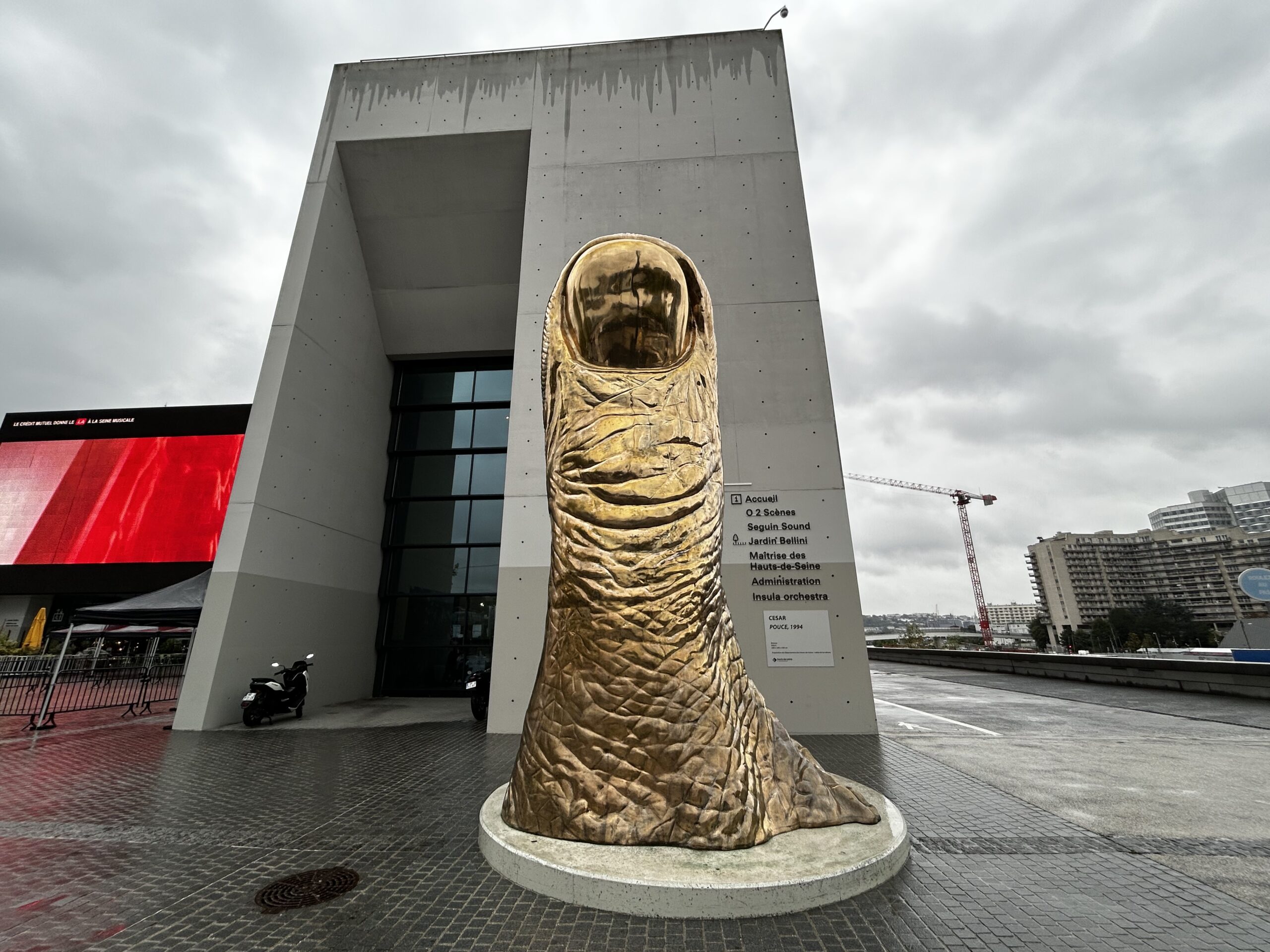
Swift disembarkation promises more time in the hotel room booked for me. I’d been up early for coaching calls before setting out from London and was eager to get to the hotel before tonight’s concert of Bruch and Beethoven with Insula Orchestra at La Seine Musicale. It’s their season opener, a hot ticket, and I want to be fresh as a daisy.
My plan is thwarted almost as soon as I arrive when I discover an email that demands a detailed reply. It unintentionally presses all the wrong buttons. I’ve had too many like it recently — full of inconsistencies and assumptions. A polite yet assertive response is penned. Then it’s time to head out.
These concert trips are important for me. They offer an opportunity to get a taste of orchestral life beyond the UK, to see the subtle differences in how European orchestras do things. Concerts here feel subtly different — in rhythm, atmosphere, and the audience’s low-key sophistication. And the orchestras are, without exception, more exhilarating to hear. There is often more to write about when you’ve travelled beyond your borders. The copy almost comes alive simply by virtue of the variety of ways in which it is captured: notebook, iPad, iPhone. Location too — ten minutes at an airport gate or on a long train journey — gives the creative process the additional constraint of time. Thinking focuses. Copy sharpens.
I’ve been doing this as part of my work now for nearly ten years. I’ve never grown bored of it, and I don’t think I ever will. I appreciate the investment international arts organisations make for these kinds of opportunities, and yet it amazes me how few UK orchestras really value making connections with UK writers in the same way. Some are proudly nonplussed about the idea, making little effort to engage with people who would happily help raise their profile. A wasted opportunity.

Listening on a trip is consistently more attentive too, heightened by the novelty of travel. When I descend into the Metro, the underground space feels familiar: clean, well lit, calm, spacious. I settle myself in a seat by the doors. The blinking light showing our progress down the line is reassuring, harking back to similar trips over the past four years. This is my fourth. A warm glow descends as I catch sight of the Metro typeface Parisine. Jean-François Porchez’s 1996 design conveys breezy optimism and an easy charm that momentarily lulls me into thinking that this little bit of Paris feels like home. This familiarity is seductive if a little naïve. In this environment all the senses are attuned. A notebook gets scribbled on. Ideas flow.
Before the concert I’m invited to dinner with the PR people. We’ve met before. Conversation flows easily. We talk about orchestras, Gretchen Rubin’s Four Tendencies, my father, their families, and Mounjaro. Such interactions would otherwise make me anxious — I’m more comfortable with solitude, finding conversation a thorny prospect. But this is different and a measure of a connection that has stretched back almost as long as I’ve been self-employed. That’s special.
Walking into the auditorium, memories of previous visits flood back. La Seine Musicale looks like the inside of a chocolate box with its intricate ceiling design. The wood is blocky and the seats comfy looking, so much so that the additional cushions available outside in the foyer confuse me. Even more bewildering is the numbering system. In each row, even numbers on one side and odd numbers on the other. I’m seat 13, my associates are 12 and 14. No, I’m not sat in between them as I would have expected but somewhere else entirely. I remember the same challenge years back in Verbier, where it was seemingly impossible to locate my seat quickly in the church there. My spoken French not being terribly reliable, I was met by both confusion and derision. Fortunately, no such difficulty here — once I realised I just needed to walk to the other side of the auditorium and start my search again.
Minutes to spare, the orchestra comes on to full and consistent applause. The conductor assumes position. Silence. Then the first chord.