Sheffield Chamber Music Festival have made a bold choice this year in programming works by Morton Feldman and Samuel Beckett. In doing so, they’ve demonstrated how well they know their audience too.
A near-capacity audience for a Monday night at the Crucible Theatre meditating on end of life, isolation and the sense-making that comes after was poignant, comforting, and gripping.
Opening, Samuel Beckett’s one-woman play Rockaby. Siobhan McSweeney plays W rocking in a chair that slowly revolves on a podium, a light illuminating her from below. In the fifteen minute work, the character W reflects on memory, isolation and her approaching end of life in pre-recorded observations over which the W in the room occasionally speaks. As the work progresses so W’s voice becomes quieter and more muffled, and her physical presence disappears into the darkness. McSweeney’s voice makes for a gentle lilting departure, a world away from Richard Eyre and Penelope Wilton’s austere, chilly version made for television in 2001. Here, we witness an eventual expiration. The slowly revolving podium sees the character returning as she descends and disappears. No fetishised heroism here. End of life is simply a process. The gentleness of Siobhan McSweeney’s increasingly drowsy W has given us a departure most of us would want.

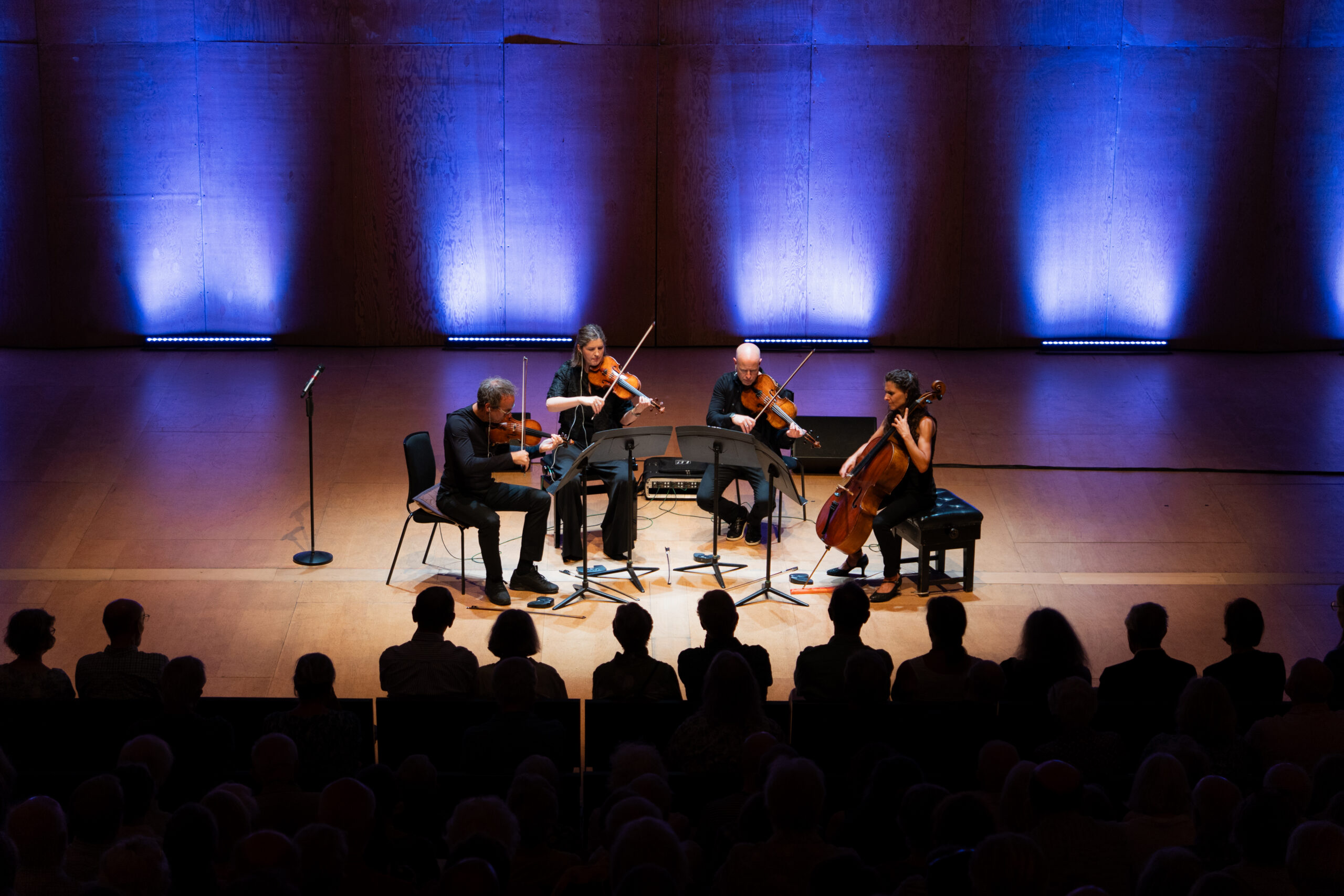
In the vacuum that followed, Morton Feldman’s Why Patterns? was disarmingly comforting. Three musicians decide on the placing of notes in response to what they read in the score and independently of the sounds their peers are making. Listeners struggle to find patterns — the very thing the brain is trying to construct. Yet in the absence of a pre-determined pattern, instinct builds one in the room, unrepeatable, unfindable again. This is music for the moment when the world tilts on its axis and nothing afterwards is the same. What surprises in Why Patterns? is how the work retains a discernible shape — a paradoxical pattern as it turns out — whilst avoiding overt rhetoric or climax. What results is not so much struggle as great beauty, one that neither accompanies, nor drives, thought or feeling.
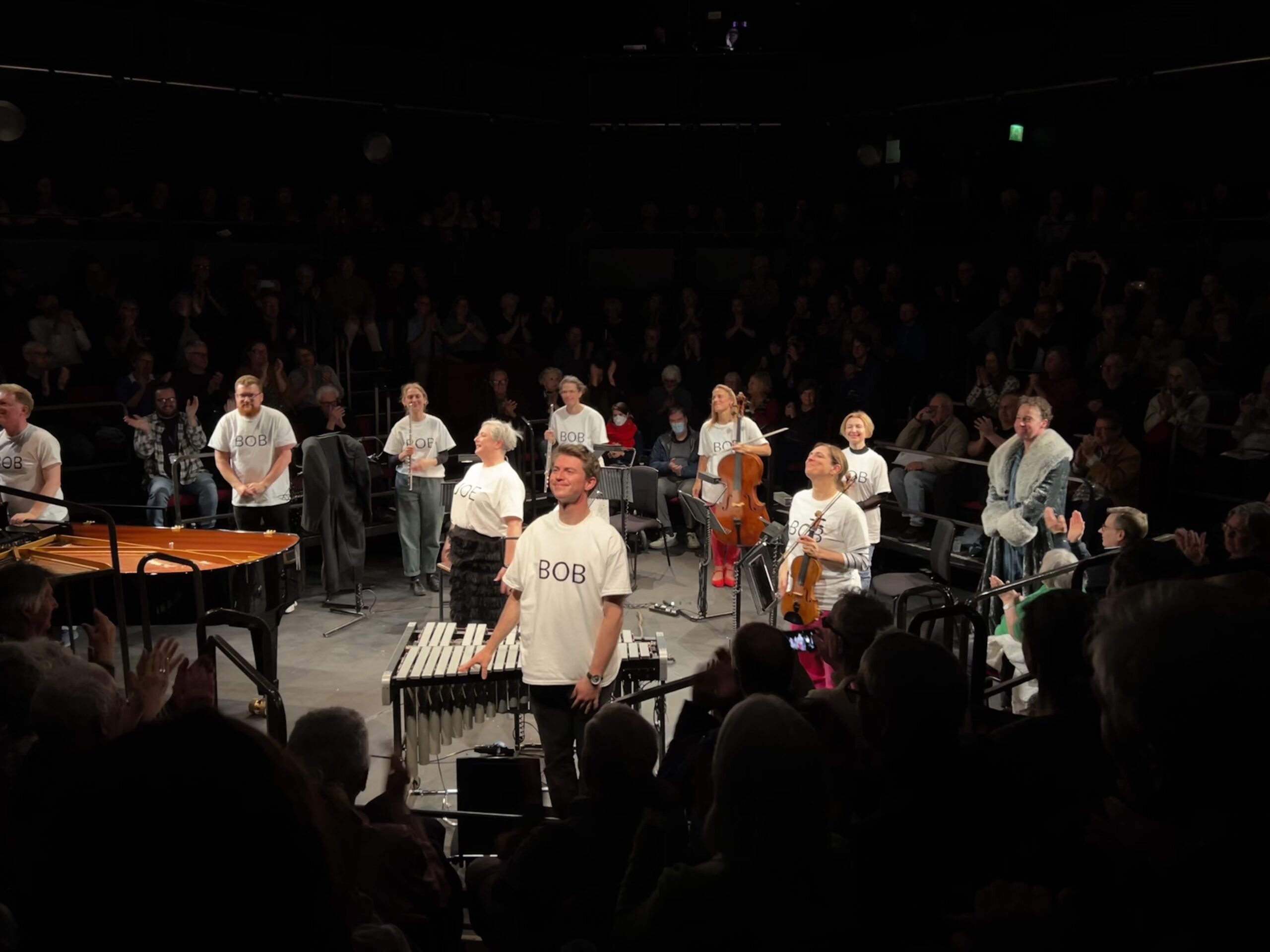
We often look to music or words to do the heavy lifting, to fill in the gaps, to comfort or console. But what if they were pitched against one another in a battle to perform? How would they perform? What would they do? Which would win? Words and Music was originally a radio play with music by Beckett’s cousin John. Feldman’s score, written shortly before his death in 1987, is a character in the play itself. Ensemble 360 is a flexible ensemble both in configuration and performance. Here the ensemble plays Music as a character, pushing back at the sycophantic and often petulant Words (Siobhan McSweeney), refusing to serve straightforwardly, whilst asserting its own agency in the dynamic. Words may pander to the demands of Croak (Jonjo O’Neill), but in McSweeney’s performance we’re steered away from earnestness, and more towards the light-hearted, sometimes via the absurd. These directorial nudges make the eventual cohesion of words and music gratifying even if as it turns out Croak has long since left the stage. Consolation arrives but the chair is empty.