
Mental disintegration demands energy which this event didn’t always have. But when it counted – as in Peter Maxwell-Davies 8 Songs For A Mad King – the effect was brutal, and the questions potent.
Nearly sixty years after its premiere, Peter Maxwell-Davies still shocks. This isn’t so much to do with the score, the sound nor the technical demands made of the vocalist. Maxwell Davies’ setting of Randolph Stow’s libretto — itself shaped from the King’s own recorded utterances — sounds fresh. The stark and grating interiority the score constructs around the protagonist and the audience evokes that which we perceive to be the extremities of mental illness, and also a fitting representation for any personal equivalent experience. 8 Songs For A Mad King predates our disclosure-dominated world (and the pop-psychology boom that began in the mid 80s) but it feels like a new and needed work now.
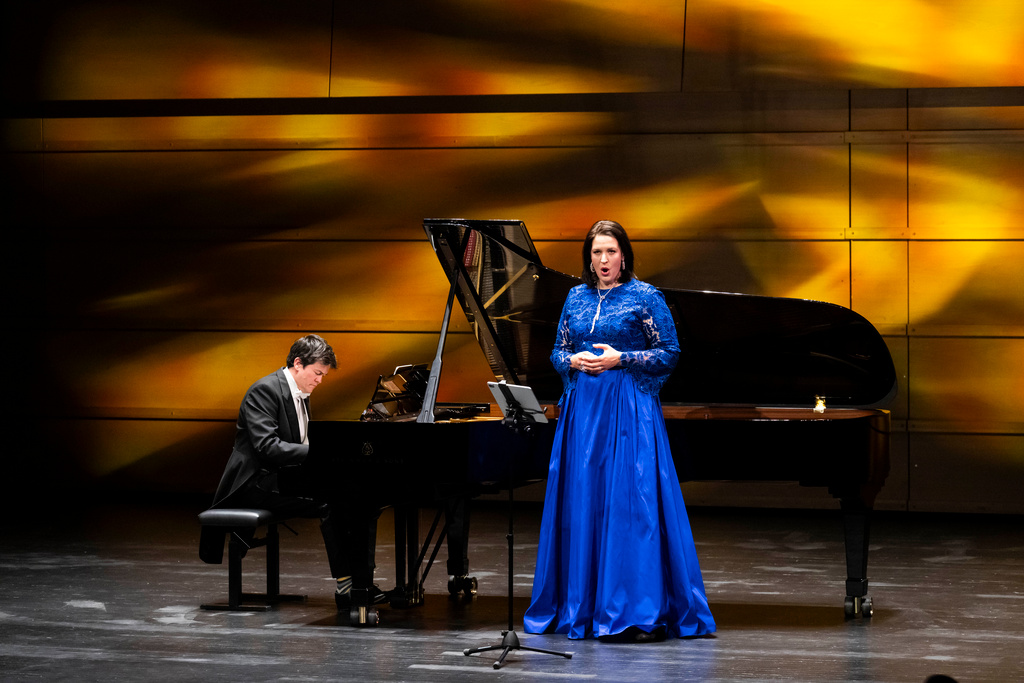
A far more visceral reaction is achieved theatrically rather than musically – originally written for a baritone of near-impossible range, the role here was taken by mezzo Rosie Middleton – though the distance imposed by the staging made for a less intimate experience than the libretto implies is necessary. The smashing of the violin on the ground is a brutal act of destruction that indicates music’s impotence. It was also a welcome dark antidote to the way music is marketed as wellness today.
Greater intimacy would have been achieved in a performance in the round. Closer proximity would have made the connections the Mad King sought to build with musicians more apparent and, in consequence, the narrative spine stronger.
Nonetheless, Manchester Camerata demonstrated pragmatism, resourcefulness, and trust in staging the work at all.
In both its pre-publicity and its programme notes, boundaries are pushed against hard, with the uncompromising imagery of a burning violin making sense to those who know the work already. For those who won’t have made the connection themselves, that same imagery triggers the visceral reaction the libretto does. Daring as it was, the editorial strategy which didn’t wholly convert into a full house — though avant-garde music about neurological disintegration was unlikely to, on a Saturday night in central London.
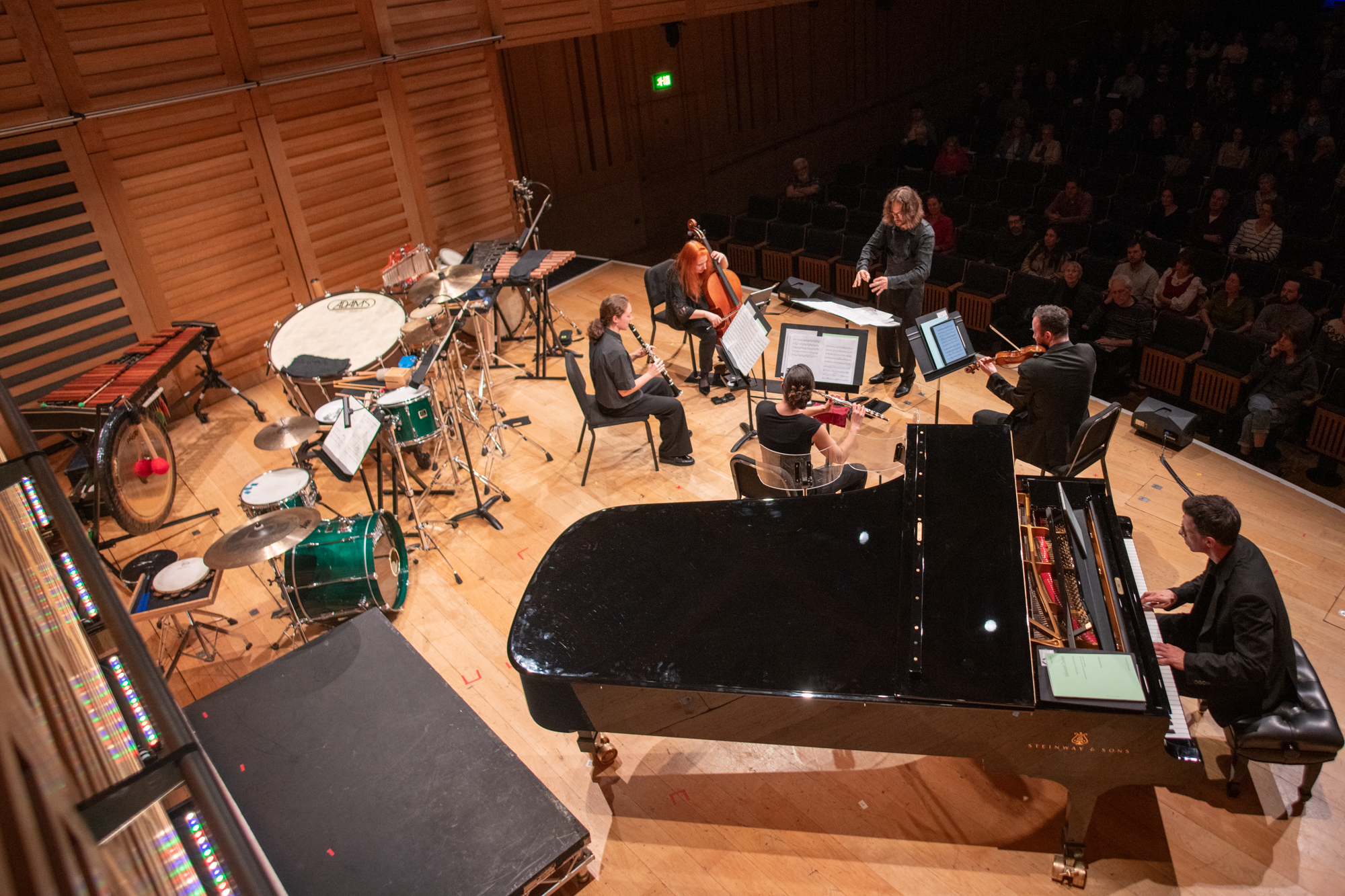
The first half required more patience than the programming earned. What preceded it was less sure-footed in places. Originally written for piano, Schumann’s Kreisleriana takes its name from E.T.A. Hoffmann’s fictional composer Johannes Kreisler — a figure of creative obsession on the edge of madness, with whom Schumann strongly identified. Simon Parkin’s new arrangement for chamber ensemble, made good use of some of the instrumentalists required for the Maxwell-Davies. Interesting though it was to hear with some gloriously scored lines for flute and clarinet, and a poignant solo for cello and piano, the energy between each short movement dropped as instrumentalists adjusted for what followed. In its original form for piano, the pauses in between movements wouldn’t have needed to be quite so great meaning the energy would have been kept up. By the time we’d reached an hour and ten minutes for the first half, frustration had taken up residence.
On the other hand, both works that opened the first half – Judith Weir’s Blue Green Hill and Errollyn Wallen’s By Gis and Saint Charity – were ideal openers. A reassuring often wistful start followed by a characteristically concise and unexpectedly reassuring depiction of shame. The efficiency of both likely underlined the drive demanded in the Schumann that followed.
This was characteristically fearless programming that posed important questions of the individual and, satisfyingly, raised the hackles and triggered debate on the way home. Job done.