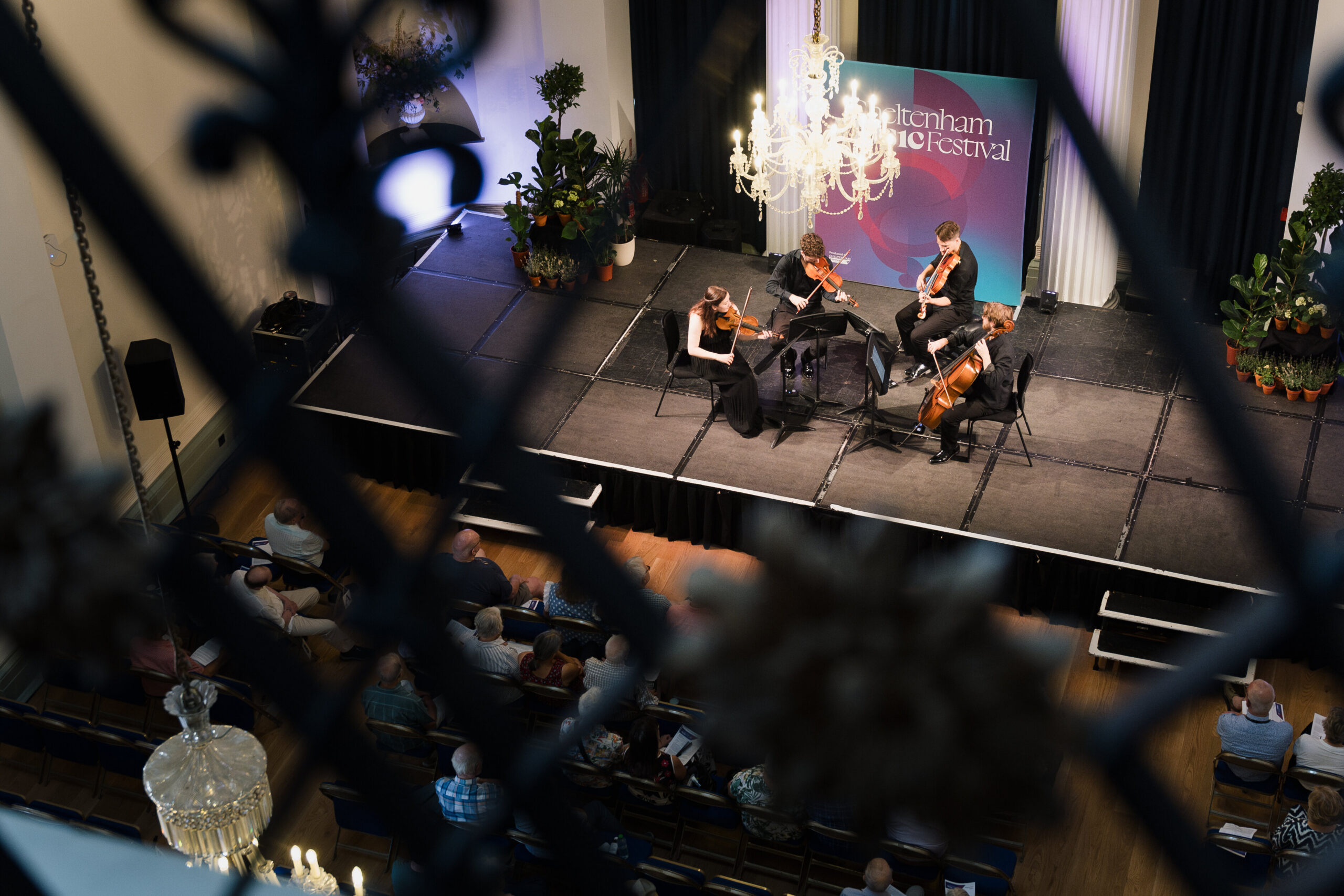
From a signature Mendelssohn to Janáček’s fevered final quartet, Opus13 play like a group with little to prove and everything still to say.
It’s easy to see why Norwegian quartet Opus13 are on the trajectory they are. Two major quartet competition wins — Wigmore and Bordeaux — a recent agency signing, and inclusion on the 26/28 Radio 3 New Generation Artist scheme set an impressive stage before they’ve even stepped onto this one. All this only twelve years after they first started playing together as teenagers.
The opening chords of Mendelssohn’s second quartet, Opus 13 — the work they first played together and now their “signature piece” — set the mood and signal intent. Disciplined ensemble, a fresh, distinct sound unadorned by deference or convention, and an appealing kind of youthful ardour. It’s bounded energy that emanates from the stage. Evident attention to detail, joy sought in playing together. There’s a sense they’ve brought fresh air to the stage. Their difference is noticeable.

Their distinctive quality is the sensory experience of the sound they produce. A sweet first violin — metallic rather than resonant — is matched by lower voices that give the whole ensemble a freshness that enlivens. They clearly relish the theatrical elements in Mendelssohn’s score: fortepianos are dramatic thunderclaps, the subsequent string tremolos — never imperceptibly quiet — shudder intensely. There are plump pizzicatos, melodic lines suspended high above tremolos thick with colour, texture, and a kind of charged excitement — even jeopardy.
The strategy of resisting demonstrative playing lays bare the mastery in Mendelssohn’s writing. This is most evident in the gripping intermezzo. Studious. Thorough. Such is the intensity in their response to the score that at times it feels like we’re listening to a chamber orchestra, not a quartet. Pizzicatos sketch out the harmonic progression below the sweet, simple melody in the first violin. From time to time, a rebellious bowed note subverts expectations, hinting at an alternative direction of travel. Modest dramatic surprises are maximised but never overworked. For those who dismiss Mendelssohn as mathematically cold, Opus 13 isn’t so much set to defrost as to warm, simmer, and maybe even reach a much-needed rolling boil.
The tone is matched across the ensemble. They’re a team, not a gaggle of competing egos. Whilst it’s never good form to single out one player, violist Albin Uusijärvi earns the attention — not because he’s the best of the four, but because his tone is so clear. Too often in other quartets the viola sounds like it’s just been let out of the wardrobe, still blinking at the light. Here, there’s no such adjustment period. It’s simply present and sounds it.
Kryštof Mařatka’s AMEDEA — visage de jeune fille, inspired by Modigliani’s portrait of the same name, sets itself an ambitious task in the programme note: the connection it draws between what’s heard and its visual source is a bigger leap than any first listen can bridge unaided. Nonetheless, the work succeeds on its own terms — inventive writing that demands players produce sounds that subvert expectation and tickle the senses. Breath, flute, and sundry other aural effects emerge from stringed instruments — a gift to suitably minded musicians, and a credit to those responding to the score here. The final sequence passes through a variety of shades, the ensemble moving as one, the room left in a different place compared to where they were ten minutes before and better for it, even if they don’t know exactly why.
Why on earth aren’t we hearing more Janáček? His second string quartet, written in twenty days shortly before he died, is a powerful evocation of an intense, obsessive kind of love — Janáček reportedly wrote 700 letters to the woman who inspired it (a red flag if ever there was one). It’s his final statement, premiered a month after his death. The writing in its fiercest expression singes the skin. Opus13 don’t just deliver it, but play like it was written for them. It’s not an easy narrative to follow for an unfamiliar listener — the endings are abrupt — but there is comfort and joy, and deep pathos too. Listening to this, I like to think that Janáček was quite the catch. Archive photography suggests otherwise.
Opus 13 are at Wigmore Hall on 11 October, and crop up at Sevenoaks Music Society on 17th October 2026.