The clarinet looks toy-like against soloist Pierre Génisson’s frame in Bruch’s rarely heard Concerto for Clarinet and Viola, until the sound bursts out: exuberant, bracing, and revitalising.
Pierre Génisson clarinet
Miguel da Silva viola
Laurence Equilbey conductor
Insula Orchestra
Review
Written late in life and premiered in 1912, Bruch’s light double concerto is compact, retaining the characteristic dramatic feel he had shown in his Violin Concerto nearly sixty years earlier. Brahms’ influence features heavily in a thoughtful opening movement. In the second, particularly beguiling interweaving solo melodic lines conjure a comforting pastoral idyll. The concluding movement shifts from grand fanfare to brisk, perky virtuosic display that draws on Richard Strauss and Weber. As the work approaches its ultimate conclusion, the material sparkles. A rattling viola chunters away, above which a breezy clarinet line darts about, confirming for anyone who might be in doubt that these two instruments are best pals and nothing will change that ever.

Pierre Génisson and Miguel da Silva are a sympathetic pairing who draw out the warmth and charm in Bruch’s double concerto for clarinet and viola. The opening Italianate exchange quickly demonstrates the effortless musicianship between the two. The viola feels a little imbalanced at the beginning of the work, some of the string textures lost in a slight tussle between orchestra and clarinettist. As the material quickens, the to-and-fro between the two heightens and the balance is secured. In the upper registers the melodic lines between soloists, peppered with instinctive hesitations, are delightful. The final note of the first movement is perfectly judged, lingering just long enough.
In the second movement, Génisson’s physicality does much to create what feels like a superior live performance. Visually, the clarinet looks almost toy-like against Génisson’s broad frame. The mismatch creates a moment of tension, resolved the instant he produces a sound that is exuberant, bracing, and revitalising. Playing with great poise, Génisson traces the arc of the melodic line with his whole body, creating an unforced elegance in this lyrical second movement. Miguel da Silva matches this with a solid, steadfast presence — grounded, never heavy. Together, in the decorative flourishes of the final movement, they create an electric charge that makes the music fizz.

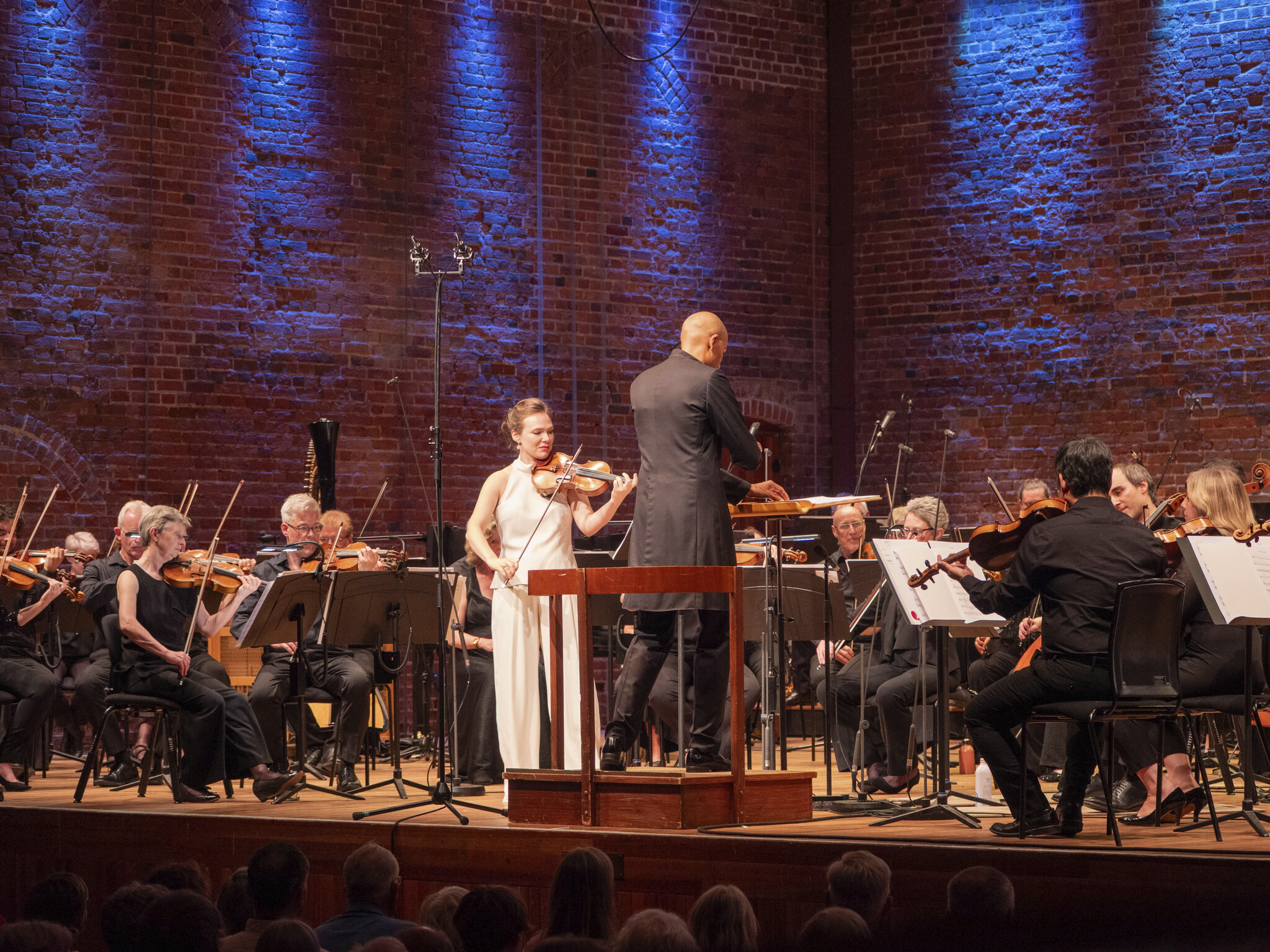
This was the first appearance of Insula Orchestra’s new cohort of young professionals, bolstering the ensemble for a muscular Beethoven 5. These 18–30-year-olds have the chance to play alongside Insula regulars and develop their craft. This might have explained a slightly unsettled feel to the beginning of the Beethoven, the iconic declamatory opening not feeling confidently seated by all until the second time through the material. Things settle down in the development section when the ensemble is tight and the narrative clearer. There is real grit in the strings towards the end of the movement.
Whilst the ensemble issues return briefly in the third movement, where basses (positioned at the back of the orchestra) and cellos negotiate a shared line, the rest of the material throughout has a punch that feels spirited and defiant. Conductor Laurence Equilbey achieves much here with a paucity of direction, her distinctive and expressive physicality the result of judicious thinking. In the second movement the right hand marks time whilst the left points, jabs, and sweeps only when needed. Beyond, she brings her whole body to emphasise an expressive marking or dynamic, conveying weight, bounce, or a caress deftly and efficiently. She not only establishes trust but communicates only when she needs to. Her performance is a fascinating study. The concluding movement cracks on at quite the pace, whilst the orchestra retains a muscular drive in a performance that is, at times, overwhelmingly uplifting. We conclude the movement exhilarated and spent, as after a demanding workout.
For the Avoidance of Doubt
Thoroughly Good is an independent website making the case for classical music — part commentary, part curiosity cabinet.
Classical music’s best friend, if it needed or wanted one.
Help Keep The Lights On
Support Thoroughly Good with a one-off contribution, or a modest recurring subscription.
It won’t change the world, but it might cover lunch. Maybe even a bill or two.