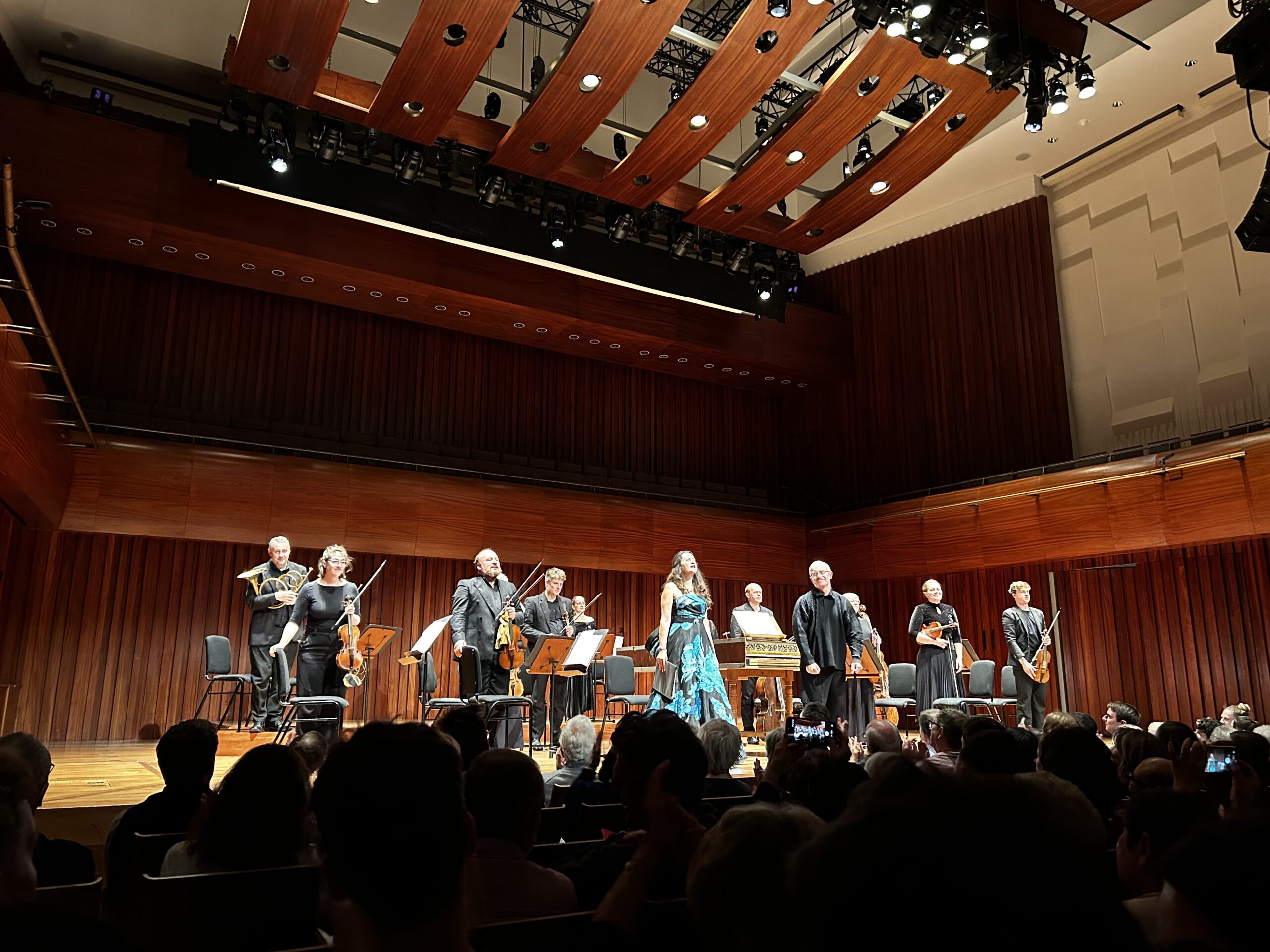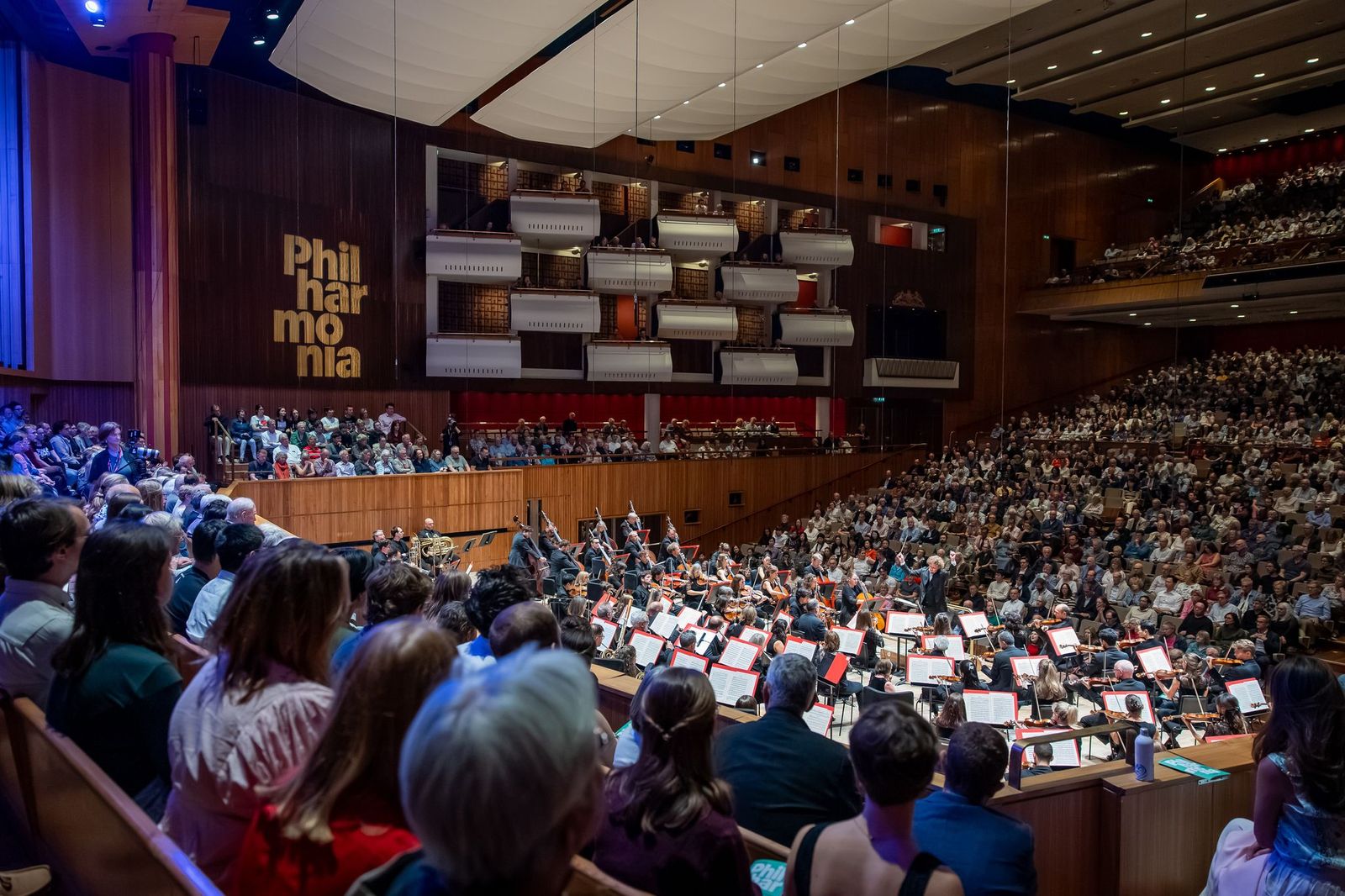
Santtu-Matias Rouvali and Philharmonia open the new season with cellist Sol Gabetta.
Programme
Brahms Academy Festival Overture
Elgar Cello Concerto
Dvorak Symphony No. 9 ‘From the New World’
Sol Gabetta cello
Philharmonia
Santtu-Matias Rouvali conductor
Review

The Academic Festival Overture opened the concert giving strong first-day-of-term vibes. Apt programming to mark the beginning of the Philharmonia’s 2026/27 season and, as it turned out, a useful benchmark for the developing sound across the concert. Brass at times dominated, and the strings in the fortissimos sometimes felt splashy and screechy, emphasising the Royal Festival Hall’s brutal acoustic. Nonetheless, by the tender pianissimos the orchestra was already adjusting.
The Elgar Cello Concerto was played but not necessarily felt. This was noticeable in the opening movement, where there seemed to be a tussle between soloist and ensemble over speeds and intent. Proceedings felt a little on edge. Nervy. Jumpy. Speeds weren’t so much being negotiated as independently embarked upon. Ensemble pickups at the end of solo lines gave the impression that two strategies had been adopted at the same time. These subtle twists distracted from Sol Gabetta’s solid tone – itself an earthy characterisation for the work that was matched in colour and temperature by the cellos and basses. Narratively, however, the otherwise instinctive hesitancies implied in Elgar’s score seemed to be rushed, nuances likely intended but overlooked. The melodic lines were there and the intended framework solid, but the spirit didn’t always have time to linger. The third movement was a pivot point. Gabetta shaped her line with a vocal quality that grounded the character and helped us invest. Focus achieved, this advantage didn’t bed in come the final movement. That earlier uncertainty over speeds sometimes crept back in, characterful quirks skipped over, resolute punctuations rushed, musical full stops only lightly applied. Some slides in the finale’s slower closing pages, larger than those usually heard, reminded us Gabetta was still leading this performance. A deft touch. The final stabs from the orchestra came across as impulsive swipes – more youthful defiance than aged melancholy.
If time was sometimes contested in the Elgar, it was measured in Dvořák 9’s symphony to good effect. Santtu Rouvali and the Philharmonia thrived with an array of colours, textures, moods, and characters that came ready-made and were eagerly deployed. Crisp cushioned brass cues, rounded tone in the upper strings, and clarity for individual solo lines acted as the scaffolding in a first movement that immediately made things feel a whole lot more cohesive in comparison to the first half. Brass intonation at the beginning of the second movement risked unseating proceedings, though this settled gently in time for the cor anglais solo. Rouvali brought about a breathy quality to the underlying strings which made for a poignant take, laying the ground for the devastating final chord in the basses. Delicate triangle work, warbling woodwind, and muscular strings coloured the third movement. It was here the performance tightened focus more. Solid coherent transitions provided bold contrasts at the same time as maintaining a sense of the movement’s throughline. In the fourth movement, fierce brass cues gave the work a burnished colour that still made it feel modern. Rouvali led with a resolutely clear beat, seemingly drawing out shivery articulation in the strings with nothing more than a flick of the hand. In the triumphant closing pages, energy was deployed in the same measured way it had been throughout, tension held to the very end, when exhausted players sent the audience on its way with a final chord, subdued but terrifyingly exposed.
Gallery
The gallery will be updated shortly.