Toby Anderson, Amy Bryce and Jonathan Woolgar premiere new chamber concertos at Britten Sinfonia’s Magnum Opus showcase.
Britten Sinfonia: Magnum Opus Composer Showcase 2026
Saturday 14 November 2026, 2.30pm
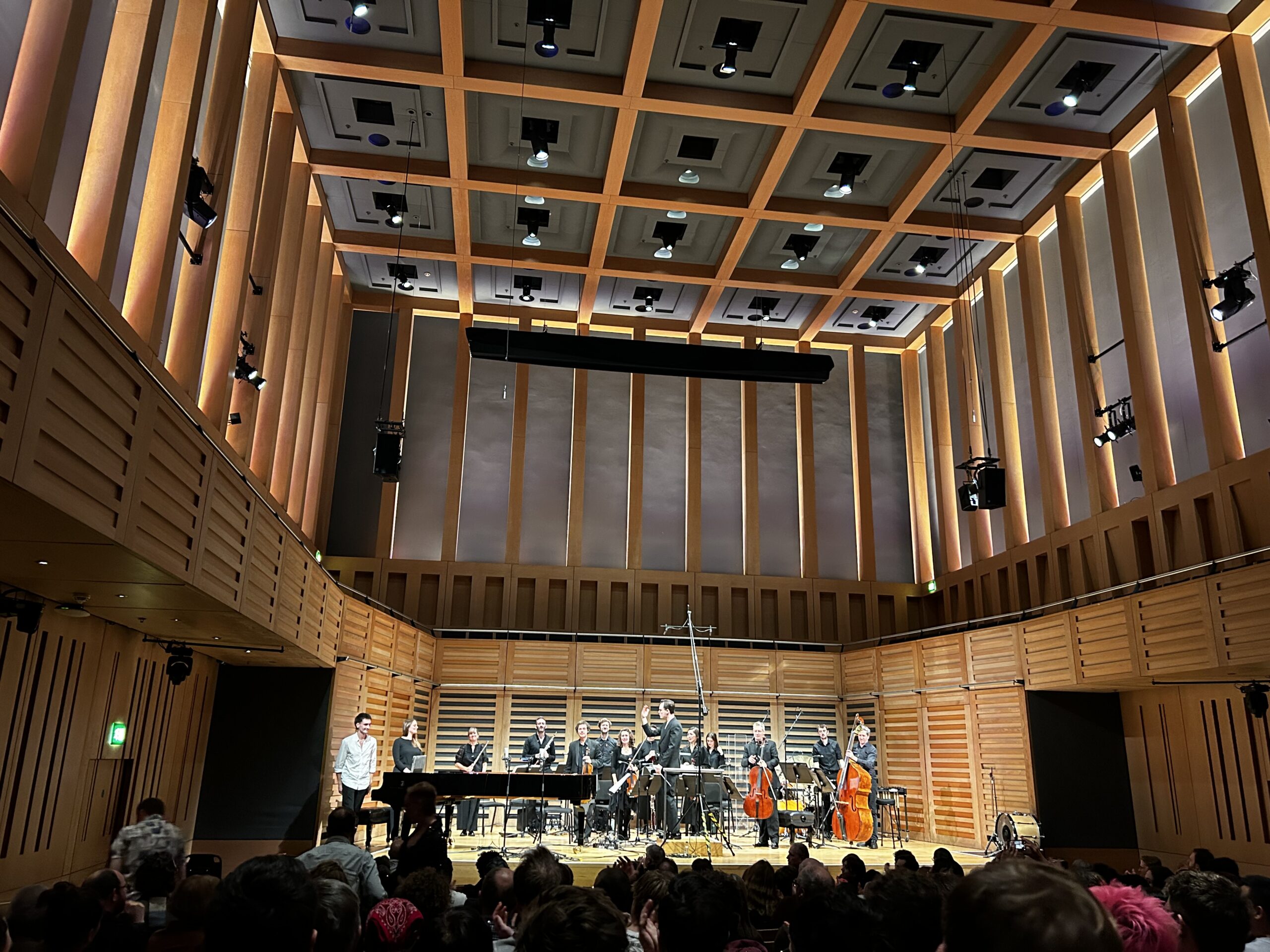
Kings Place, London
Toby Anderson – #itgetsbetter (world premiere)
Siwan Rhys piano
Jonathan Woolgar – Alpine Concertino (world premiere)
Martin Owen horn
Amy Bryce – soft rebellion (world premiere)
Laura van der Heijden cello
Britten Sinfonia
Tom Fetherstonhaugh conductor
Britten Sinfonia’s composer development programme Magnum Opus is turning out interesting, engaging, and thought-provoking works from (in some cases) award-winning new names. The latest collection – Amy Bryce, Jonathan Woolgar and Toby Anderson – under the direction of composers Gavin Higgins and Freya Waley-Cohen deepens the reputation of the scheme and makes the future of contemporary classical assured, even if opportunities for live performance appear increasingly limited.
Toby Anderson’s #itgetsbetter is the work that resonates most beyond the score. Its starting point is the YouTube movement that began in 2010 as a response to a spate of suicides among young LGBT people. Anderson reflects both on the promise of those early days and on what followed in their wake, which his second movement calls “the machine”. The implied question that lingers at the work’s conclusion speaks to one generation’s despondency that the promise didn’t come good. This isn’t so much the disappointment of empty ambition. It’s more the result of an increasingly polarised and politicised discourse that quickly curdled into toxicity. Anderson keeps to the artist’s line in the score, posing the question rather than steering opinion. There’s a universality about the work too: for some in the room, the title might prompt reflections on what the generation before went through. It also points to the campaign’s quieter promise, that life improves as you grow into yourself and gain confidence with age. Is that the message lost in the machine?
Like the other chamber concertos, the work follows a conventional three-movement format, though here the piano feels more ensemble instrument than soloist in the tutti sections. Anderson juxtaposes club scene with a pimped Belle Époque salon style, his keen ear populating the score with evocative, multi-layered textures. The reflective cadenza in the middle movement conveys a sense of letdown after that bold, optimistic promise. The pain of the eighties hangs over it, and over the fractured viewpoints of the present day.
That Anderson has already taken part in opera workshops might indicate the direction of travel. #itgetsbetter is a compact calling card for a composer well placed to secure a theatrical or operatic commission. The musical language will delight. His distinctive take on cultural reference points is another matter: selling that will need energetic marketers, a machine of its own.
Amy Bryce’s four-movement concerto Soft Rebellion, written for RCM contemporary Laura van der Heijden, is an invitation to a broader group: those energised by bending the rules a little. There is something characteristically subversive about a programme note that simply informs the reader that “this is a happy piece”. The frame isn’t prescriptive. It might even highlight how often the word is misconstrued. Rebellion can come in many forms. Here it’s continuous and multifaceted – quiet, strong, relentless, but never destructive. A soundtrack for those who understand the role rebel ideas play in innovation, and the responsibility each of us bears in deploying them. I’m a big fan of the plump, bass-heavy harmonic stabs Bryce favours in the opening movement. Later, ethereal whistling percussion and slow downward glissandi usher in an extended, Tavener-esque solo line that nibbles at the edges of the “happy piece” descriptor. Melancholy creeps in, and it’s not unwelcome. Van der Heijden may be having fun, but she’s certainly worked hard: there’s hardly any let-up for the soloist. It’s the narrative cohesion from movement to movement that really seals the deal.
Jonathan Woolgar’s Alpine Concertino takes what is likely a common composer’s experience – dreaming about the music being written – and renders it as a musical meta-narrative. A late-Romantic Austrian harmonic language dominates, with bold, characterful flourishes from the solo horn at the opening. Distortion and disintegration follow. It’s a tightly drawn, highly efficient, descriptive work that plays to soloist Martin Owen’s reliable and woefully underreported strengths. The even tone across multiple registers is a thing to behold, as is articulation that knows its place and doesn’t make too much of itself. Woolgar has an endearing playfulness about him, apparent in the unapologetically childlike descriptions of percussion interventions and in the wry smile of his introduction, which carries through into the music. A satisfying trigger for the imagination, and plainly fun for everyone on stage – never more so than when Owen, in one of the handful of bars’ rest he’s granted, casts a knowing look across the ensemble.