Britten Weekend 2025 traced music refusal to be destroyed. What emerged wasn’t nostalgia or indulgence but a promise to remember. Not everything was executed as perfectly as it might have been, but maybe perfection isn’t the goal.
A day at Snape is possible without an overnight stay in Aldeburgh, it seems. If Britten Pears Arts can build their programming around the first and last Saxmundham train, they’ll be onto a winner for us London folk. For this year’s Britten Weekend — events spanning 72 hours (events which needed to have had a lot more works by Britten included) — Thoroughly Good spent 24 hours at Snape Maltings hearing provocations, spoken word, solo voice and orchestra. The through line was there, but it was one that needed to be made a little more explicit.
The most rewarding was Dr Lucy Walker’s ‘study morning’. Less of an earnest lecture demanding note-taking, Walker’s editorial strategy combined the best elements of a Ted talk with a shrewd understanding of what the audience wants. A far cry from the learned pronouncements of Donald Mitchell, Walker combined a 45 minute exploration of music as remembrance, mourning, solace and meaning into a fast-paced meditation that marked 80 years since the liberation of the concentration camps in a fitting and, at times, surprisingly light-hearted way. This was an opportunity to go back to first principles, illustrated by various philosophers, therapists, thinkers and the rest, helping us to build a picture of why this stuff matters; music is with us when we are born; meaning requires suffering; music is meaning that unconsciously chronicles suffering; music is an act of remembrance (and a reminder to remember).

A performance of Viktor Ullman’s seventh piano sonata from Dr Simon Callaghan – written in the Theresienstadt camp before the composer’s death at Belsen in 1944 – brought the composer into the room. We weren’t listening aesthetically so much as participating in an act of remembrance. A profound and deeply moving experience.
To follow, a short story which could have easily been a truck-driver’s gear shift. Oliver Soden read from his Prospect published short story, a fictionalised account of an unlikely friendship between Slava Rostropovich and a Sumo wrestler. We accompany the cellist’s impulsive and heartfelt journey from Paris to Tokyo for an act of mourning outside the wrestler’s home in memory of his baby daughter who had died only a few days before. Nobody other than a bemused taxi driver witnessed this ‘gesture of helpless compassion’ except us, now. Slava’s act told through the incisive prose of the self-effacing Soden landed Walker’s point with a deafening thud: music picks up where words fail.
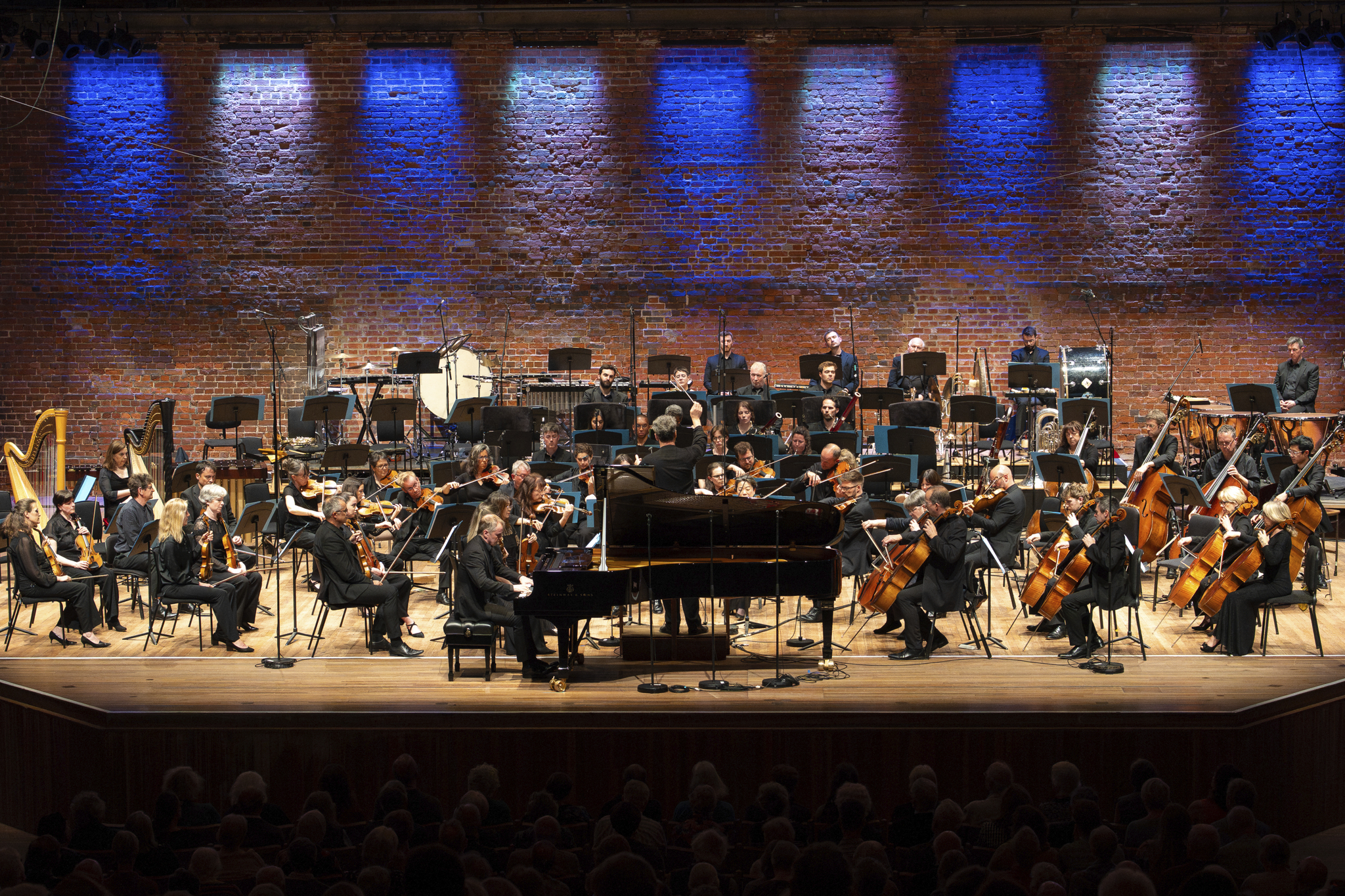
Soden’s short story gently cued up the evening performance of Bliss’ Cello Concerto (premiered by Slava in the 1970 Aldeburgh Festival). Cellist Raphael Wallfisch joined the English Chamber Orchestra for the performance. This was a symbolic piece of programming even if it wasn’t immediately obvious why the ECO were playing. Wallfisch is a trustee of the ensemble, honouring the role his mother, cellist and former concentration camp internee Anita Lasker-Wallfisch had played founding the orchestra in 1960. ECO would establish a close connection with the Aldeburgh Festival throughout the 60s and 70s, this activity contributing to an enviable reputation drawing on illustrious international talent. The connection between work, ensemble, or soloist wasn’t immediately obvious and could have been made more of.
In a similarly disappointing way, the present formation of the ECO didn’t do justice to either its glittering past nor this performance of the Bliss, one which was at best ill-disciplined and frequently lacking focus. This was a performance followed rather than led from the podium. Scrappy entries, under-supported solo lines in the brass and wind, and muddy articulation in strings and timpani gave the impression this might have needed more rehearsal or, given that the RLPO/Johnston release on Onyx earlier this year presents the work a more electrifying listen, considerably more forces. Perhaps more of a programming error than anything else.
String playing was at its best when the score was marked fortissimo. Wind ensemble was most cohesive with some warm colours and rich legatos. And whilst the most compelling listen was its hard-earned reflective slow movement, Bliss’ splintering virtuosity in the outer movements never really stood a chance. In the third movement Raphael Wallfisch was working harder than would normally be necessary, visibly so in places, responding to a lot of pull from an ensemble that didn’t appear to be offering very much push in return. Detail was lost or sped over. There was a sense all wanted to get to the end, an observation reinforced when the leader of the orchestra calculated the soloist wasn’t returning to the stage and resolutely set off for the interval, only to discover Wallfisch returning with a newly discovered piece written by Britten, which the cellist intended to play as an encore when he left the stage.

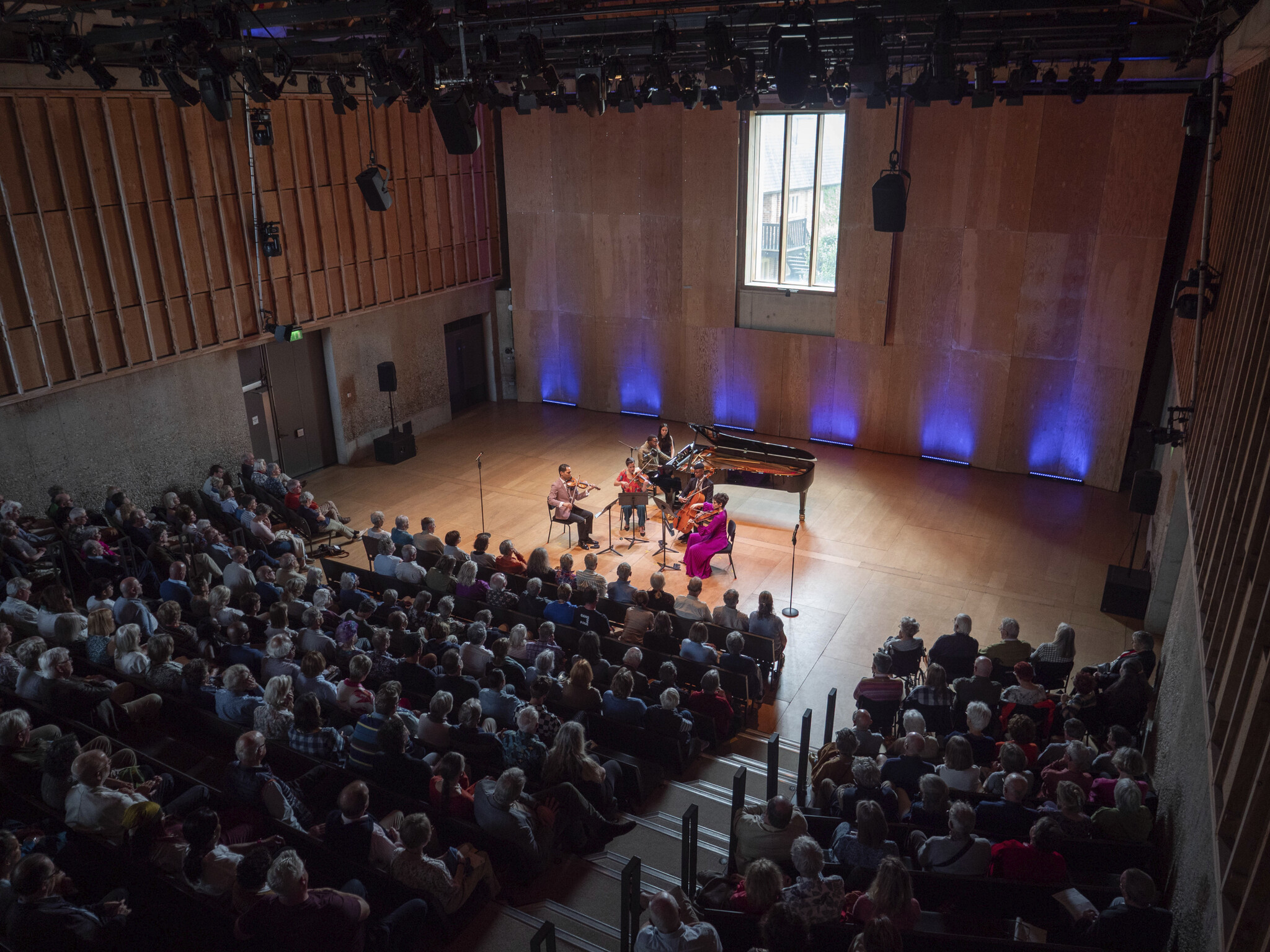
A counterpoint to this was the mid-afternoon recital given by tenor Liam Borthrone and pianist Benjamin Mead. An excellent duo, both sympathetic in their enthusiasm and their craft, combined settings of poetry scored by Britten, Frances-Hoad, Poulenc, Debussy and Wolf, contrasting childlike innocence with the brutality of war. Perth-born Borthrone summons a surprisingly plausible Yorkshire accent when Cheryl Frances Hoad’s score demands. He’s also able to draw a delightfully smooth legato line that gives tenors the world over a good name. The fashion for splitting out individual song cycles into playlisted movements won’t and doesn’t sit right with all, but it keeps attention and likely draws attention away from the comparative limitations of the present-day poetry. There was a pleasing sense of satisfaction on the faces of vocalist and pianist both in the Britten Studio and the Plough and Sail pub afterwards. Satisfying stuff.