If you want to know where British composition is heading, schemes like Britten Sinfonia’s Opus 1 and Magnum Opus offer a compelling snapshot.
Nine new works written by composers on Britten Sinfonia’s Opus 1 and Magnum Opus composers scheme were premiered in a showcase event at Kings Place, London on Saturday.
In the Opus 1 scheme, six young composers with eyes on a professional career had the opportunity to work with a handful of musicians from the Britten Sinfonia and programme director and award-winning composer Dani Howard. All the composers received the same brief that saw them write for the same forces: flute, viola and harp.

Three composers looking to build on early successes got the chance to develop their voice and writing skills on the Magnum Opus scheme. This twelve month programme offers three artists the chance to create two new works in collaboration with Britten Sinfonia players, premiered during the orchestra’s season.
Like last year’s concert, these showcases draw an enthusiastic crowd. Saturday’s event saw a mixture of industry folk and musical early adopters, many eager to secure a first listen to the sounds created by those whose names surely will pop up in future programmes. Concert-going fuelled by a precious future opportunity when we’re able to say ‘I remember the time when …’
The evening’s range was striking. Sophie’s Harmonicity approached science with structural confidence, while Hughes’ Refraction conveyed in places a palpable sense of standing near a precipice. Angel Chaloner-Hughes returned to a more tonal, melodic palette in As I Walked Out One Evening, and Botterill’s Geneva-inspired work brought a welcome warmth with its lyrical viola solo. Together, their writing hinted at a cohort already thinking beyond the brief.
Many turned inward, focusing on small, distinct sounds, but the boldest excursions came from Indonesian composer Aris Daryon — evoking gamelan colours on Western instruments — and Sooji Seol, whose brief study seemed to depict sound at the beginning of its life left a lasting impact.

On the year-long Magnum Opus scheme, three composers – George Stevenson, Leoni King, and Michael Betteridge – worked with a larger ensemble of strings, wind, brass and percussion, plus soloists they had chosen themselves for the work they were creating. Stevenson’s theatrical Bloodshift, a work for piano and ensemble featuring the luminescent playing from pianist Clare Hammond, brought to life the unseen internal workings of the human body underwater, with a playful score that avoided overworked musical tropes.
Arguably the most challenging was found in Leoni King’s deeply personal I Carried You Out From A Dream, exploring the theme of loss and reunion rooted in a landscape – ambitiously structurally yet occasionally unfocused in its execution. King’s daring metaphorical text set for soprano and ensemble, placed demands on scoring and execution where the vocal line vibrato sometimes obscured the deeper meaning. Sometimes the technical execution masked the mythical atmosphere King’s text worked hard to establish.

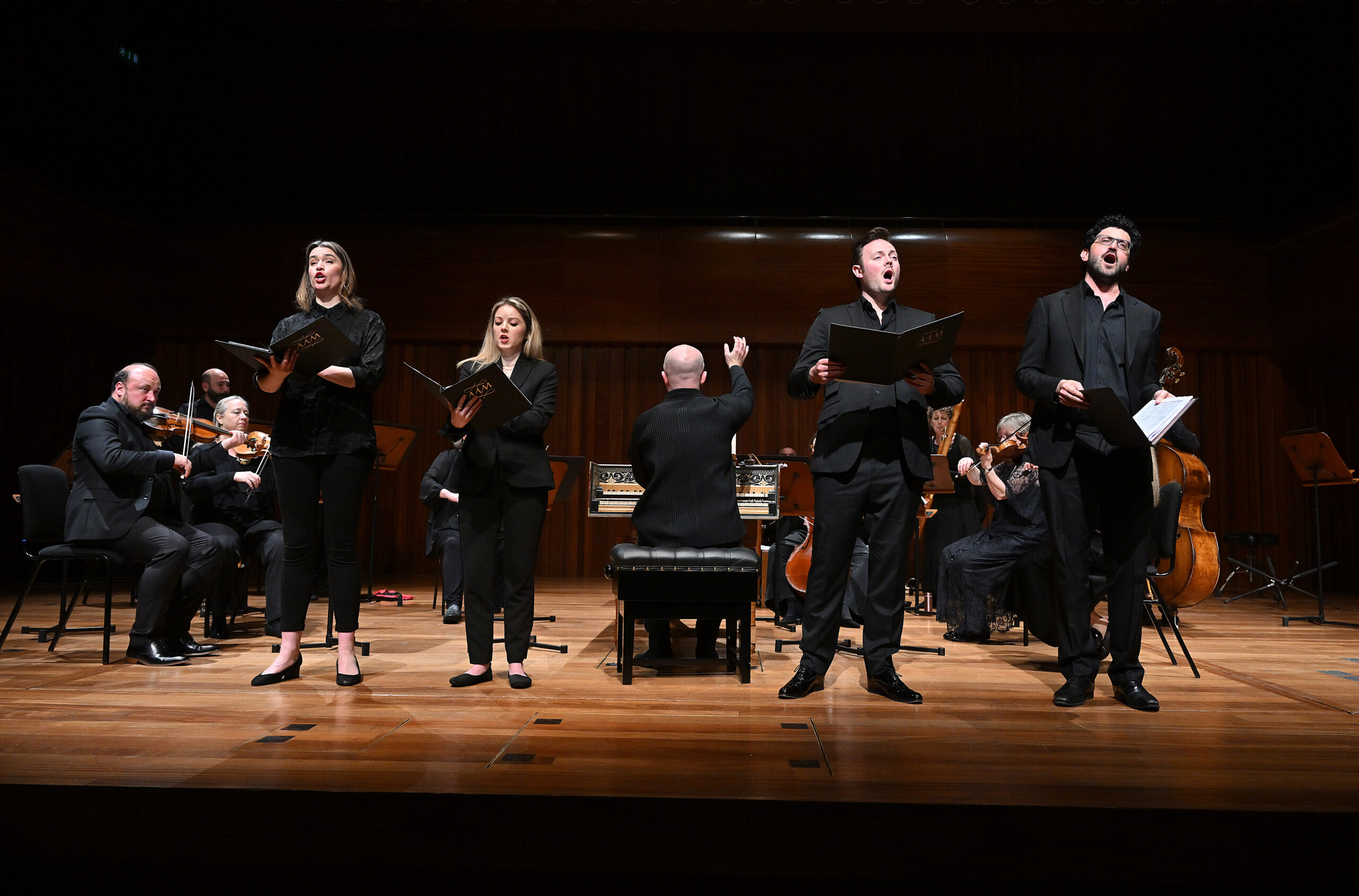
Michael Betteridge’s four-song set Bodies was cohesive, taut and big on impact. His writing for countertenor, matched by Collin Shay’s assertive timbre, gave the texts by contemporary writers a distinctive colour, the score’s economy sharpening their emotional focus. At the heart of this exploration of queer self-perception, the setting of Andrew McMillan’s the men are weeping in the gym stood out: a poised alignment of ensemble, vocal line and poetic weight.
Britten Sinfonia reinforces its commitment to new music with its composer development schemes, and this in the same week that Magnum Opus alumnus Aníbal Vidal won at the Ivors Classical Awards for Invocación No. 2. The ensemble’s composer showcase is, like the Ivors, becoming a fixture in the musical calendar — a clear glimpse of who to keep an eye on next.