
Strong voices and competent performances carried a production that appeared not to question the tradition it so readily relied upon.
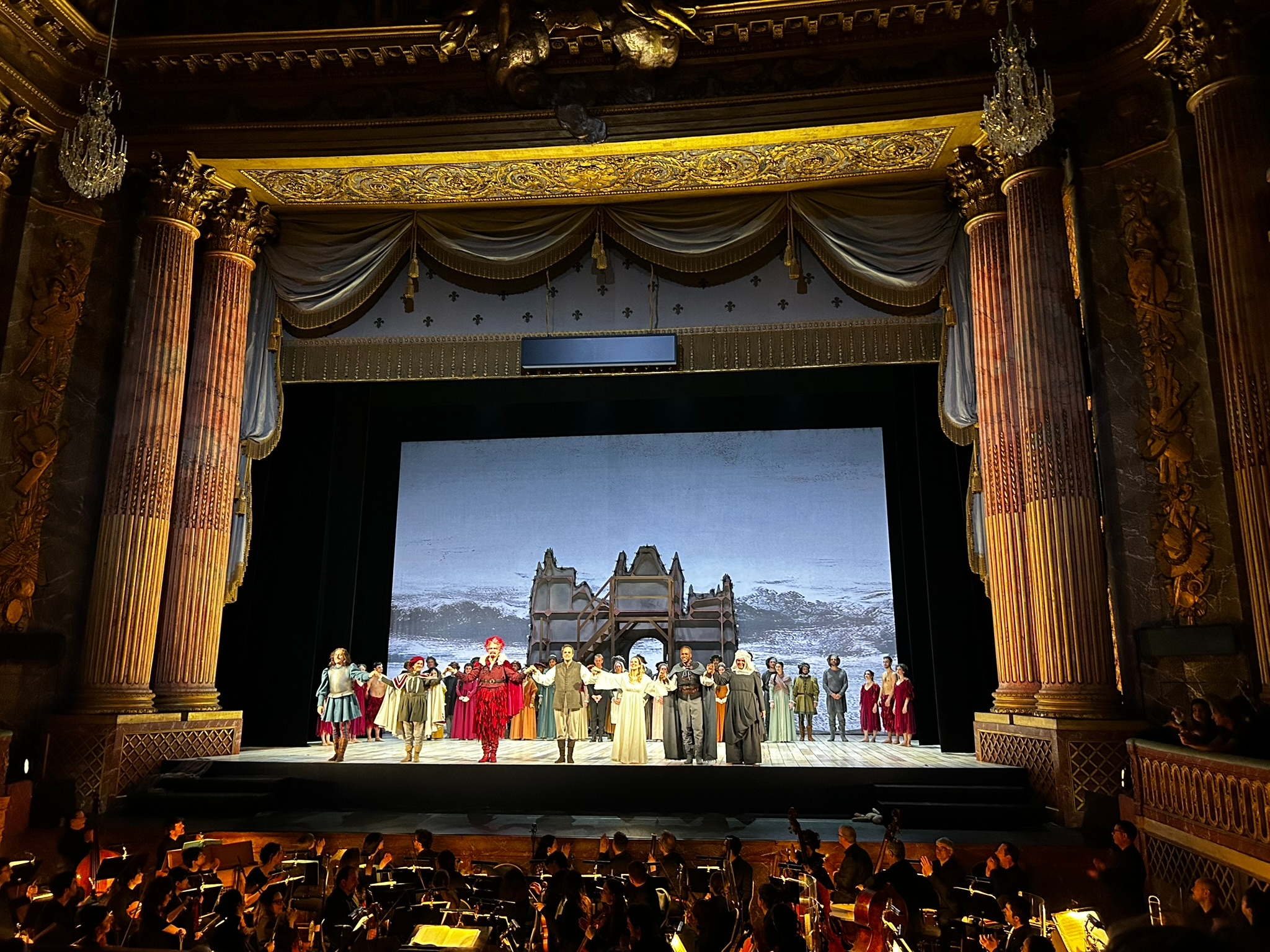
At two and half hours, Gounod’s Faust is long in its exploration of the predictable folly of an ageing man doing a deal with the devil for eternal youth. Grand opera it might be, but that’s no reason to wallow. The challenge for any director is to mitigate the length and bring the moral of the story to the fore. In relying on period costume, easy tropes (Faust dragging a pile of books behind him was a clunky metaphor), and tired set design, relevance lost out to nostalgia. A translucent gauze screen on which snow fell and Hell’s inferno blazed went some way to energise the production but this came too late. Despite this, tired scene changes executed by all too visible stagehands made this in some respects a laissez-faire production for all the wrong reasons.
Strong performances drew focus. Anas Séguin played a brave and principled Valentin, mastering a convincing death come the denouement. Luigi De Donato’s Méphistophélès was nimble, switching from guile to wry-playfulness in one exchange to another. Vannini Santoni’s Marguerite warmed up as the evening rolled on. Her potent vulnerability in the final act was clearly in evidence, underlined more than necessary by a white smock that over-egged the pudding.
Still, there were unexpectedly and gratifyingly uncomfortable moments. Faust’s penetration of chaste Marguerite’s bedroom with hopeful Siebel’s sunflowers stored underneath the bed presented as a deeply unsettling violation. Direction that honoured Gounod’s interpretation of Goethe.
Ultimately the work is flawed by its length. Especially, the final act. The energy is lost when the ballet music that emphasises our relocation to Hell kicks in. By present day standards, the sudden insertion of a dance sequence presented as a sequence in need of an edit. The dancing here was, in comparison to the comparatively simple moves the chorus were called upon to follow, a good deal better executed. Surely, there’s an argument for cutting it down to one number.
When a production offers this little, attention falls on the work itself — and the work doesn’t entirely hold up.