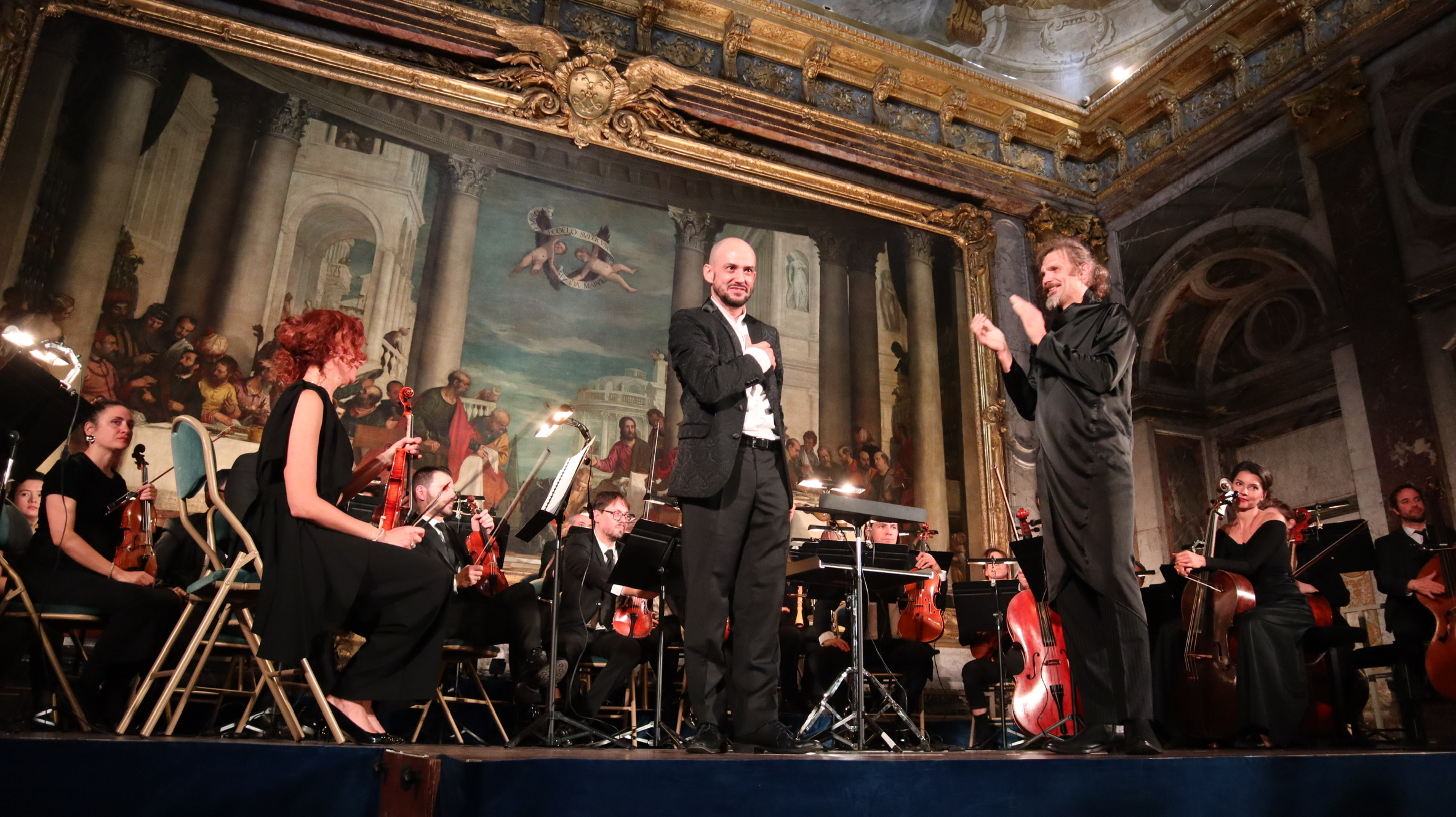

Franco Fagioli is currently engaged in a concert tour promoting his album The Last Castrato. He appeared with Orchestra de l’Opera Royal at Versailles and violinist and director Stefan Plewniak earlier this week at Chateau de Versailles. A hurried event in which the vocalist led proceedings, the orchestra responded, and director followed with one too many theatrical flourishes.
Categorisation is important to Fagioli who makes a point of clarifying in print and in interview he’s a mezzo-soprano not a counter-tenor. Fagioli creates spectacle with his presence. His performance isn’t a circus act curiosity. There is craft here that pins you to the back wall of the auditorium. At the same time, the self-assured voice production that celebrates Velutti – the ‘Last Castrato’ – reminds us of a time when genital mutilation was considered the legitimate treatment for what would now be regarded as a criminal misdiagnosis. Potent questions arise, the kind that make some firmly cross their legs.
On stage, Fagioli is sharp in his movements. He commands the stage, assumes each character and is present in every moment. Fagioli’s remarkable voice production does the heavy lifting. In Paolo Bonfichi’s Cavantine from Attila we hear voice and ensemble at their most cohesive, with glorious legatos in both upper and lower registers. Tender connection is achieved in the scene from Nicolini’s Carlo Magno where the sound is reassuringly rounded.

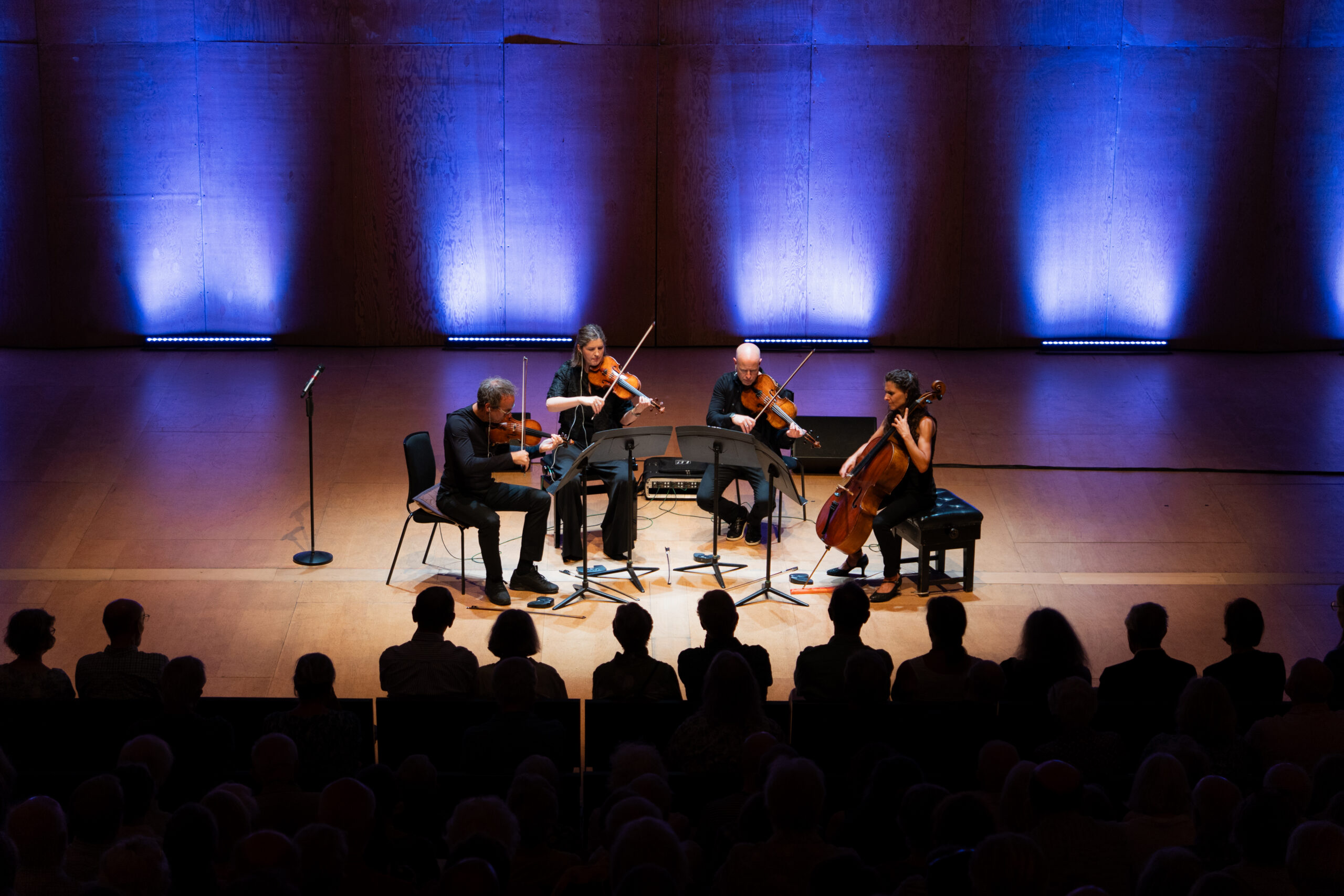
The woodwind are consistently tight, warm and articulate throughout, even if the strings of the Orchestral de l’Opera Royal aren’t as sharp in live performance as you’ll hear on the recording. This is in part down to an imbalance in the strings. Front desk players take the necessary lead whilst players behind seem comparatively underpowered. Smiles of appreciation exchanged only go so far to mitigate.
Stefan Plewniak repeatedly interrupts focus with unnecessarily eager direction that translates as a vague need for validation. This presents as someone following the action rather than directing it. There are uncomfortable moments with Fagioli when there might have been a little more space between performer and director. Plewniak’s earnest, occasionally beatific, smile and jolting arm movements frequently risk making the performance more about him than the soloist. The consequence is that in places ensemble is lost, more so towards the end of the programme, where principals in the orchestra look to one another rather than the director to anchor themselves at key points in the score.