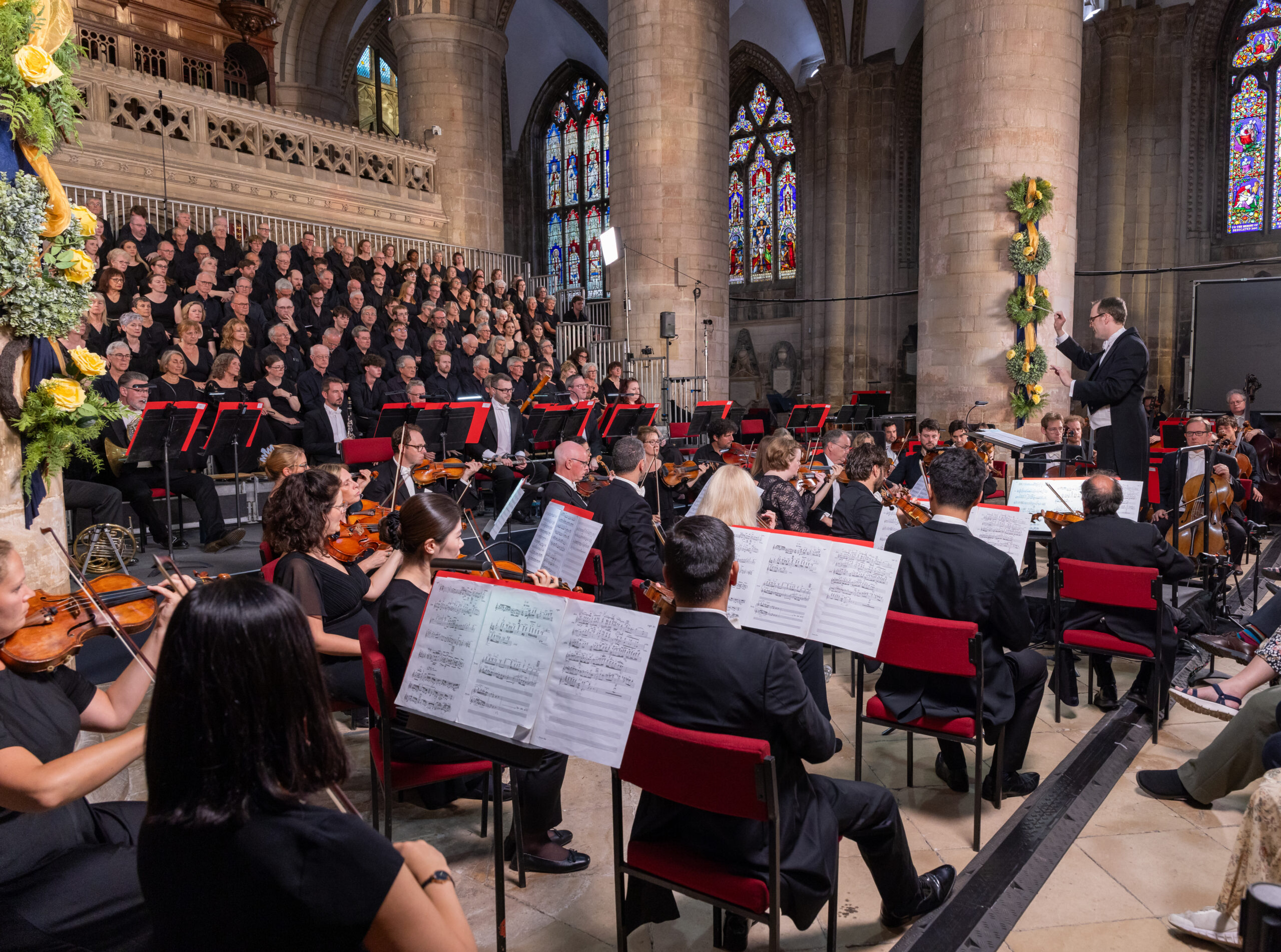
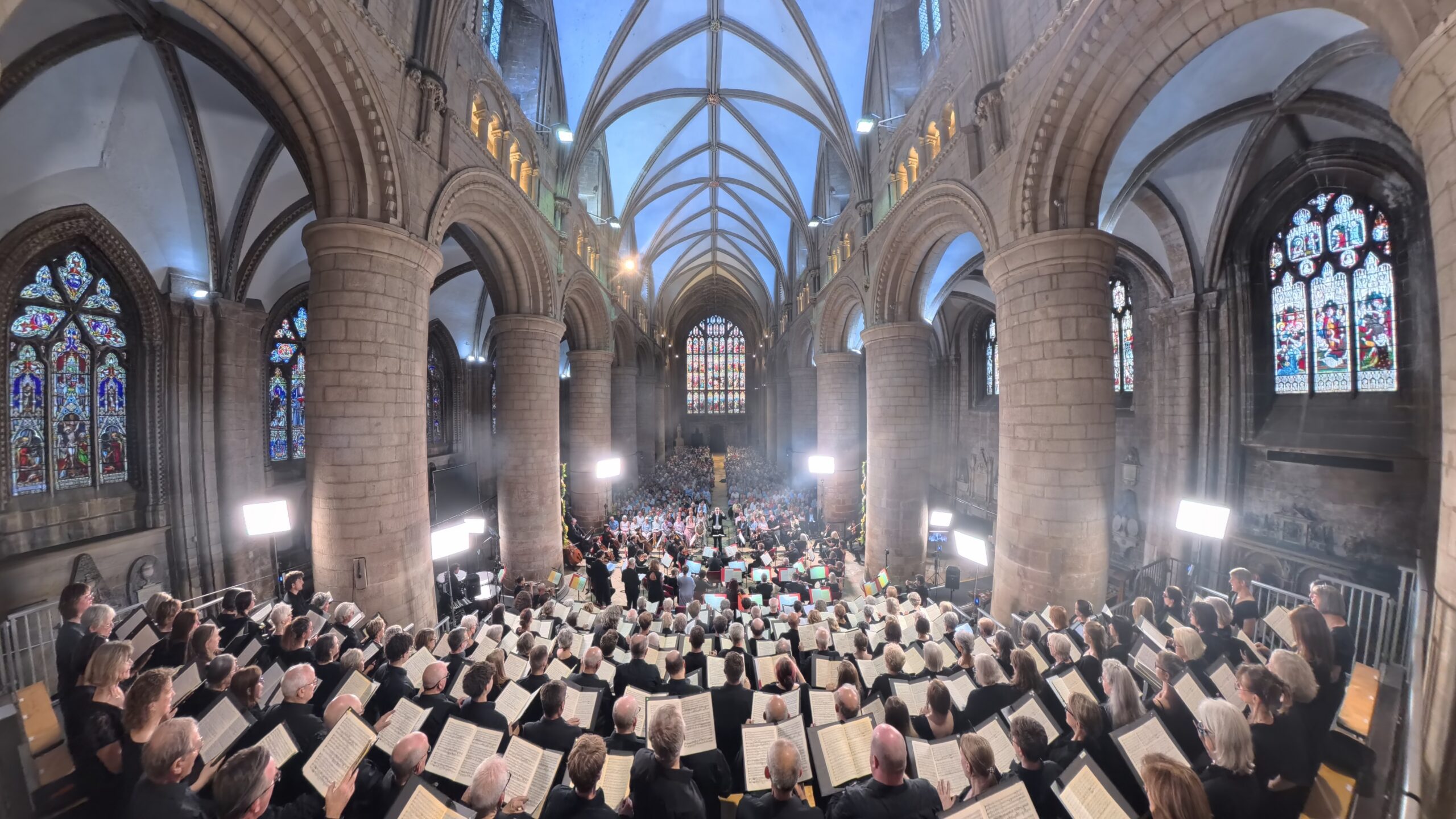
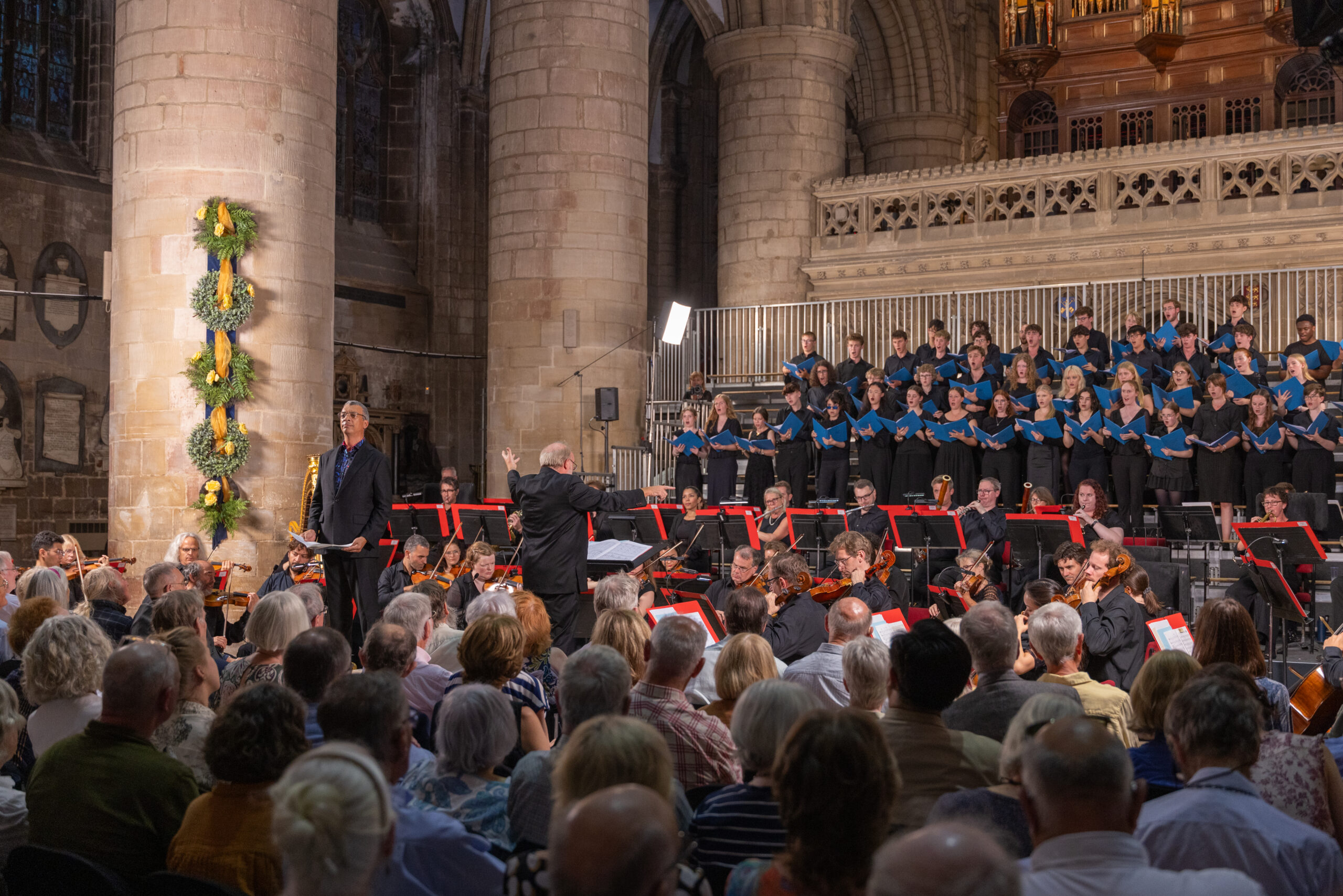
Gianandrea Noseda conducts the BBC Philharmonic in Beethoven’s Ninth, with a UK premiere from Jessie Montgomery and cellist Abel Selaocoe.
Programme
JS Bach, orch. A Davis Fantasia and Fugue in G minor, BWV 542
Jessie Montgomery These Righteous Paths (BBC co-commission: UK premiere)
Beethoven Symphony No. 9 in D minor, ‘Choral’
Abel Selaocoe (cello)
Leah Hawkins (soprano)
Stephanie Wake-Edwards (mezzo-soprano)
Derek Welton (bass)
Philharmonia Chorus · BBC Philharmonic Orchestra
Conductor: Gianandrea Noseda
Monday 20 July 2026 · 7pm–c9.20pm
Royal Albert Hall
Listen on BBC Radio 3 / BBC Sounds · Watch on BBC iPlayer (recorded for broadcast)
Preview
Two big pulls for this concert. The first is cellist Abel Selaocoe — a performer who brings an electric energy to the stage the moment he walks onto it. He’s giving the UK premiere of Jessie Montgomery’s These Righteous Paths, a work that draws on the poetry and plays of the composer’s late mother, Robbie McCauley, a significant figure in Black American theatre after the Civil Rights era. Written partly as an act of grief, the piece draws on the African diaspora and its inheritances — guided by the Ghanaian Sankofa concept, the idea that looking back is what enables you to move forward. The music is built around Selaocoe’s distinctive range as a cellist and vocalist, weaving together baroque, song, Afro-centric rhythm and improvisation. Montgomery describes the form as restless but grounded, sometimes arriving at melodies so familiar they feel remembered rather than composed.
Beethoven’s Ninth has form as a symbol of political hope — most memorably in the days after the fall of the Berlin Wall, when Leonard Bernstein conducted it with musicians from both sides of the divide, replacing Schiller’s “Freude” with “Freiheit” — freedom. History is layered onto the annual Proms performance of this work such that its regularity makes the Proms Beethoven 9 an almost spiritual experience. There remain only a few works in the repertoire that generate this particular kind of collective experience: the sense, after an hour or more, of having arrived somewhere together. Its rousing conclusion is what most reach for, though the slow third movement contains some of Beethoven’s most tender melodic writing. It’s also a peculiarly British work, commissioned by the Philharmonic Society, now known as the Royal Philharmonic Society.
Review
Bach arr. Davis Fantasia and Fugue in G minor, BWV 542
That this is Andrew Davis’ arrangement of Bach is doing a lot of work in holding my attention. Davis, former conductor of the BBC Symphony Orchestra, died last year. His death was anticipated though perhaps not as quickly as it turned out to be. Memories of a fine musician and a jovial presence bounce around as we listen to an arrangement of music he loved, shortly before he died. As concert-openers go, it’s touching. And that frankly is all that can and should be said.
Beethoven Symphony No. 9
I’ve taken a bit of time before posting this review because the performance of the Beethoven caused me some confusion. The first movement of Beethoven 9 with Noseda works well — solid, confident, and assertive. It’s the second movement where I sensed things began feeling unstable, with some sections scored in tandem with one another sounding mildly out of sync with each other. It wasn’t an especially fast-paced scherzo, so my hunch isn’t that it was down to speed so much as distraction from the main source of direction — the conductor — resulting in a feeling of instability. This became more noticeable around 1:44:44 in the BBC Sounds playback. A loss of string ensemble cohesion around 1:47:50 suggests this instability had curdled into a loss of attack.
The following slow third movement opens with a brass cue that doesn’t feel as though the ensemble has precision. As a whole, the otherwise brisk movement feels like a romantic reading — it sometimes feels like I’m listening to Tchaikovsky in places. Whilst it’s brisk, the passages with rubato feel held back. Narratively this feels at odds with what’s gone before — it doesn’t feel coherent. Come 1:58:58, the lack of distinct characterisation combined with the late-romantic feel to the sound leaves me feeling as though I’ve lost faith in it. And whilst the choral entry and a much tighter opening to the fourth movement went some way to distract from my unexpected dissatisfaction with the performance as a whole, I finished feeling as though something had been played very well, but not necessarily experienced by all as something profoundly felt. The audience felt differently, of course — the conclusion of Beethoven 9 does that. Oddly perhaps, I think the listening experience of Beethoven 9 is improved when the work is heard later in the season — the wealth of what’s gone before makes this epic musical act of connection more hard-earned and more deeply appreciated.
This review will be updated in due course.
Gallery
Photography will be added once available.