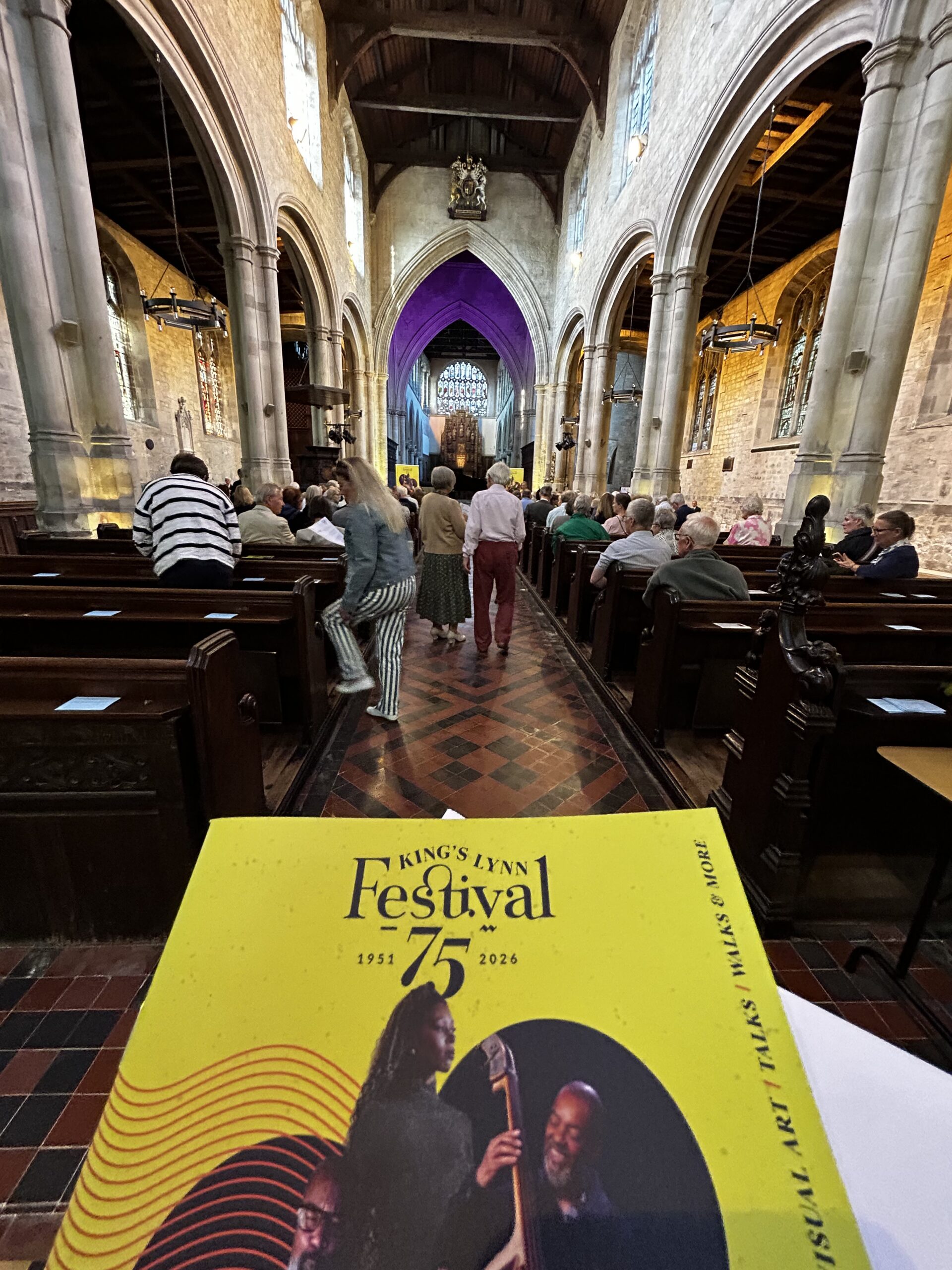
In north Norfolk a music Festival in its 75th year could be doing more to honour the vision of its founder
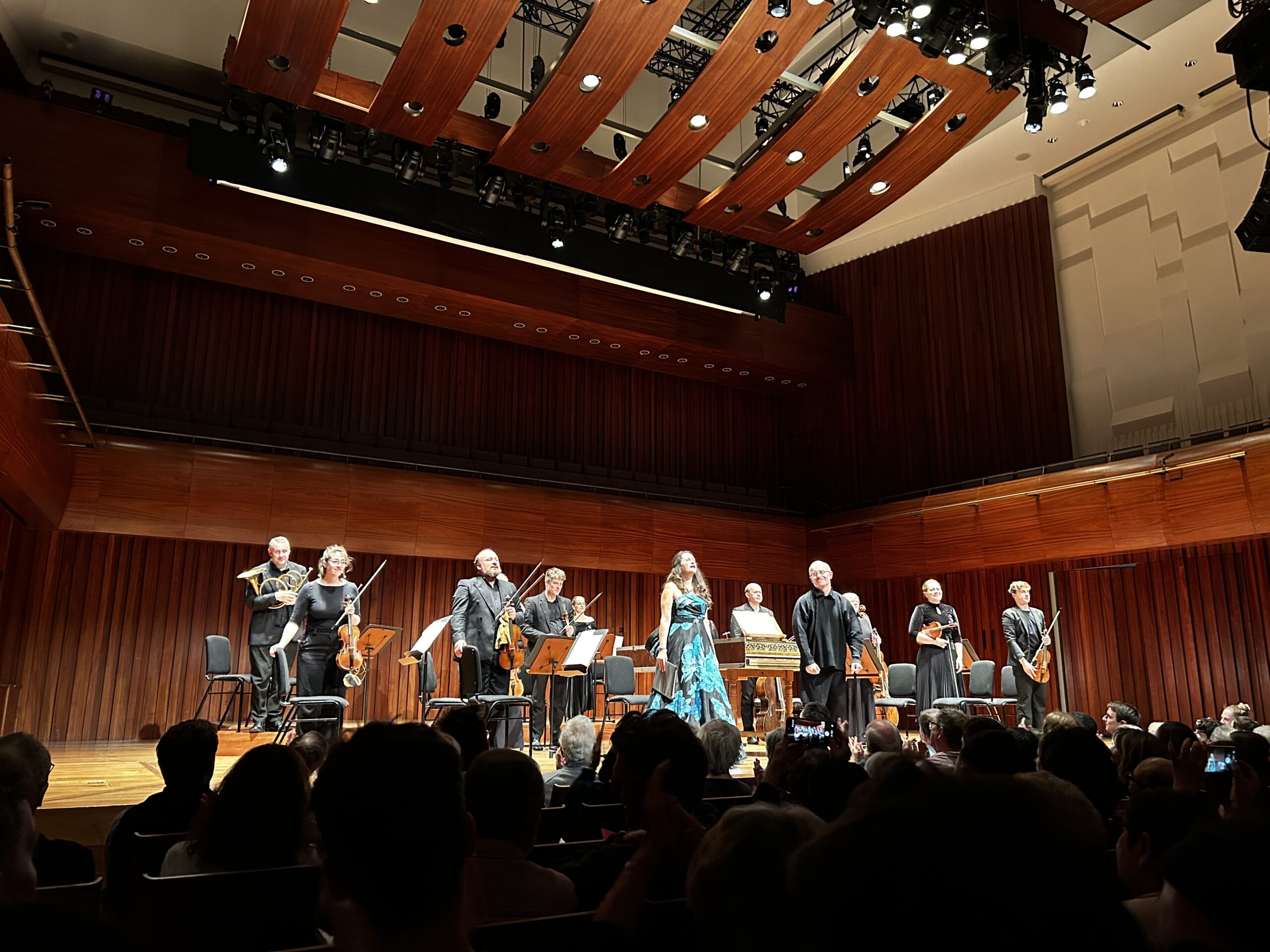
Pianist Boris Giltburg’s King’s Lynn Minster concert was the big draw for the second week of the North Norfolk town’s Festival. Giltburg performed a bold programme that made all manner of demands of the performer, combining Bach arranged by Busoni, with Ravel’s Gaspard de la nuit, Liszt’s B minor Sonata, and a selection of Rachmaninov Preludes. The pianist’s ever-reliable ability to summon the orchestral-scope sound demanded by Busoni, and extreme dynamic contrasts in Ravel’s intense three-movement response to grief, played to the scale of the interior and our perception of space. The Rachmaninov Preludes saw the same technique deployed in more concise expressions, music more immediate in language but frustratingly limited in length. Conscientious, tenacious, and thorough throughout, Giltburg didn’t flinch from his responsibilities. Giltburg bowed with a fixed grin and sweat rolling down his face.

Enthusiastic, appreciative applause from the committed crowd, though there was a sense that not everyone quite appreciated what they’d been exposed to — and a harder question of whether they’d been given much help. This was, nominally, the Fermoy memorial concert, the Festival’s annual nod to the woman who founded it. You wouldn’t have known it. No word from the stage, nothing in the printed note beyond the credit line, nothing to mark the occasion as anything other than another date in the fortnight. The interval offered the kind of catering you’d expect from a music society’s evening out, not a festival marking its founder’s memory in its 75th year. There was no obvious sense that partnerships with businesses like the very good Bank House Hotel or The Wenns across the road, had been galvanised to to create an occasion – an easy way to create an occasion. No reason for anyone in the room to feel they’d been given more than a very good concert by a very good pianist. Which, ultimately, is what it was. For an occasion built to honour its founder’s motto “nothing but the best,” that felt like, if not an own goal, then a missed opportunity.

Conversely, the next night across the road in the historic Town Hall where unreserved seating saw the capacity audience in their seats nearly 15 minutes ahead of the start of old favourite, and master of wry self-deprecation and shameless self-promotion, guitarist Craig Ogden. The Australian guitarist explained as much about the workings of the guitar as he did about his various appearances in film and on the radio, and there was a point, somewhere past the third such digression, where the talking risked being more than the playing. The opportunity for an implicit musical narrative was jettisoned as a result. Dyens’s Fuoco closed the first half with a more modern-feeling rock-infused feel which saw feet tapping and heads nodding, though this wasn’t, we subsequently learned, quite as difficult to play as what we heard might have led us to believe.

Ogden is evidently a sound box office draw for the King’s Lynn audience, reflected in the return visits he’s made to the fortnight-long Festival over the years. But whilst this approach to programming likely explains the Festival’s confidence in securing 50% of its income from ticket sales, the lack of anyone in the audience younger than 60 — not including invited guests — hints at complacency and, more seriously, points to a problem that isn’t going away: how to develop a new audience. The diagnosis has been made — it’s evident in the Festival’s own publicly available annual report — but it’s hard to escape the sense that the solution feels like too big a challenge to attempt for some.
Festival Manager Ben Horden’s own writing gets closer to naming the problem and the opportunities than the Festival’s official messaging does. In a piece for Interlude marking the Festival’s 75th year, he writes with real clarity and erudition about the challenges facing it — the kind of self-awareness an institution needs if it’s going to change. There’s a sense, however, that the distance between what Horden can see and what the Festival, as an institution, is prepared to do is wider than it needs to be. Enthusiastic smiles and firm handshakes from management are matched by the seamless switching of responsibilities Horden himself is called upon to execute — front of house manager, stage manager, communications manager, guest liaison, all in one person, and all done swiftly and well. He conducts the Festival Chorus besides, and maintains a burgeoning professional career in nearby Cambridge. If there is a star of the Festival, and a rising star in music management, it is Horden. It seems obvious he is going to crop up somewhere running something very big someday soon.

There is undoubted and irrefutable polish in the execution of every concert, then. Warm welcomes from stewards on the doors do much to compensate for the lack of visibility the Festival suffers from across the town.A fortnight-long festival in a town built around a river ought to have some outdoor presence, some point at which the town itself feels claimed for the occasion — a stage on the quay, banners beyond the venue fronts, something for the person walking past who isn’t already holding a ticket. Instead the riverside sat stark and unclaimed, exactly as it does the rest of the year, and the Festival’s presence in King’s Lynn amounted to little more than the sum of its individual venues. You could walk from one concert to the next without any sense that a town of this size was celebrating 75 years of a cultural achievement. At the 75th Aldeburgh Festival, the celebratory atmosphere was inescapable. And rightly so. In King’s Lynn, there’s no clear sense of the event going on in real life, and no updates on social media bar one event during it.
In this way, Horden is likely what King’s Lynn Festival needs most right now — someone to see it through transition and finally settle the audience-development question it’s faced since the pandemic. The board leans heavily on continuity: four of its nine directors have served ten years or more, two of them since 2010, and one since the Festival’s incorporation in 1997. Recruits have joined in the past two years, but the wider board’s collective experience runs to planning, museum management, and civic voluntary work rather than running arts organisations, fundraising, or audience development. Only Artistic Director Ambrose Miller, who has steered the Festival’s programming for two decades, brings artistic experience. What the Festival needs is bold vision and good governance to create the right environment for innovative thinking in the form of not simply recognisable names, but genuinely new talent on the scene. Alongside that, it needs stability: Horden’s own recruitment followed an acrimonious split with his predecessor, co-artistic director Anna Pool, in 2025. Audience development takes time. Innovation takes a robust kind of trust. The latter is a precondition for the former, and right now, time is the one thing in shortest supply.
The stakes are high too. King’s Lynn Festival celebrates its 75th anniversary this year, though you wouldn’t necessarily know it from the brochure or the programme notes, high quality as they are. Founded by Ruth Fermoy, the Festival’s heritage leans heavily on the connections she was able to leverage — Barbirolli, Ferrier, and Menuhin were mainstays — but it’s not obvious the present-day Festival is making much of those roots in its anniversary year. The Fermoys’ philanthropy reached well beyond the concert hall: Ruth Fermoy was instrumental in establishing a psychiatric unit at the local hospital, part of a wider civic vision in which culture and wellbeing were never really separate causes. That legacy is still visible in the many references to the name dotted around the town — yet memory of her connection to the Festival she founded is submerged in a page on the website and this year’s memorial concert. Little reference was made to her on the night. No opportunity was seized to honour the progressive, well-connected woman who not only launched the first Festival but helped galvanise the case for restoring the Guildhall itself, still less to draw a line between what she believed music and civic life could do for a town.
If the brochure hints at a wavering civic role — Norfolk County Council’s £4,765 grant must surely be in question following Reform’s recent local election gains — the Guildhall refurbishment two streets away appears to have embraced its identity. Artists’ impressions of what the five-hundred-year-old interior will look like are striking; so is the scale of the funding behind them: £10.1m from government, a further £720K promised by Historic England, against a total project cost put at £30.5m as of January 2026. Not every councillor is convinced — one, Alun Ryves, has publicly dismissed the scheme as a “road to doom” and “daft” — but the ambition itself is unmistakable, and unmistakably larger than anything the Festival currently demonstrates. Popular is available everywhere. Specialist is where reputations are built, heritage honoured, and places truly put on the map.
When the Guildhall reopens in 2028, the Festival will have a rare thing: a second chance to be what Fermoy built it to be. Whether it takes that chance depends less on the building than on whether the Festival can first rebuild the kind of relationship with it — and with its own founding purpose — that it has historically struggled to sustain. Fermoy’s founding motto was “nothing but the best.” Seventy-five years on, it’s fair to ask what that would actually look like now.