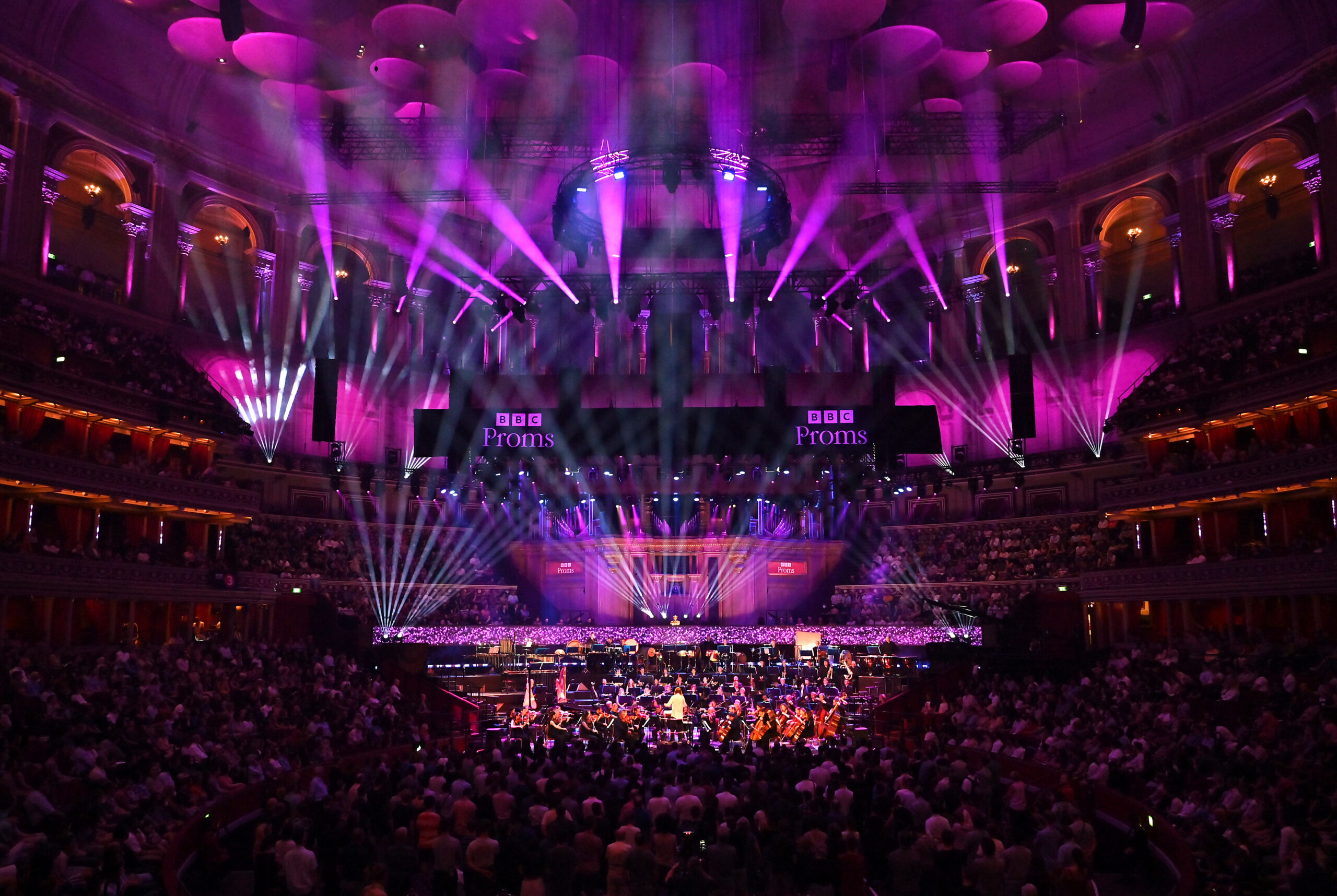

Roll up. Roll up. A summer of superlatives awaits.
A big old summer stretches ahead of us now the BBC Proms for 2026 has been revealed. 86 events form the season at the Royal Albert Hall (and across most of the UK), a mix of international soloists and orchestras and UK performers convening in a series of concerts that feature well-known repertoire, spotlight some new work, and celebrate some composer anniversaries. For those that feel a bit queasy about the seemingly impenetrable, there are a handful of entertainment events. Everyone’s included. No one need feel left out. A necessary if slightly awkward nod to 250 years since American independence, sees British orchestras play American scores, and a few US orchestras swing by London, including The Met and the LA Phil. This summer-long front door open wide on the British classical music scene, unapologetically knows what it is and what it won’t be. And those who know look on knowingly on the direction of travel the Proms has committed to taking in the future.
The BBC Proms opens and closes in its now customary celebratory style with Ravel performed by pianist Yunchan Lim on the first night. Yuja Wang steps onto the stage for the Last Night, her billing now making sense of why BBC interviewer Norman Lebrecht’s ill-judged email bemoaning the pianist’s withdrawal from his interview, made public by her, resulted in his cancellation. It was either Lebrecht or Wang who had to go. The pianist won the battle and arguably the war.
10 proms to book in 2026
A world premiere, two Mahler symphonies, Argerich with the Berlin Phil, and seven more bookings from the 2026 season.
In terms of music this year, there’s little that will upset the apple cart. At the time of writing, a full line of sight of each programme running order wasn’t available — the BBC Proms is the only classical festival to hold back granular programme detail until the day of publication, which makes writing about it as annoying as the strategy is canny.
Commercially-minded programmes likely curated within an inch of their lives act as a malleable spine running through the season, with core repertoire that anchors newcomers and the casual listener.
Expect symphonies by Beethoven, Tchaikovsky, Brahms and Schumann, and concertos from Sibelius, Bruch, Beethoven, and Berg. Additionally, standard choral fare as you’d expect. Bach’s B Minor Mass, Berlioz’ Requiem, and Haydn’s Nelson Mass will warm the heart and see those with available credit reach for their credit cards. Glyndebourne makes its regular appearance this year with Strauss’ Ariadne auf Naxos. That’s arguably as challenging as it gets. Lots of confident box office billings that will likely appeal to the largest possible audience.
Bolder and more substantial performances are found in Les Siecles concert performance of Berlioz’ La damnation de Faust. Weber’s final opera Oberon performed in its 200th anniversary year from Sir Mark Elder, the Monteverdi Choir could be notable. The 100th anniversary composer celebrations are modest, pickings distinctly slim for fans of György Kurtág, who features in three events, and Hans Werner Henze Erlkönig which features in one, safely scheduled late in the season. Top tip, if you’re looking for edge, grit and challenge, you’ll need to look elsewhere.
SAM JACKSON on Thoroughly GOOD PODCAST
BBC Proms Director and Radio 3 Controller Sam Jackson on audiences, strategy, and credibility. What’s driving Radio 3’s new sound, and are recent listening figures been spun or are they actually improving?
How does he perform his role as a cultural leader amid a Corporation challenged by funding, budget cuts, and future monetisation plans?
Visiting orchestras offer excitement, including the return of the Los Angeles Philharmonic with Gustavo Dudamel, the debut of the Mahler Academy Orchestra, the Berlin Philharmonic, Munich Philharmonic, and Freiburg Baroque Orchestra. Munich is scheduled to appear with pianist Martha Argerich for Beethoven’s second piano concerto. Get your bets placed now for there being a change of soloist for that one once the season is underway.
Marmite clarinetist Martin Fröst’s Sunday morning concert will no doubt have some earnest choreography in it of some kind, but its world premiere of Jacob Mühlrad’s Helix, the UK premiere of Hans Ek’s DNA Suite, and Göran and Martin Fröst’s Nomadic Dances will make this a must-attend, if not for the soloist’s circular breathing. Arguably the biggest pull in the international line-up is the Oslo Philharmonic with Mirga Gražinytė‑Tyla with a programme of Øyvind Torvund’s Symphonic Poem No. 1: Forest Morning, Stravinsky’s Violin Concerto performed by Patricia Kopatchinskaja and Prokofiev’s Romeo and Juliet Suite.
Long in the tooth attendees will roll their eyes at the ever-increasing number of ‘cross-genre’ events, ie entertainment programmes. Prog Rock, a Paul Simon Graceland, Marvin Gaye, and Miles Davis tribute all continue the trend established a few years ago where a popular genre on stage at the Royal Albert Hall gives Proms attendance a boost, so too viewing figures. They’re always fun and always deployed way too early in the schedule, making their appearance an apology for the more serious stuff. The more there are of these events, the fewer slots there are for riskier classical programmes, which is where challenge and discovery were previously found. Maybe that’s the point.
The other side of the same coin sees 50 years since the death of Benjamin Britten marked with safe repertoire – the Cello Symphony, Violin Concerto, Les Illuminations and Young Person’s Guide. All the greats, none of the weighty.
There is then a sense that the widening of what the Proms is and how it’s experienced by people beyond classical music is perhaps more important to the BBC than the Festival that Wood and Newman originated and the Corporation eventually took over. Whether that’s reflecting a shift in public taste or the BBC narrowing scope in order to make the Proms more appealing to the widest possible audience is reflected in how people see the BBC still adhering to its public service principles or moving relentlessly to the inevitable, more commercial future it will have to embrace. Its TV broadcast line-up is where the answers lie as to how the Corporation wants classical to be seen and the Proms to be thought of. Twenty four concerts will be available on iPlayer, weighted heavily to the pleasant, the legible and the reliable. Strap in for concerts dedicated to Bond film music, Disney, plus the inevitable Radio 3 Unwind Ultimate Calm Late-Night Prom. I can think of one broadsheet classical music journalist who won’t ask for a press ticket for that one.
What the TV broadcasts and the safe programming underline is how the BBC has committed to positioning the Proms as a popular gateway to the wider scene. Specialist and niche is to be found in those festivals across the UK that remain committed to reflecting (and can probably mount more realistically) the less familiar and the more challenging. That’s not in itself a problem, though the question remains whether there is still a need for the Proms to reflect at least some of the content that would be deemed off the beaten track, if only to satisfy those who are in search of it. Yes, Steve Reich’s Music for 18 Musicians is a no-brainer for the composer’s 90th birthday. It’s also interesting to give that opportunity to the Paraorchestra to perform it. This is where the intersection of broadcast and recent developments in the UK classical music scene may give the Proms its edge – demonstrating access by advocating music for all.
Relevance drives the season choices, because relevance is more likely to protect against swingeing cuts. Earlier this week, the BBC announced needing to cut £500m – an announcement which took staff by surprise. The messaging used by interim DG Rhodri Talfan Davies probably didn’t help calm the nerves. Its already possible to see how the Proms has responded to ongoing cuts in budget the Corporation has had to make in recent years. That is reflected in the ongoing emphasis on commercially-minded programmes, designed, if not in part, then in whole, to serve broadcast more than the audience. A summer of polished overused superlatives awaits.
The BBC Proms 2026 starts on Friday 17 July. Every concert is available via BBC Sounds. Some are televised. Tickets go on sale on Saturday 16 May 2026.