
Excerpts from Sandbrook and Phibbs’ new opera Mrs T: The Iron Lady Sings will be performed at King’s Place in June. It’s an ambitious creative challenge too.
An opera about Margaret Thatcher is a tall order before a single note is sung. Mrs T: The Iron Lady Sings goes on sale later this week, with forty-five minutes of workshopped material previewed at Kings Place in June. It’s a serious creative test.
The opera – Mrs T: The Iron Lady Sings – documents a turbulent decade in the life of the country, during which the first woman prime minister, Margaret Thatcher, oversaw radical change and kept countless journalists and subsequent historians busy at their typewriters, word processors and keyboards. Few reflect on the 1980s with overt warmth and nostalgia, so expectations are high that historian Dominic Sandbrook’s libretto won’t only portray Thatcher, but honour a wide range of political views. A tough ask.
The production sees mezzo-soprano Lucy Schaufer in the lead role of Thatcher, with Marcus Farnsworth playing Geoffrey Howe, Robert Forrest as Michael Heseltine, and Mark Stone as Ronald Reagan.

It’s an ambitious challenge – one which will succeed or fail depending on the editorial nerve of its creative team. Mrs T is billed as an opera. A few weeks ago, no one seemed clear whether it was opera or music theatre. It’s also described as a work that will raise ‘urgent questions’ about what it means to ‘stand up for what you believe in’. Mrs T has been identified by its creative team as being a work in the tradition of Adams’ Nixon in China. Ambition or a hostage to fortune? Regardless, right-leaning Thatcher fans will be reassured enough to part with their disposable income and will presumably demand a sympathetic portrayal. Anyone on the other side of the political spectrum, anyone left in the former coal mining communities, or indeed anyone mindful of the devastating effect Section 28 had on their identity and lives, will be a good deal more sceptical.
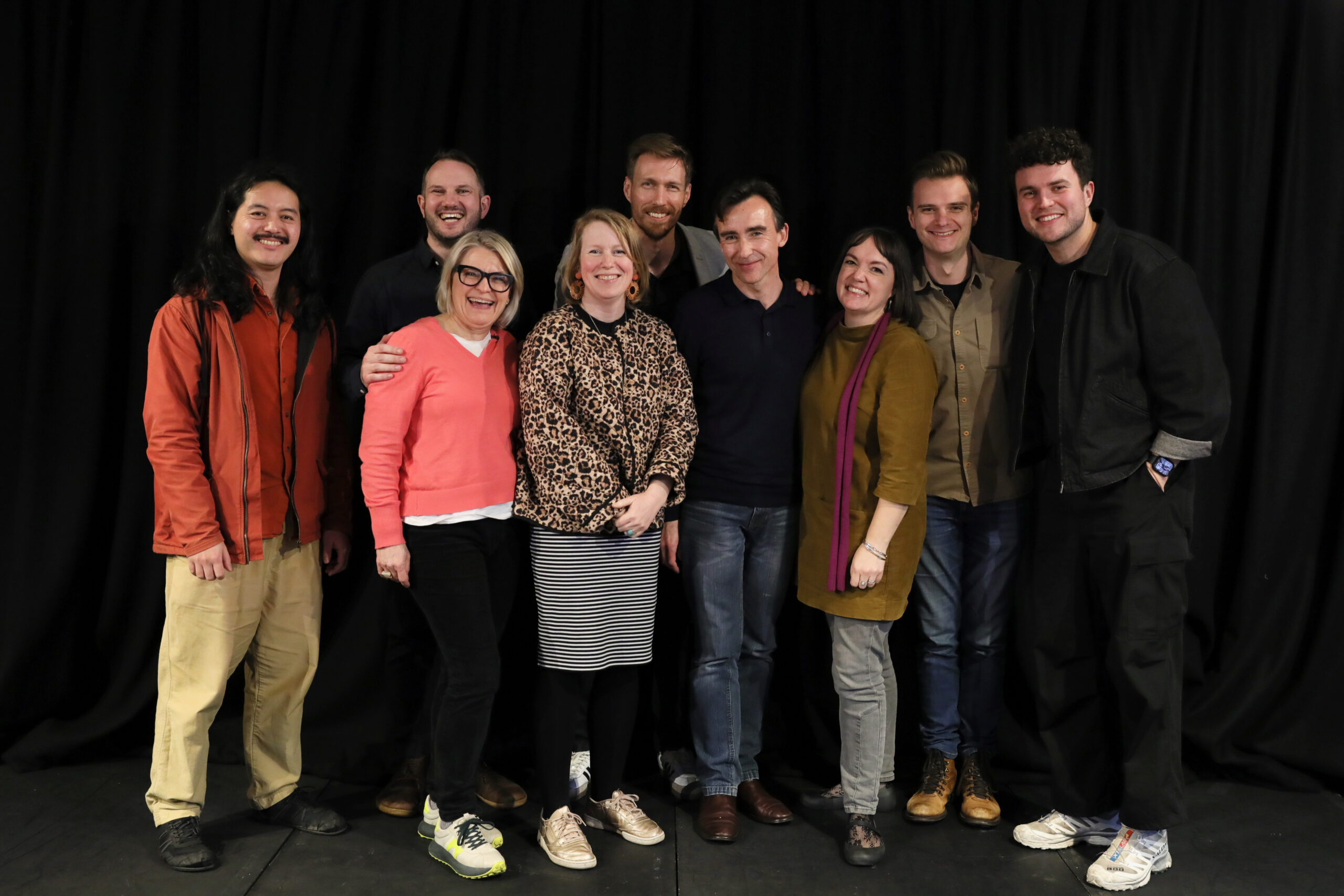
Excerpts of the work were presented at a fundraiser a few weeks ago in central London. Joseph Phibbs’ score is authentically Phibbs – a distinctive, solid sound that dabbles with various 80s influences.

Sandbrook’s angle is a little more difficult to pinpoint. Those who remember the 80s as the decade when communities were decimated as brutally as families’ livelihoods, and as heated, if not violent protest necessary, would undoubtedly have given the sympathetic portrayal of Thatcher short shrift. One wonders how Northern Ireland and the Brighton bomb will fit into the score too. Divisive as she undoubtedly remains long after her death, the burden is on Sandbrook to create a libretto that represents a balanced debate. Anything less could easily see the work dismissed as a Tory love-in. Do the creative team have something up their sleeve? Are they holding something back? Sandbrook turned out to be double-booked for the fundraiser, though he did share a pre-recorded message for the assembled crowd.
Amongst the excerpts shared, there’s a poignant aria for Thatcher herself — and the work needs more like it. For Mrs T to land as opera rather than political pageant, Schaufer’s Thatcher has to carry interior weight, not just iconography. The aria suggests the writing is reaching for that.
Ultimately though, Geoffrey Howe is the more interesting character. Thatcher’s longest serving Cabinet minister, those of a certain age (and arguably the opera’s target audience) will remember only too well Howe’s resignation and his subsequent textbook roasting of his former boss in the House of Commons. Pivotal. Nail-biting. Jaw-dropping stuff. For some, Howe is the hero. How that moment, the lead up to it and after it is played, will make or break this work. It’s Howe’s show, not Thatcher’s in that respect. All of that depends on which side of the political spectrum you’re on. Beware the sycophants, they’ve likely forgotten about the Poll Tax riots.
Marcus Farnsworth is strong in his depiction – not imitative so much as characterful and convincing, also crystal clear in his delivery. Ideally, he needs to not be quite so transparent how recently he discovered who Howe was – credibility is everything for this risky creative statement to land. That said, based on the fundraiser, Telegraph readers will adore it, so too the angrier Spectator subscribers who consider the country’s decline began the day she was ousted.
Ultimately, Mrs T will succeed if it captures the complexity of a divided nation in iconic moments from the 1980s, not least what some of us felt the moment we saw Thatcher leave No. 10 for the last time. Quite the challenge for librettist, composer and cast.
Tickets for the 12 June preview at Kings Place are available from 1 May 2026 at 12PM BST.