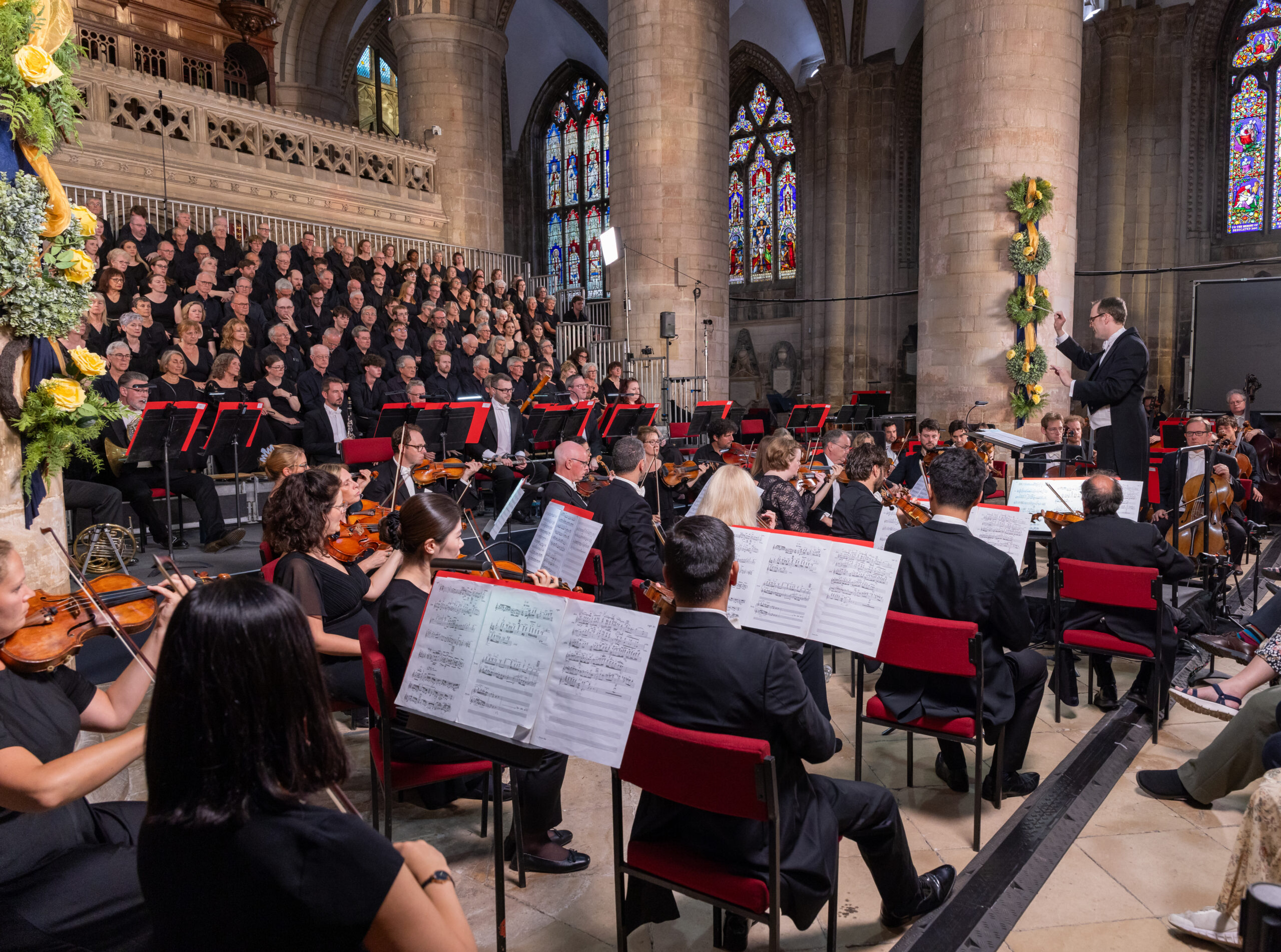
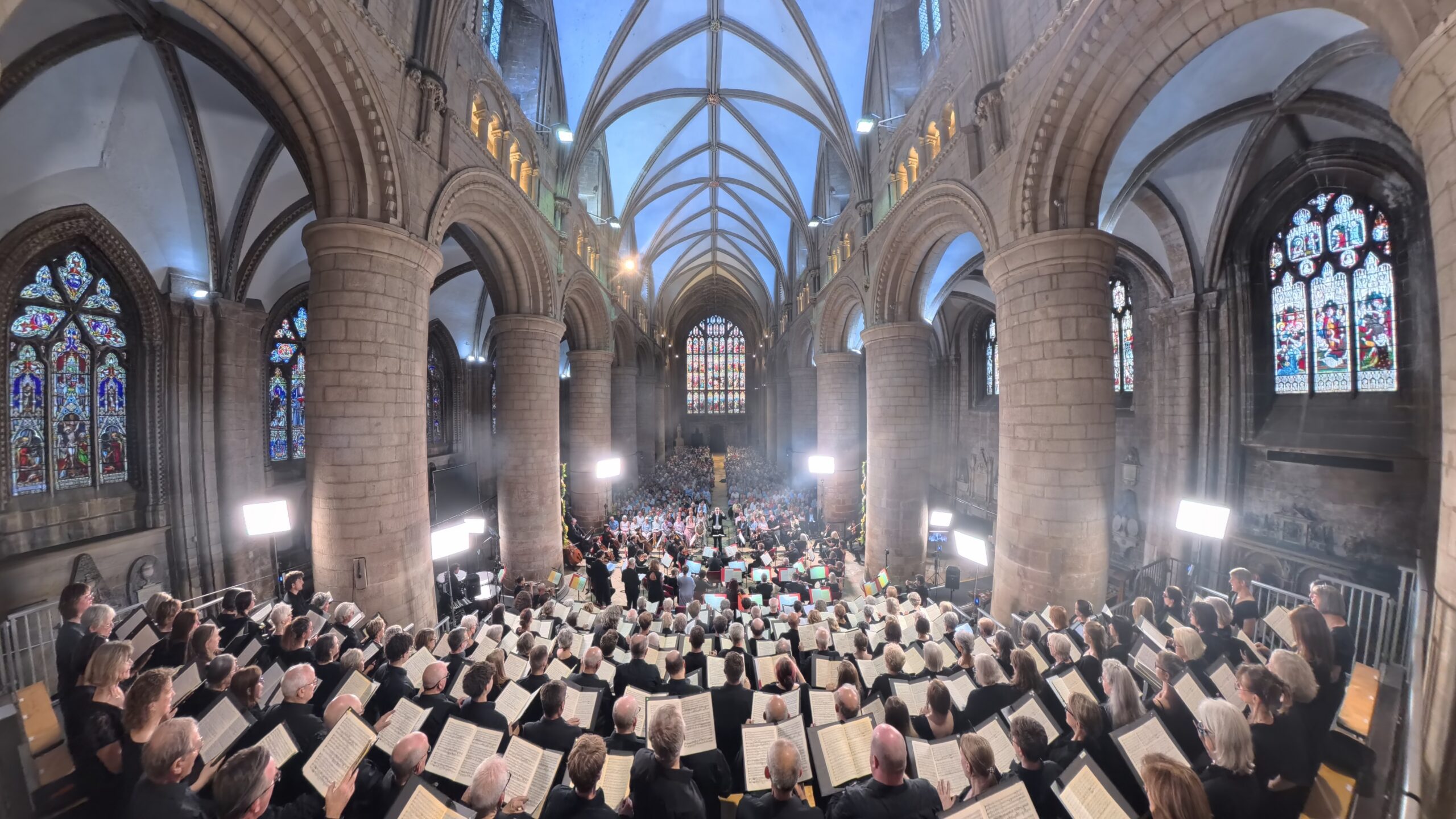
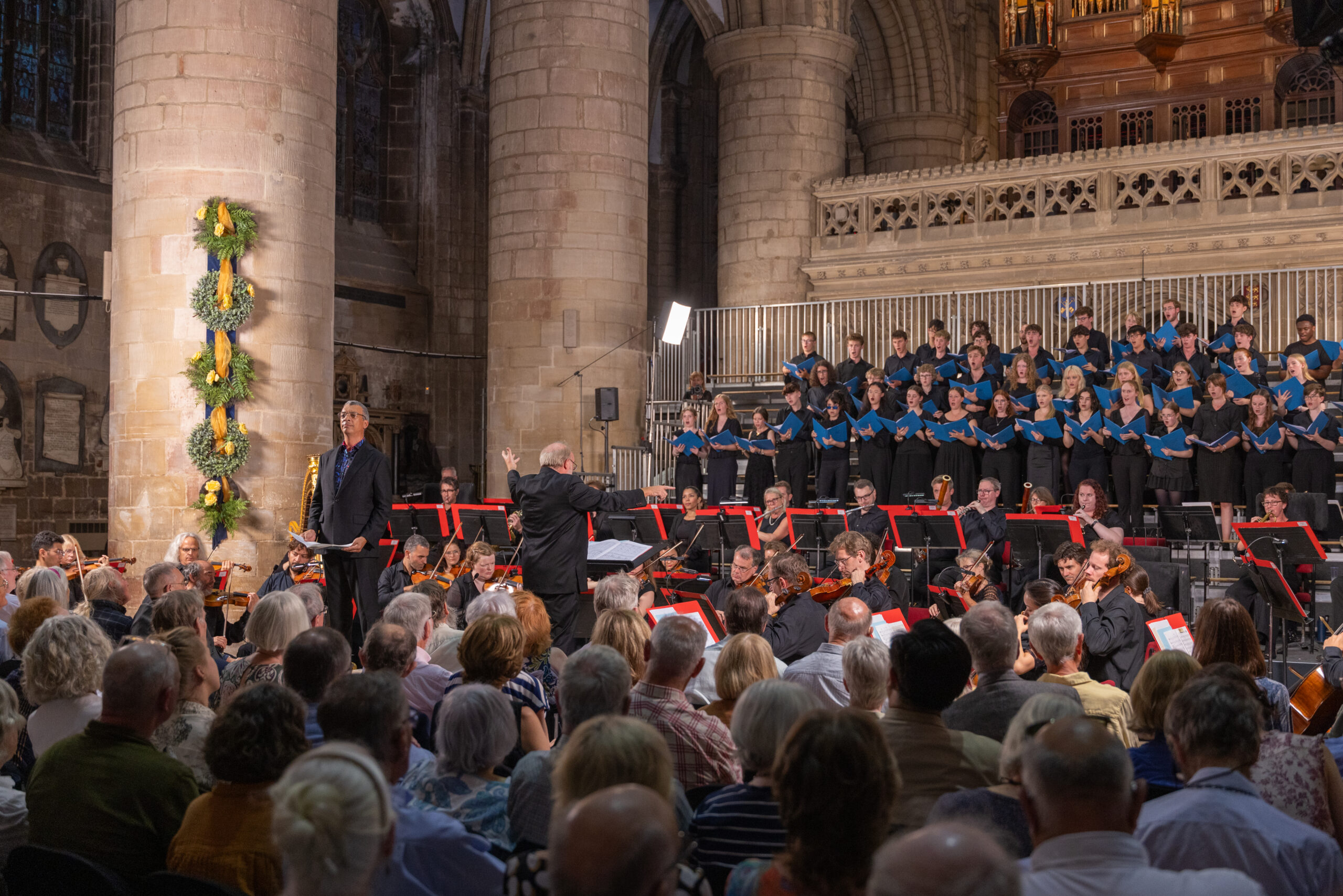
Alina Ibragimova plays Mendelssohn’s Violin Concerto with the BBC National Orchestra of Wales under Elena Schwarz — alongside Dvořák’s Seventh Symphony.
Programme
Zimmermann Märchen-Suite (Fairy-Tale Suite)
Mendelssohn Violin Concerto in E minor
Dvořák Symphony No. 7 in D minor
Alina Ibragimova (violin)
BBC National Orchestra of Wales
Conductor: Elena Schwarz
Tuesday 4 August 2026 · 7pm–c9.05pm
Royal Albert Hall
Listen on BBC Radio 3 / BBC Sounds
Preview
Mendelssohn’s Violin Concerto is a staple of the repertoire. A reliable crowd pleaser. Entertaining and virtuosic — though not as demanding as the concertos that followed — it’s decorative if a little light. It’s a reliable old thing that doesn’t scare the horses, which is why it, like Vaughan Williams’s The Lark Ascending, often features high up in lists of favourite — or indeed overplayed — works.
In the hands of violinist Alina Ibragimova we can expect some fireworks. Be sure to listen to her 2012 recording of the work with the Orchestra of the Age of Enlightenment — the last movement is deliciously brisk. The bar was set high a few years back when Isabelle Faust appeared at the Proms with the Freiburg Baroque Orchestra in the same work — gritty, edgy, and raw, it gave a piece that had reached near-wallpaper status a new lease of life.
Review
Zimmerman’s Fairy-Tale Suite opened with interesting material, though attention waned early in the 19 minutes of what is largely light music, even in those moments late on when the keys were dark and the punctuation from the brass gruff and threatening. No real surprise materially. Zimmerman works for where the Proms is positioning itself right now – light, descriptive but, after a while, inconsequential, borderline dull – given his profile. The German composer, older than the generation that came to define the avant-garde in the early 1950s, found himself outside that scene even as his own music pursued its own uncompromising path. In doing so it feels as though he found himself between a rock and a hard place.

It was likely the Zimmerman where the playing was the most disciplined. Alina Ibragimova’s Mendelssohn Violin Concerto led with raw exuberance in the first movement with her characteristic warm sweet all-embracing tone in the second. The imperceptible pianissimo at the conclusion of the second prompted an unexpected moment of stillness. The third movement was, oddly, unbridled here, raggedy there – not quite sure what happened in the first few bars after the brass calls but the absence of the solo line was unsettling. Some in the ensemble behind her sounded a little taken aback either by her ambitious plans, or conductor Elena Schwarz letting the agreed plan slip. Where the woodwind underpinned the soloist’s own line, the lack of cohesion was hard to miss. There was a sense that this, like other concerts this season, might hint at where BBC budget cuts are being felt most keenly: rehearsals. The narrative worked simply because it felt hard-earned, raw, and real. But the question lingers after the final chord: are most on the stage simply thinking ‘this will do’?
There were as many good moments in the string playing, as there were ‘moments’ in the wider ensemble, during Dvorak’s Symphony No. 7. Sound, entertaining, and largely serviceable. The more reliable and reassuring moments were found in the final movement where the ensemble had found its lead, and the resulting rubatos had a human quality. Whilst lower-range strings resonated, things felt a little splashy in the upper registers. We screeched and screamed as we approached the coda, the final chord feeling a little like we’d made it to a service station before the final drop of fuel had been spent.
Gallery