In a week of unrest in a Norfolk town, a fiftieth-anniversary memory, and the difference between reaching for reconciliation and being ready for it.
ASYLUM SEEKERS have been removed by police from their homes in Thetford for their own safety in light of protest, unrest, and threatening behaviour this past week.
That the unrest in the Norfolk town has received the coverage it has is sadly unsurprising and highlights the still unresolved problem new Prime Minister Andy Burnham will need to tackle on his return from holiday.
Hearing about the town nearest to where I grew up — the one I spent a high percentage of my waking hours in for one reason or another up until the age of 24 — on news bulletins the past few days has been unsettling.
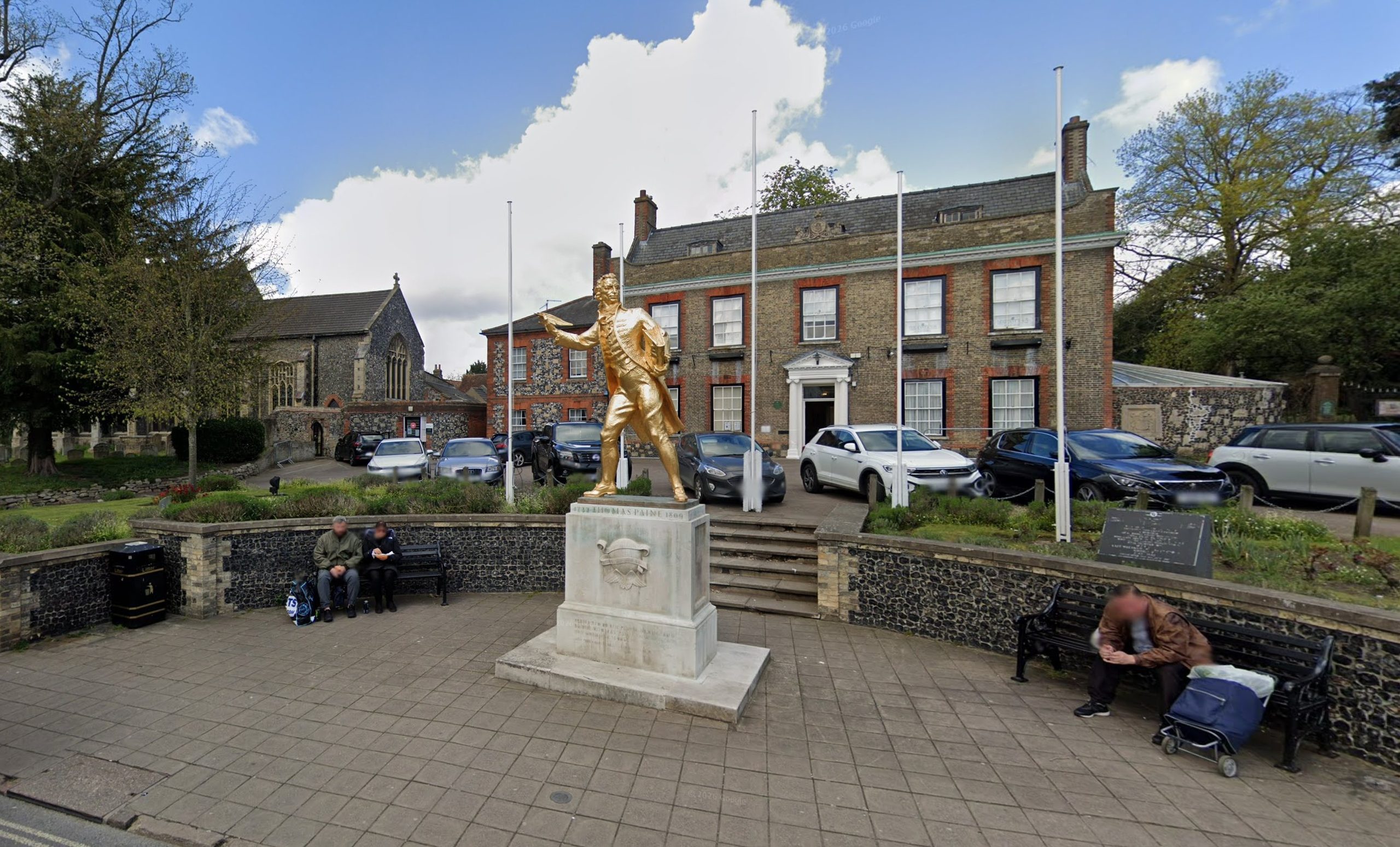
Up until this point, the Town Council’s attempts to put Thetford on the map extended to begging up its connection with the BBC sitcom Dad’s Army. Yet, the town’s greatest export, recognised in a bronze statue unveiled in 1964, was Thomas Paine. Born and educated in the town, Paine, writing in 1791, advocated for the universal rights of man separate from state, nation, or religion in the Rights of Man. Seeming hero now, perhaps not always. The commission was opposed back in the day, including one councillor who resigned over the proposed tribute to a Thetfordian who, in life, had been disowned for his attacks on monarchy, then on Christianity.

This week Thetford features on radio bulletins because of unrest and a police officer being bitten. On Facebook, videos of teenagers wander around aimlessly outside the police station. The right to protest has been defended, but the unrest condemned. Hearing road names read out on-air triggers unexpected memories of a time in my life when I felt an overriding motivation to get away. It also reminds me how in recent months I’ve found exploring my own past a matter of diminishing returns.
One of the first jobs saw me stage managing concerts for an out-of-town orchestra that had as its honorary conductor, Yehudi Menuhin. It was the Yehudi connection that led us to Dresden for the 50th anniversary of the end of the Second World War, where after a silent torchlit procession through the centre of the city by its residents, the English Symphony Orchestra and a local chorus gave a performance of Mozart’s Requiem. Earlier in the day, I’d passed events in the centre of the city in which TV journalists presented news broadcasts from this monumental event, amongst them the late BBC anchor Edward Stourton who died last month.
More than the seeming weirdness of being called upon to set up the dressing room of a musician I knew to date as a celebrity figure, and collect his score to put on the podium before the concert, my overriding recollection of those two days was the poignancy. It seemed both disconcerting and utterly appropriate that people representing a country that bombed a city played a pivotal role in a symbolic act that unified the city’s residents. We were honouring something that few of us had first hand experience of. This felt like a kind of duty. A responsibility to one another and to previous generations, alive or dead.

This was very much Menuhin, the concert a kind of throwback to the act of passing through concentration camps after the end of the war with composer Benjamin Britten — a symbolic gesture of healing. Bernstein did the same at the Berlin Wall in 1989. Music used in response to political upheaval. Not so much programmatic to commemorate, but an act with an eye on what the future might be like in response.
Britten did this again, deliberately, at Coventry in 1962 — the War Requiem, commissioned for the consecration of the new cathedral built beside the bombed ruin of the old one.
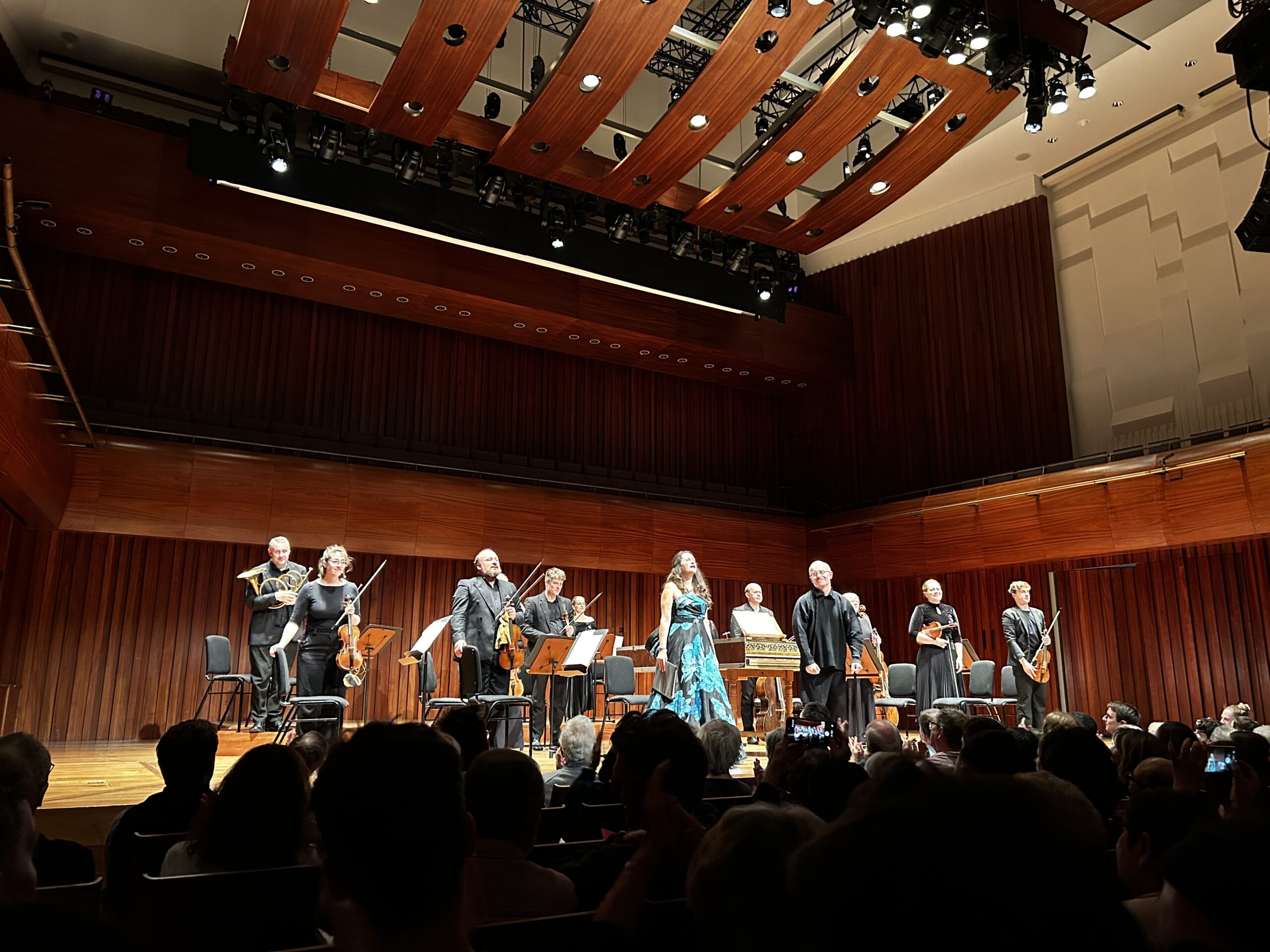
But Britten also wrote a work that is perhaps where we are at the moment in this story. Peter Grimes isn’t reconciliation but diagnosis. It’s the Borough closing ranks against a man it’s decided doesn’t belong. There’s not let up and no healing either. The recent revival at Royal Opera House was particularly arresting. The final scene a little too close to the bone.

It leaves me wondering: what is the similar act necessary now? Not specifically in response to Thetford, rather the collection of Thetfords. What is the musical response that reflects this aspect of society and goes some way to bring people together. Can there be? Beethoven 9 seems the obvious choice, though the poignancy depends on that collective need — or ache — for reconciliation or hope. Who is the present-day musician (Barenboim has stepped back due to ill-health in recent years) daring enough to even speak it? In the stampede to ‘break down barriers’ and ‘build new audiences’ one of music’s most potent effects is being crowded out – its ability to bring about a moment of collective reflection.
Every symbolic act of reconciliation was a reflection not a trigger for it. Coventry Cathedral had been rebuilt for twenty-two years before the War Requiem was possible. Dresden’s commemoration was on the fiftieth anniversary, not its first. Bernstein conducting Beethoven at the Berlin Wall happened after it had fallen, not before.
We’re in the middle of Peter Grimes. And I’m rushing for the point where we’re reconciled.