A ten-year plan, not a slogan: Music@Malling’s Thomas Kemp on why ‘growth in every postcode’ needs the arts to be treated as infrastructure.
With a new Prime Minister, the political mood music has changed from one based on ambitious house-building targets to “growth in every postcode.” This chimes with Arts Council England Strategic Framework – a reaction to the Independent Review led by Baroness Margaret Hodge – which aims to: “support excellence, deliver for everybody and reach everywhere.” These idealistic statements combined have the potential to be transformative, with the arts catalysing growth across the country. But how do we get the arts into every postcode, deliver for everybody, reach everywhere and create growth? How do we ensure that the sector is not overlooked when its potential to stimulate growth is manifest?
The figures are encouraging. Over the last five years, the creative sector grew by 23% – growing at 4.6% a year – four times more than the economy at large; employing 2.4 million people; adding over £247 billion to the economy each year, with £1 of investment adding £7 to GDP. The creative industries also increase wellbeing and positivity – the optimism needed to catalyse growth and innovation.
Yet funding for the arts has been reduced by millions of pounds and compounded by the cost of living crisis; many arts organisations are struggling. There is a gulf between the rhetoric and reality.
One of the primary issues is austerity and the drab mindset this has created in the public and private sector. Austerity kills innovation and risk-taking. It has created an environment where you play it safe and find reasons not to do things. This needs to be dead and buried if growth and a flourishing of the arts are to be realised. Austerity has become a national state of mind: a doom loop that kills growth, aspiration and creativity; it is the Vantablack of economics.

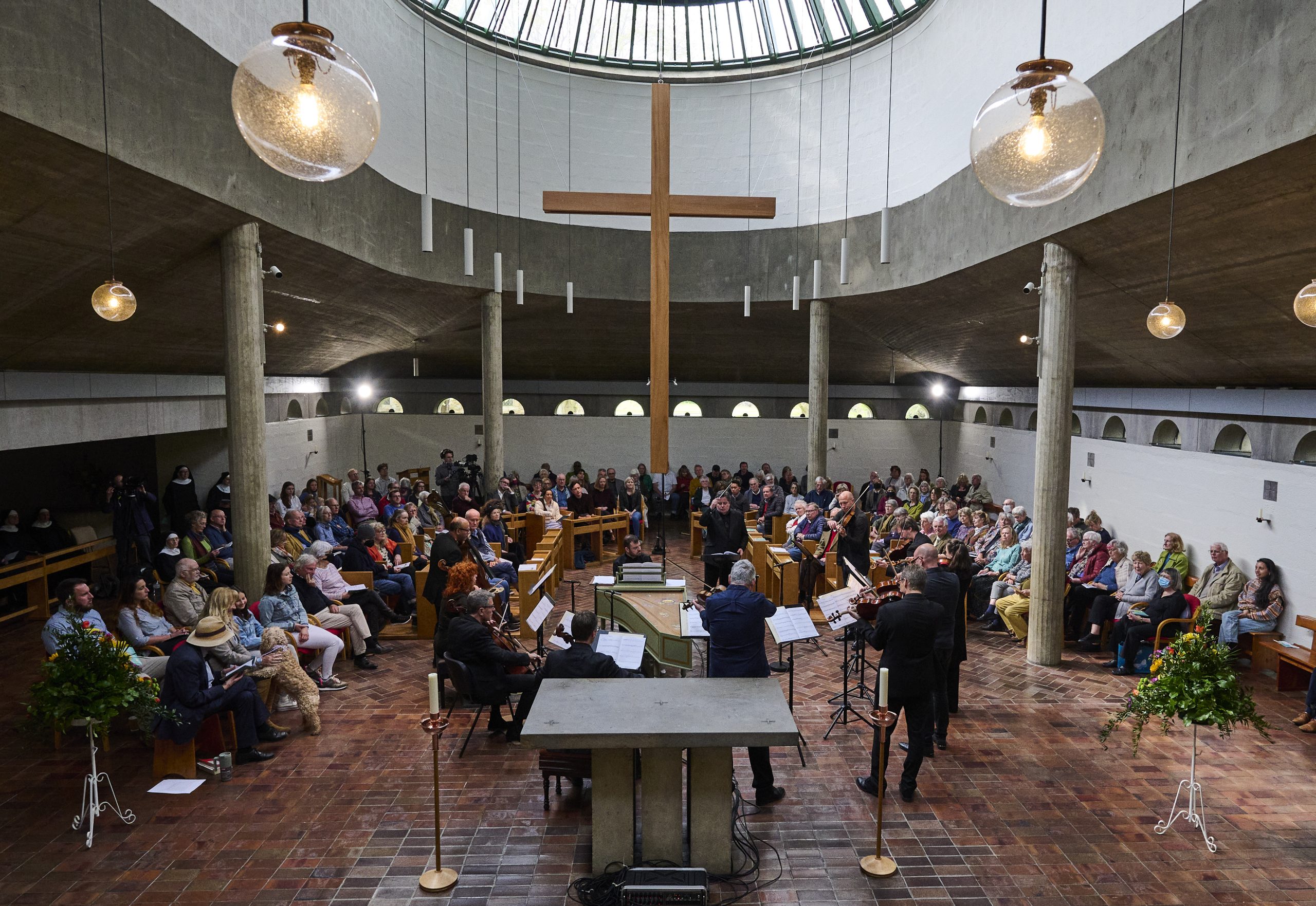
I run Music@Malling – an organisation that brings outstanding musicians into the heart of the community with concerts and outreach in and around West Malling, Kent. Founded in 2011, I built the organisation from scratch: creating new audiences and outreach participation from nothing. I have learned a lot from setting up and running Music@Malling. Perhaps the most important lesson is to plan ahead. This is very difficult to do as funding tends to be project by project. But having a long-term plan attracts multi-year funding, private and public sponsorship and gives you the air of permanence needed to gain the confidence of funders and supporters. Providing financial support over a longer time period would help new organisations and existing ones plan ahead. Organisations need the resources to generate funding streams. The government and ACE need to lead on this and set a positive tone for other public funds, trusts and foundations.
The biggest contributor to the arts has historically been councils. This has seen a dramatic decrease of 55% across a decade. Embedding arts organisations locally is a key way to drive growth and develop pride in places. With our commissioning, we try to use local buildings, landscapes and heritage as a catalyst for new work to link music with time and place. This helps strengthen placemaking and makes people feel more connected to their local area. There are many new housing developments in and around West Malling and, scandalously, these are built with no cultural facilities. We have secured sponsorship with property developers to ensure that these new populations feel connected to culture by engaging them with our concerts and outreach. Working in this way strengthens communities and helps drive growth through increased connectedness. It makes us less reliant on public funding.
This too should be led by the government if they are serious about social cohesion and generating growth in every postcode: people want to live in places where there is culture. Councils need more funding to support the creative sector in their local areas but this could come from local businesses as well as trusts and foundations. Every area needs to develop a creative ecosystem linked to local government and the wider community.
Another lesson learned from Music@Malling is that concerts are infrastructure – music does not happen without musicians – and these need to be professionally programmed to take people on a journey of discovery. Asking people what they want is only part of the mix: artists need to lead, educate and inspire. You cannot programme through focus groups.
John Maynard Keynes, who helped set up The Arts Council, hits the nail on the head. The artist “leads the rest of us into fresh pastures and teaches us to love and to enjoy what we often begin by rejecting, enlarging our sensibility and purifying our instincts.” Artist-led projects in every postcode would have a dramatic impact on our society and would give many towns and villages their mojo back.
A recent piece of feedback made me think about this: “Until your events, I knew nothing about music. You have given me so much understanding with the wonderful work you do. You have opened up this whole world of joy for me.” Concerts are educational – they are enlightening (even if you do not like some of the music). They broaden your horizons, inspire creative thinking and can take you on different journeys of discovery. They are also an antidote to social media and computers, which increasingly dominate our lives and thoughts.
All the creative arts are important and so are the connections between them – something I try and bring out in the programming for Music@Malling. Artists of all types need to be supported to set up events in their neighbourhoods and advocate the many benefits the arts bring. Growth will follow from this. To make this apply to every postcode, excellence needs to happen in towns and villages across the country and not just in the largest cities. The issues are different in smaller places, particularly rural areas, and this needs to be part of a long-term plan – ten years minimum – to place the arts at the centre of our society and as a catalyst for growth.
None of this change of policy needs to hide behind jargon and empty phrases. It should be positive, practical and have a long-term plan. After all, we don’t want to look back in ten years and think “Here, There, Everywhere and Nowhere…”
Thomas Kemp is the founder and Artistic Director of Music@Malling, an organisation bringing professional musicians into communities in and around West Malling, Kent since 2011. The 2026 festival runs from Sunday 13 September.