Category: Review
-

Nick Martin’s Violin Concerto premiered by Tamsin Waley-Cohen and Manchester Camerata
Nick Martin’s Maternal evokes Hepworth’s place in the UK’s cultural landscape — a concerto shimmering between prayer, tenderness and melancholy. Heard live, it resists earnestness and reveals a flawed, human character in a landscape both intimate and vast.
-

Review – BBC Proms 2025: Last Night of the Proms
This year’s end of term party was certainly polished and appeared to satisfy the target audience.
-
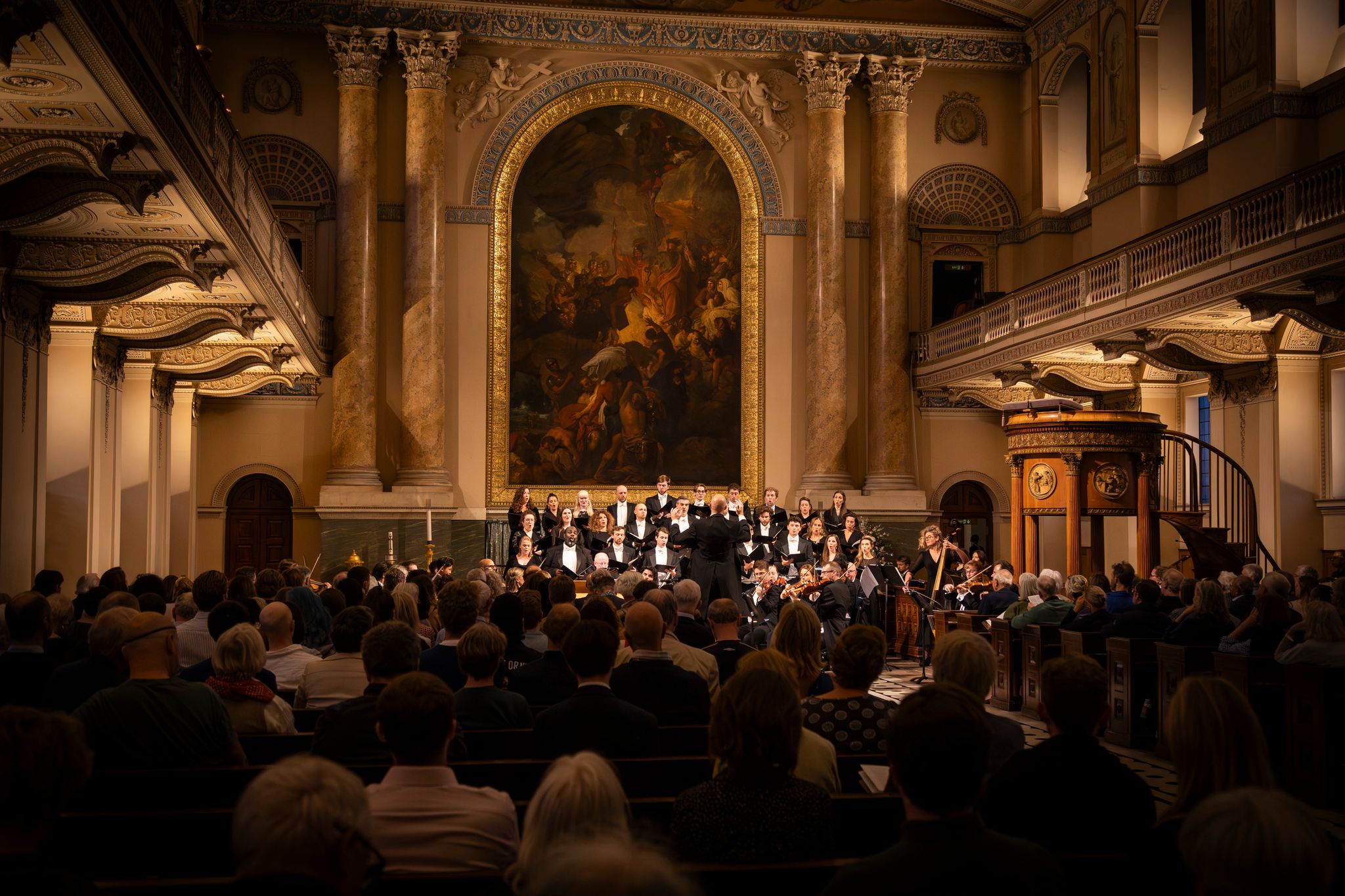
Review – Monteverdi Choir with Jonathan Sells ’Sing to the Lord a New Song’ in Greenwich
Purcell’s chromatic daring, Bach’s furious counterpoint, Handel’s white-knuckle theatrics. Performed by the Monteverdi Choir now confidently asserting themselves in ferocious precision and a myriad of colours and textures.
-

Review – Vache Baroque ‘Le Carnaval de Venise’
In an age of endless distraction, Vache Baroque offered something rare: opera that demanded stillness, concentration, and a willingness to risk surprise. And just like any exciting journey, there were even pre-flight checks for the audience.
-

Review – BBC Proms 2025: Aurora Orchestra plays Shostakovich’s Symphony No. 5
Aurora’s Shostakovich Fifth confounded doubters with bold storytelling and polish — yet at times theatrics risked dulling the raw edge of the music.
-

Review – Edinburgh International Festival: London Symphony Orchestra play Korngold’s Violin Concerto and Vaughan Williams’ Sea Symphony
Vilde Frang’s Korngold shone with unbroken lyricism and cinematic colour; Vaughan Williams’ vast Sea Symphony impresses in scale and execution, even if its emotional heart remains elusive.
-

Review – Edinburgh International Festival: London Symphony Orchestra play Beethoven 5 and Shostakovich 10
Where Beethoven’s Fifth brought moments of elegance and balance, some fortissimos felt too big and lacked clarity. Shostakovich’s Tenth was the evening’s triumph — precision, drama, and vividly drawn storytelling, including searing brass and velvety-padded strings.
-

Review – BBC Proms 2025: National Youth Orchestra plays Star Wars, Caroline Shaw, and Holst’s Planets
John Williams’ iconic score opens a barnstorming programme for the National Youth Orchestra showcasing not only young musical talent, but celebrating some of the grandest orchestral scores.
-

Review – BBC Proms 2025: BBC Symphony Orchestra, Beatrice Rana and Rachmaninov’s Paganini Variations
Live performance is full of risk — and in this Rachmaninov Paganini Variations, that risk was laid bare. An intriguing interpretive approach, flashes of Debussy-like colour, and moments of real tension between soloist, conductor, and orchestra made for a performance as unpredictable as it was revealing.
-

Review – BBC Proms 2025: Royal Liverpool Philharmonic Orchestra play Dvorak’s Symphony No. 9
Dvořák’s Symphony No. 9 feels larger and more fulfilling than any that came before it — a complete musical arc steeped in folk colour. Domingo Hindoyan and the Royal Liverpool Philharmonic Orchestra bring warmth, precision, and unmistakable character.