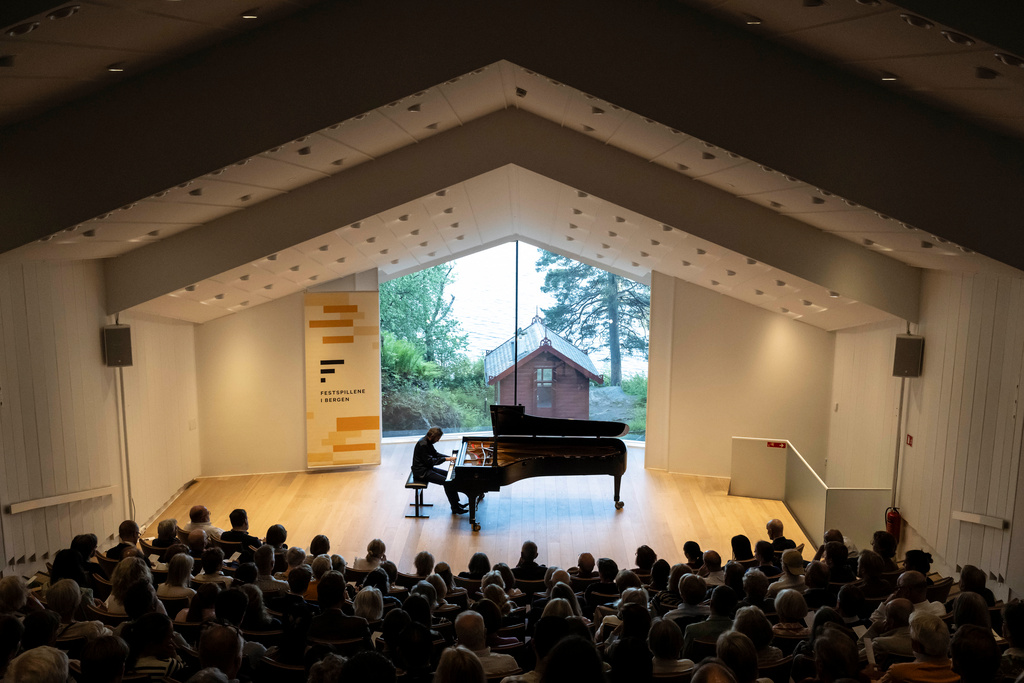
After a day immersed in figures and forecasts, stepping into Wigmore Hall feels like a breath of fresh air. Here, the discipline that keeps the research going is mirrored in the discipline of a pianist at a single keyboard. Both require attention, endurance, and trust in something more than numbers.
Wednesday 29 October. 8.14pm. Wigmore Hall, London.
I’ve spent the day analysing UK orchestra annual reports filed at the Charity Commission. It’s fascinating. It messes with the brain. It’s learning. And I’m hoping I’ll see a return on my investment in time. The hard facts spell out the volatility that so many UK orchestras face. Big numbers aren’t necessarily reassuring. Conversely, an absence of Arts Council funding isn’t necessarily the drawback (or the punishment) some might think it is. Also, insurance isn’t the same as a guarantee. And most have to sing for their suppers in some way or other. I look at some ensembles and wonder how on earth they’ve survived. I look at others and wonder at what point they secured their reputations and how it is they maintain it. What is the thread that runs through them? Is it one thing or one person or a collective effort over time? Little wonder my brain is hurting.
An invitation received last week sees me venturing out to Wigmore Hall. I gladly leave the numbers behind. Press tickets mean a lot. They’re not really work (even though some people regard them so). They are golden tickets. They remind me in my moment of presently intense business-related vulnerability that even if there’s no direct revenue available, promised or guaranteed, that goodwill means more. One has to look at the bigger picture and the role you’re playing in it.
At this point in time, music and reading are reliable refuges. Listening (or reading) brings calm (reading is a form of listening, isn’t it?) Somewhere to check in. Something to cling onto. I’m part way through my Booker Prize Shortlist challenge – Andrew Miller’s The Land in Winter is an unexpected joy. Flashlight is next on the list. Sonia and Sunny opens with a challenging shift in perspective. Away from the words, this evening at Wigmore, it’s Tim Horton playing Bach and Chopin.
Stepping inside Wigmore Hall, you’re greeted with a warm smile from someone with an earpiece and an armful of programmes. This combined with the cushioned carpet could easily be enough, yet there’s more comfort to be found inside the auditorium where I sit, talk briefly and surprisingly animatedly to my host sat beside me. As the house lights dim, I retrieve my notebook, uncap my reliable Uniball, and wait for proceedings to begin.

Throughout Horton’s performance I’m fixated by the furniture on the walls – the dimly lit Betty Boop lampshades, dark wood panelling, and the gold stitching at the end of each row. Crystal clear sound lands gently on padded surfaces. There’s a feeling I’m here for prayer, or a confession. Maybe it’s simply shedding the day’s events. Every now and again I’m scribbling something over the programme notes, trying to meet the impossible task of describing the seemingly impossible. It’s not long before I’m doubting whether they’ll be of any use when I get home. It’s then I realise that the act of capturing notes is my habitual way of clearing the mind. If I do this I can listen more attentively.
Chopin seems to invite you – perhaps even drag you – into a journey in and around yourself. When the usually abrupt end arrives applause rings out all around and i just sit staring into the middle distance. I can’t applaud yet. I’m not ready. Chopping is every bit as an intense and rewarding a listen as any symphony by Mahler. Memories flood back of all the people who have contributed to my musical appreciation. I message two of them on my way home. Another, who died a few years back unexpectedly, is present on the page of notes I’ve scribbled on whenever I’ve written a capital ‘S’ I realise. If I flick through old school reports I’ll likely find the version of his that inspired it.