
A rare glimpse at the cosmos at the moment of creation, destruction, or maybe its 21st birthday.
It’s taken me forty years to hear Messiaen’s Turangalîla as anything other than the impenetrable, hostile work I heard when my music teacher introduced me to it as a teenager. At 53, what strikes me now is how conventional it sounds: lavish, raucous, faintly subversive — the kind of work an isolated sixth-former consumed by his obsessive thoughts might latch onto in pursuit of an edgy aesthetic. A score that once felt like an exam, now feels like a free pass to a wild imaginative landscape — a rare glimpse at the cosmos at the moment of creation, destruction, or maybe its 21st birthday.
At the opening night of the Bergen International Festival, Esa-Pekka Salonen directs a near 100-strong Bergen Philharmonic in this epic workout. He conducts with a characteristically clear beat, likely more out of necessity than expressive abandon, yet the emotional range the band expresses is vast. Just when the music has reached its apex, he digs down and retrieves something else. There’s a mechanical feel to production. This isn’t a problem. More, evidence of how something remarkable that depends on everyone resolutely following time as though their lives depended on it, yields something so inclusive.

The strings have a consistently silky quality. Maybe even the comfort derived from a bourbon tipped from a glass held between finger and thumb. When they’re paired with the trumpets, it’s as though both are carving out blocks of air with a meat cleaver. Nine double basses expand the sound into a cavern with an imperceptible bottom. Brass is disciplined. The woodwind is expansive, occupying their space when the score allows.
Pianist Bertrand Chamayou shifts awkwardly from one side of the stool to the other to access the extremes of the keyboard, his score creased where a hand has gripped every page mid-turn in rehearsal. Cécile Lartigau plays with unfussy unpretentious poise. The front desk second violins are visibly enjoying not just their own music but what’s played around them. And in the wistfully comforting Jardin du sommeil d’amour, a young girl on the front row lies down and falls asleep in her mother’s arms.
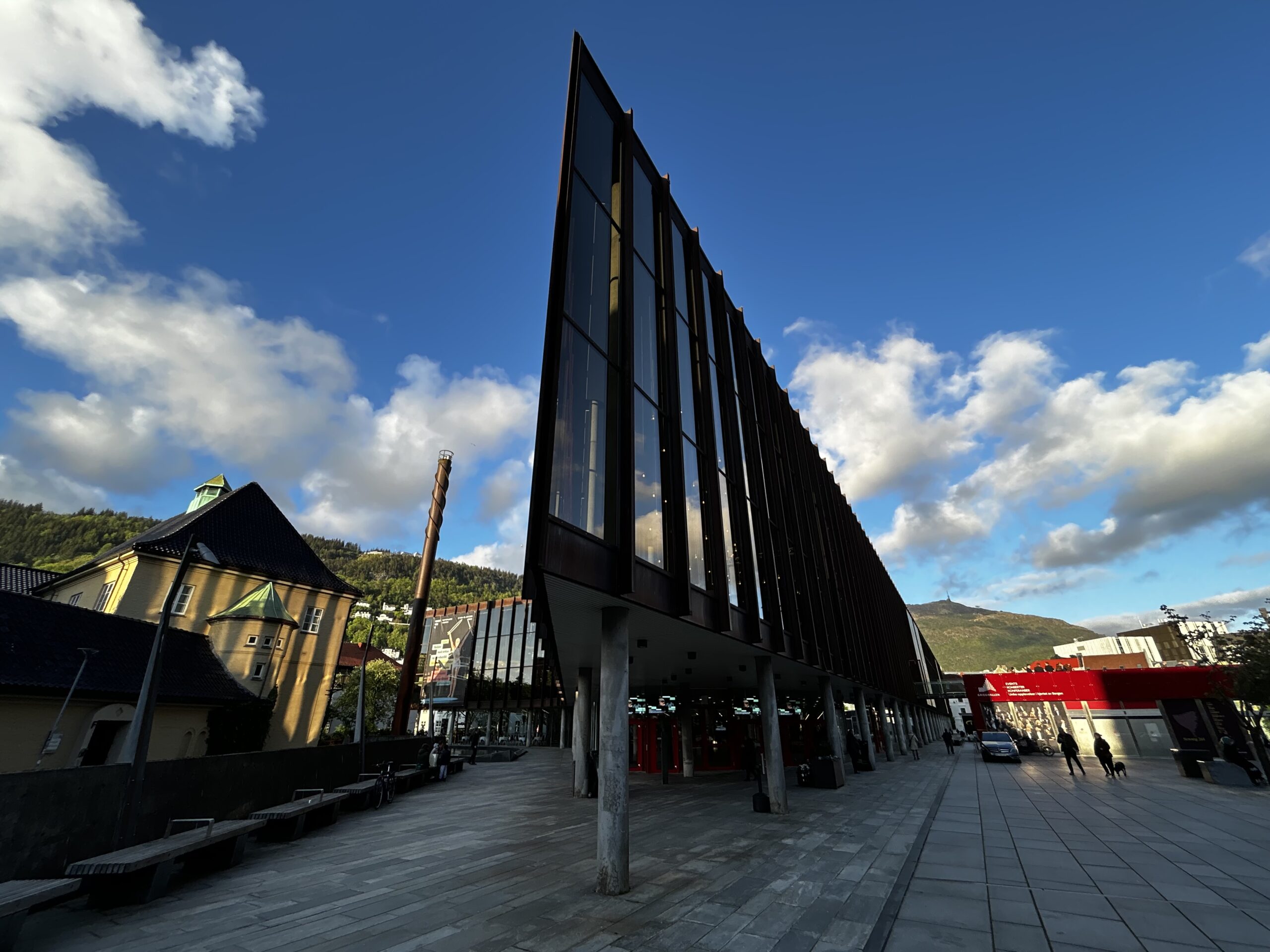
Turangalila as a concert work is the ultimate collective listening experience. Seat-of-the-pants jeopardy that triggers the wildest of imaginations. Live performances are as much a commitment for the listener as they are (in a different way) for the performers. And whilst the dry acoustic of Bergen’s Grieghalle creates a focussed sound that makes crescendos easier to capitalise on, some of the detail is lost in the glorious cacophony Messiaen’s score creates. Salonen’s recording of the work with the Philharmonia in 1986 is an entirely different listening experience in which a deader acoustic reveals more of the intricacies of the composition. Nonetheless, in concert the Bergen Philharmonic left me partly in awe and a little dumbstruck. Such is the power of the work. Messiaen’s hymn to joy might be unhinged, but I’ll happily take unhinged.
thoroughly good, by email
New reviews and pieces from the blog, sent when they’re published. No schedule, no filler.