Tim Horton at Wigmore Hall: precision, warmth and wit in a programme that moves from Bach’s architecture to Chopin’s abandon.
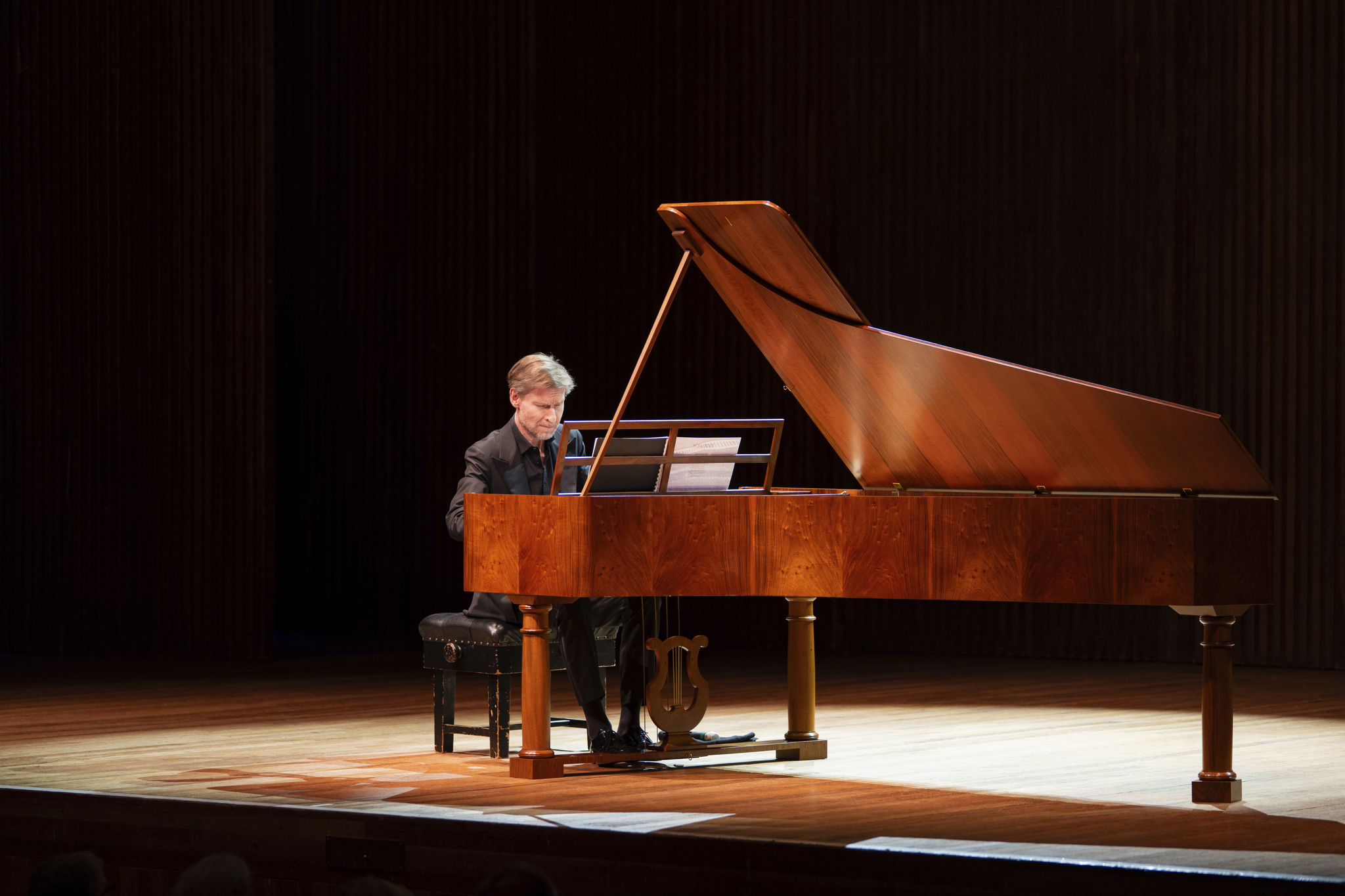
Tim Horton is an unsung hero of the UK classical world: a warm, appreciative presence on stage, and a bright, assertive sound at the keyboard. His phenomenal stamina is well documented — the sheer quantity of repertoire he and his Ensemble 360 colleagues power through at the Sheffield Chamber Music Festival is proof enough. At Wigmore Hall this evening, he conjures a gentle, uncomplicated caress; snaking melodies twist, turn, and wrap around you; and, in the second half, he becomes the master of the lightning-quick grand flourish.
The waterfall cascades of the opening C-sharp minor Prelude, Op. 45, mark the point at which he seems fully attuned to the audience and the acoustic. After that, JS Bach’s English Suite No. 2 provides an interesting contrast — not fully explained in the programme notes. The Prelude is fierce; the Allemande that follows has a contrasting colour: tender lyricism, well-pitched, with gentle rubato in the counterpoint giving an overall romantic sheen to Bach’s mathematical rhetoric. The third-movement Courante is a chilly, bright morning in late autumn, and whilst there are some balance issues in the Sarabande that follows, where the right hand seems to dominate, come the first Bourrée, with all its industry, balance is reclaimed. We arrive at the concluding Gigue — stunning, exhilarating — with a sense that we’ve not only been on a journey but also arrived at a charming destination, tea and cake provided.

Chopin’s A-minor Waltz triggers memories of a long teenage summer-holiday project — weeks spent wrestling with the score, trying to get independent lines to tolerate one another long enough to form a cohesive narrative. This is the part of the programme when, post-Bach, Chopin is revealed — in Horton’s hands — not as the decorative show-off, but as a craftsman who insists on taking you on quite an intense journey, only to abandon you without so much as a by-your-leave — wham, bam, thank you, ma’am.
The second half has an epic feel — a kind of musical hobbit-like traverse across Middle-earth in search of a missing link. Each work, daintily titled yet at odds with the emotional and virtuosic demands placed on the soloist, captures a Mediterranean air within an operatic frame. Chopin’s expansive expression is impossible to explain, yet Horton guides us in a way that makes the experience both challenging and supported. There are fireworks in the F-minor Fantasy, flourishes in the C-sharp minor Polonaise, and tender lyricism in the E-flat minor Mazurka that warms the soul. A bright and breezy B-major Mazurka pivots us into mild menace in the next. The concluding Polonaise-Fantaisie in A-flat, Op. 61, is an expansive odyssey that brings us back from the depths to the surface just in time for a gasp of air.
At the end of this lovingly curated programme, the Nocturne No. 2 in E-flat Major is offered in Horton’s customarily self-effacing way — mindful, perhaps, that its plaintive goodbye is exactly what’s needed and that words shouldn’t get in the way.
One of those live concert programmes that makes you want to recreate the running order as a playlist, just to hear again what the soloist made of it.
Tim Horton’s Chopin Series at Wigmore Hall continues in 2026 on 16 January.