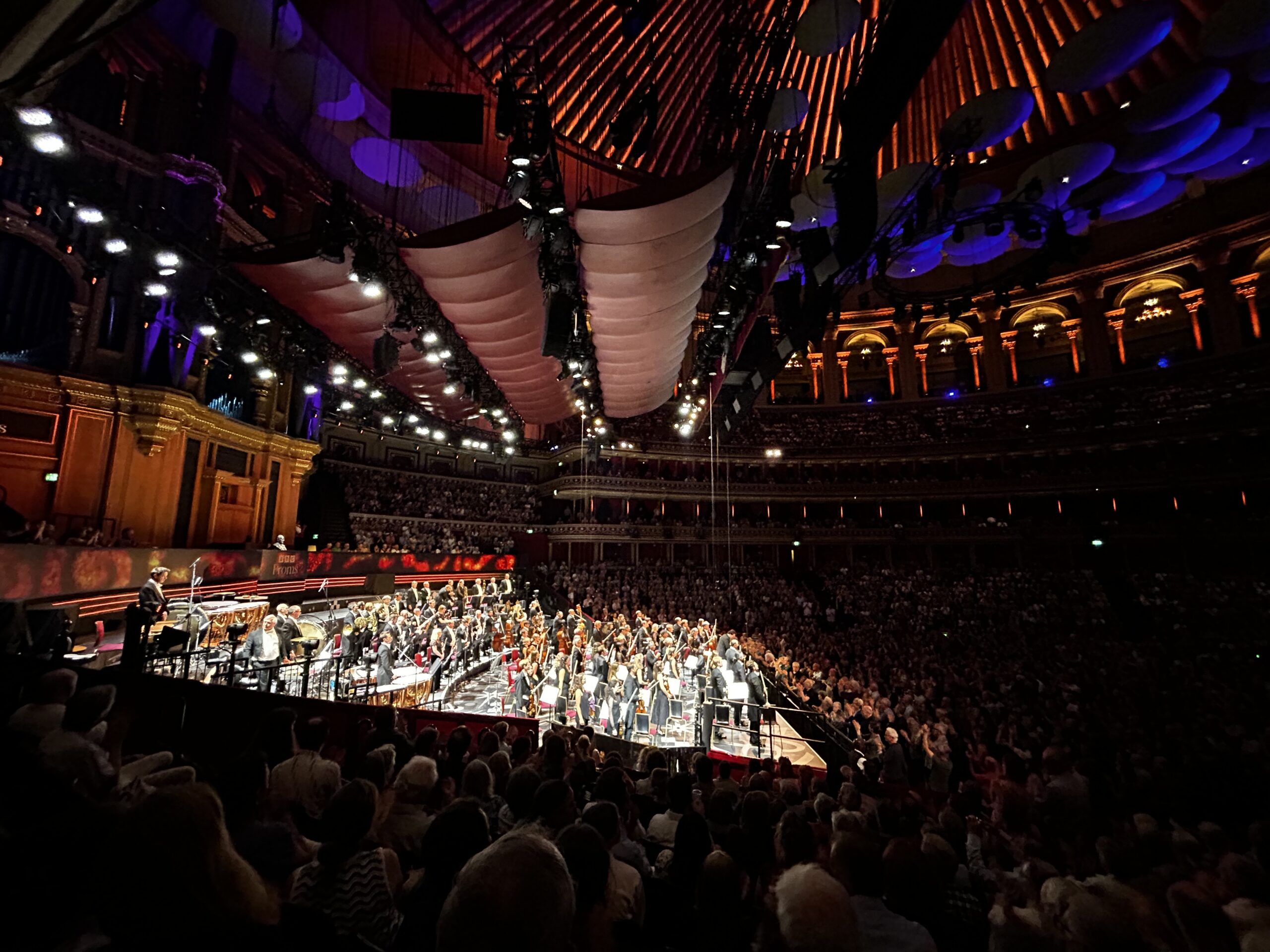
Cristian Măcelaru conducts the BBC Symphony Orchestra in Shostakovich’s Tenth Symphony — with a UK premiere from Édith Canat de Chizy.
Programme
Édith Canat de Chizy Skyline (Concerto for three percussionists, timpani and orchestra; BBC co-commission: UK premiere)
Shostakovich Symphony No. 10 in E minor
BBC Symphony Orchestra
Conductor: Cristian Măcelaru
Tuesday 18 August 2026 · 7pm–c8.50pm
Royal Albert Hall
Listen on BBC Radio 3 / BBC Sounds
Preview
If Shostakovich’s Fifth Symphony was the composer complying with authorities with a poker face masking sardonic material, then his Tenth Symphony is the horror laid bare. It is one of his finest symphonic works. A personal depiction of the terror of Russia under a dictatorship. The crescendos build slowly, the climaxes are beautiful and grim, and the orchestration is riveting. The brass cues in the middle of the first movement will send shivers down your spine, and the string writing (assuming the BBC Symphony Orchestra comes close to the Royal Liverpool Philharmonic Orchestra with Petrenko’s recording) in the second movement will have you running around the Royal Albert Hall if not metaphorically then literally. When the final movement tips into its allegro, there is an exhilarating sense of defiance. And who wouldn’t want to play the gripping timpani solo in the final bars (the notes reference Shostakovich’s name – DSCH)? Whilst the entertainment fulfils the story it depicts makes this a strangely mawkish listen.
Review
Edith Canat de Chizy’s new percussion concerto achieves something rare: contemporary music for percussion and orchestra that doesn’t sound self-absorbed, pompous or pretentious. In Skyline, the composer concocts a treat for the imagination that works as a piece of live radio, brought to life because of the theatrical moves she demands of three solo percussionists. Her creative spirit is evident not simply in rhythmic invention, but in the vast range of percussion instruments she brings to bear — evidence of a mind with a fertile imagination that knows how to bring it to life, in such a way that an audience member actively looks forward to hearing it back in a live recording. Some commissions lack the narrative thread that makes them a good choice. This one is evidence of what happens when the right offer is made to the right creative — not simply because of the work itself, but the way something fresh invites further exploration of an unfamiliar catalogue.

Shostakovich 10 was a much-anticipated event that unexpectedly delivered more than anticipated. A performance to pore over. There was a great deal promised in the opening string sequence — pathos aching with inevitability, shot through with a sense of hope. Here, precision in colour, ensemble, and temperature, was directed by Măcelaru, whose beat has a captivating clarity. No hedging in the brass cues — full-throated stuff with a gratifying buzzy sting.
The orchestra’s evident commitment to the vision was underlined in the second movement. Fierce energy, resolute attention to detail, and a delectable snark to conclude. There’s a snatched look of hard-earned satisfaction between timpanist and percussionist in the silence that follows — a reassurance that players as well as audience members were similarly gripped.
There’s heart-juddering deadness to the strings at the opening of the third movement, complete with sardonic asides from the violas. Deliciously subversive clarinets underpin piercing piccolos; sardonic bassoons have their say amid inch-thick paint brush legatos in the string sequences that follow. One lonesome horn solo deftly channels Mahler. This was a movement brimming with personality. Musicians given scope to interpret. Fragile. Precious.
When proceedings get underway in the fourth movement, there’s a momentary loss of ensemble. When the woodwind join the melee, composure is regained. Clarinets lead the charge; later, splintering brass cues prepare the ground before we skid towards an agonising scream of DSCH. The latecoming but irresolute climax is as taut as everything that has gone before it. The BBC Symphony’s Shostakovich is vying for second place to Sinfonia of London’s Respighi this Proms season. One thing is unequivocal: Cristian Măcelaru deserves a permanent contract.Shostakovich 10 was a much-anticipated event that unexpectedly delivered more than anticipated. A performance to pore over. There was a great deal promised in the opening string sequence — pathos aching with inevitability, shot through with a sense of hope. Here, precision in colour, ensemble, and temperature, was directed by Măcelaru, whose beat has a captivating clarity. No hedging in the brass cues — full-throated stuff with a gratifying buzzy sting.
The orchestra’s evident commitment to the vision was underlined in the second movement. Fierce energy, resolute attention to detail, and a delectable snark to conclude. There’s a snatched look of hard-earned satisfaction between timpanist and percussionist in the silence that follows — a reassurance that players as well as audience members were similarly gripped.
There’s heart-juddering deadness to the strings at the opening of the third movement, complete with sardonic asides from the violas. Deliciously subversive clarinets underpin piercing piccolos; sardonic bassoons have their say amid inch-thick paint brush legatos in the string sequences that follow. One lonesome horn solo deftly channels Mahler. This was a movement brimming with personality. Musicians given scope to interpret. Fragile. Precious.
When proceedings get underway in the fourth movement, there’s a momentary loss of ensemble. When the woodwind join the melee, composure is regained. Clarinets lead the charge; later, splintering brass cues prepare the ground before we skid towards an agonising scream of DSCH. The latecoming but irresolute climax is as taut as everything that has gone before it. The BBC Symphony’s Shostakovich is vying for second place to Sinfonia of London’s Respighi this Proms season. One thing is unequivocal: Cristian Măcelaru deserves a permanent contract.