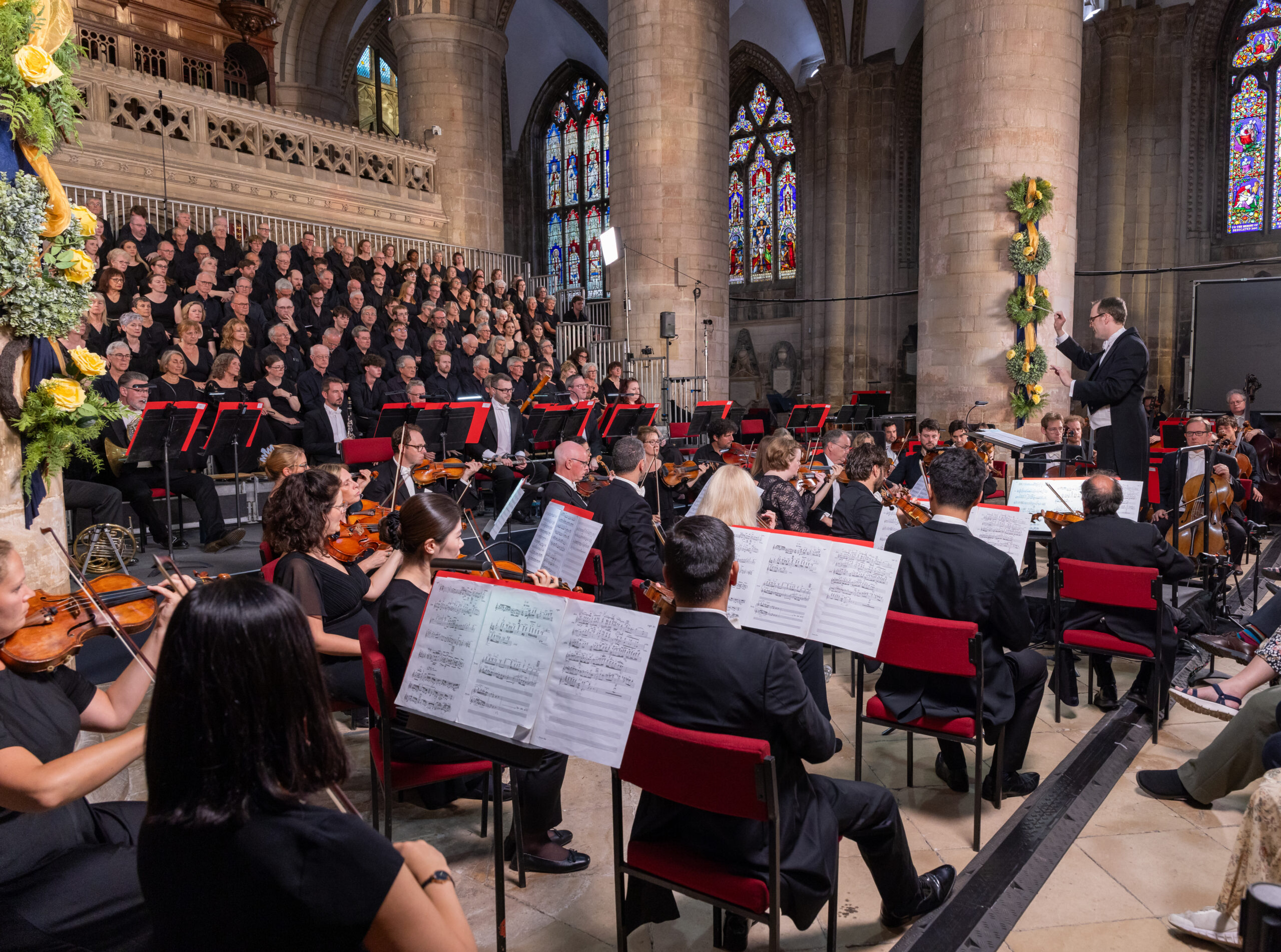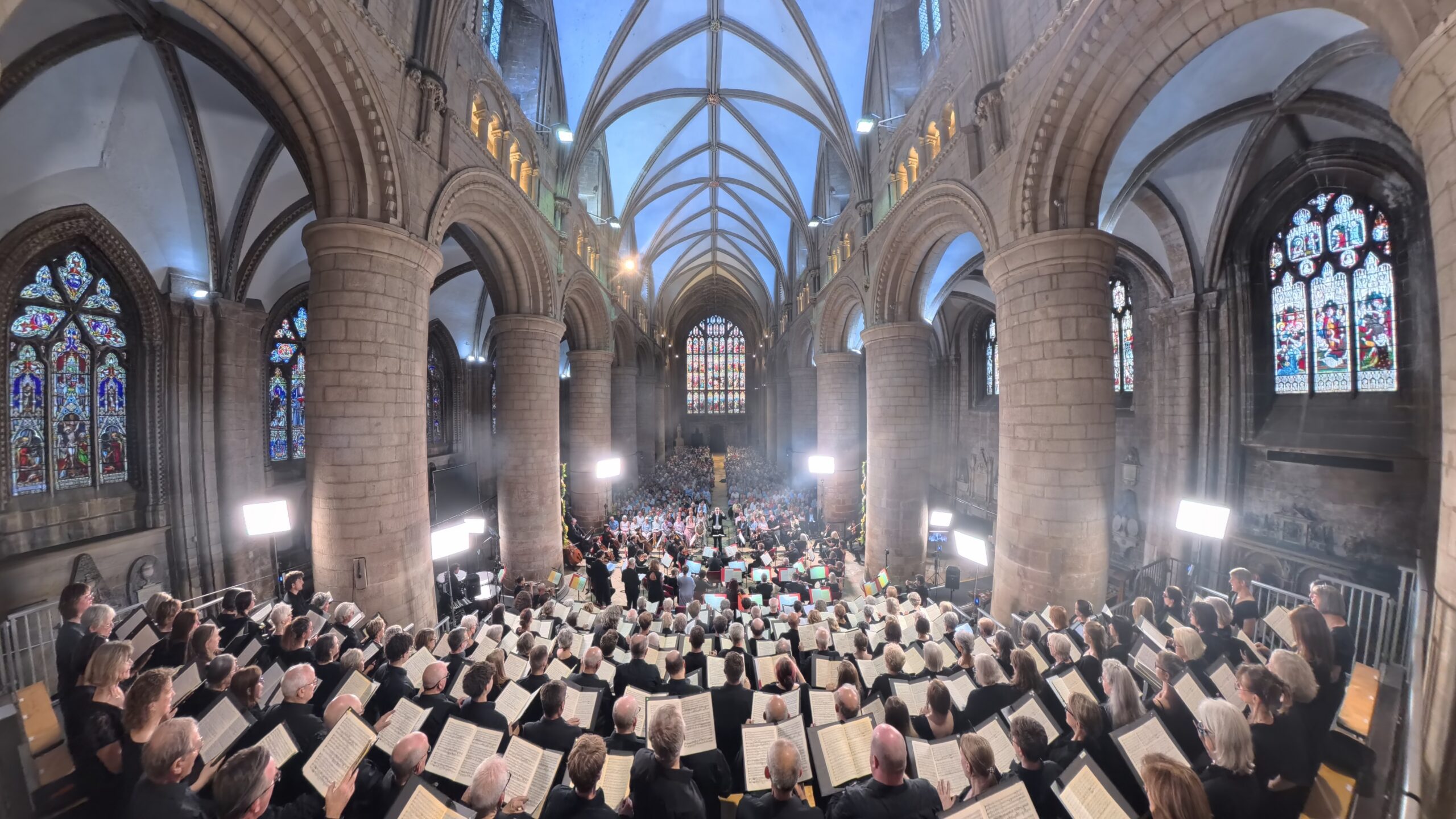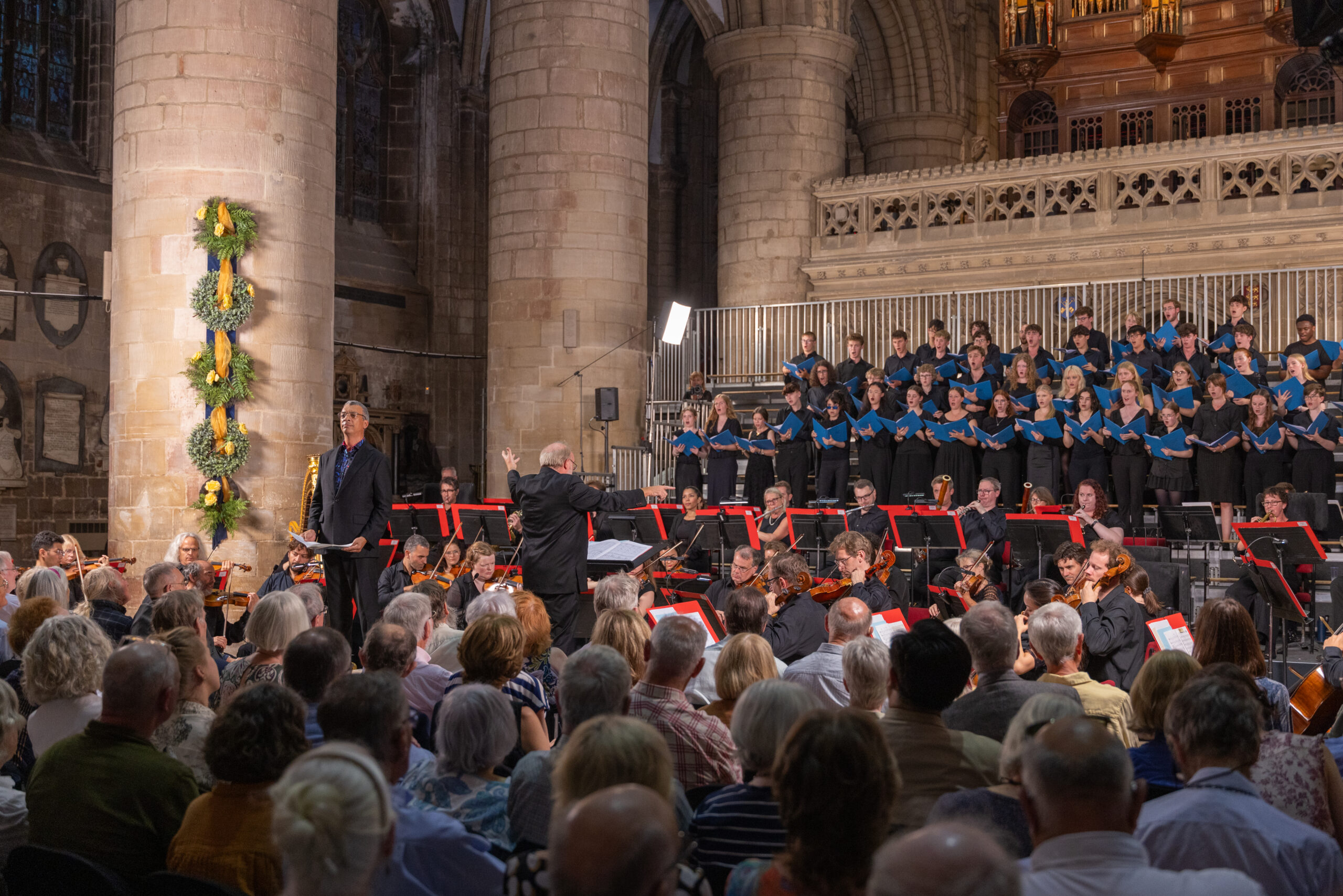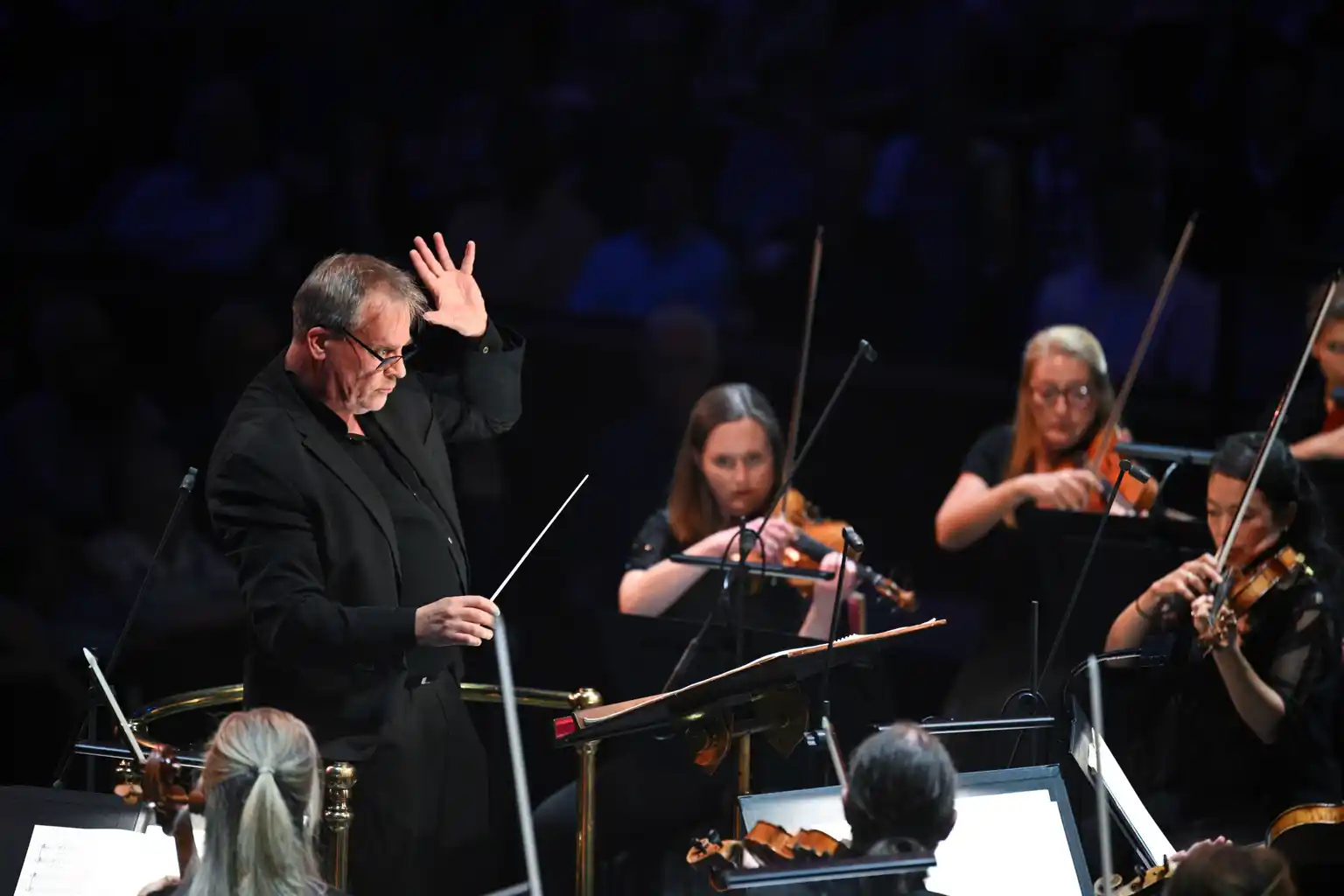
John Storgårds conducts the BBC Philharmonic in Richard Strauss’s Also sprach Zarathustra — with violinist Sueye Park in the Sibelius Concerto plus a UK premiere of a 1977 work by Betsy Jolas.
Programme
Betsy Jolas Tales of a Summer Sea
Sibelius Violin Concerto in D minor
R Strauss Also sprach Zarathustra
Sueye Park (violin)
BBC Philharmonic Orchestra
Conductor: John Storgårds
Tuesday 21 July 2026 · 6pm–c8.10pm
Royal Albert Hall
Listen on BBC Radio 3 / BBC Sounds · Watch on BBC iPlayer (recorded for broadcast)
Preview
Two key Romantic works from the BBC Philharmonic — Sibelius’s Violin Concerto in D minor and Richard Strauss’s tone poem Also sprach Zarathustra. Where the Sibelius turns inward, lonely and brooding, Strauss looks outward at the cosmos and finds it indifferent. Both, in their different ways, leave you with the distinct impression of your own insignificance in the universe — which is either deeply unsettling or oddly comforting depending on the kind of week you’ve had.
The BBC Philharmonic are one of the Corporation’s finest orchestras — second only to the BBC Scottish Symphony, though don’t tell Manchester that — and John Storgårds is a conductor of real precision and detail.
Review
Betsy Jolas’ Tales of a Summer Sea makes the Proms finally feel it’s returned for the season this year. Unusual sounds that trigger the imagination inoculate against the familiar and the overplayed. Something to figure out. A different picture. Different textures. Jolas’s is a fraught summer scene – at least it feels that way – ‘summer’ in the title misdirects the first time listener from ‘sea’. The vibe is part-Nancy Drew, elements of the Famous Five, and a modern-day retelling of an Agatha Christie classic, more than the perils of a coastal storm. The palette is, compared to the familiarity of the Proms programmes so far this season, reassuringly modernistic even if it was written in 1977. The combination works not only because the narrative is strong, but because there’s variety that enlivens the senses. Best listened on headphones, close in. Jolas’s inspiration was a terrifying storm off the Azores in which she was caught. Turbulent, for sure. The imagery perhaps not immediately obvious, though more apparent when prefaced with biographical detail.

Sibelius has taken a long time to warm to. The tempestuous romanticism has long been a heavy meal on a big plate. Karelia Suite early on in my life did much to put me off Sibelius’ music too. Violinist Sueye Park’s Proms debut with the Violin Concerto secures this work as no longer something I am able to get through, but a symphonic work I actively look forward to. A lot of this is down to her storytelling, evident in the opening subject — the silvery tone, ultra-smooth legato, and strategically deployed vibrato. The sweet sound in the cadenza makes the prospect of the returning orchestral accompaniment an unwanted distraction. The woodwind material at the opening of the second movement contains blissfully smooth articulation — one way in which the style of playing steers this interpretation away from heady introspection. The vulnerability in Park’s melodic line makes me want to hug the nearest person as I listen, though there’s a mild worry that I’m in so deep now that I’m not entirely sure whether I’ll be able to cope emotionally with the rest of the day ahead. The broadcast detail is especially good in this performance, revealing detail in the orchestral string playing – individual parts, articulation, and textures – I’ve not heard quite so readily before. There is a reassuring padded sensation underpinning the louder string sequences. As a whole it’s not fast-paced and maintains a sprightly, dance-like lightness. There is a sense of lightness to the whole thing, consistent with the presumed intent behind the style of woodwind playing in the opening of the second movement. That same attention to broadcast detail surfaces a delicious brass cue – burnished chords rising triumphantly above the band – in the final few bars.
The opening bars of Also Sprach — the most famous seconds in the piece — set a standard the rest of Strauss’s half-hour tone poem has to live up to. This performance gets off to a shaky start, ensemble not quite together in those opening notes. But the attention to detail tightens later, with taut string and brass ensemble. The chamber elements in the work are emphasised with a sympathetic broadcast balance, challenging the assumption that Also Sprach is simply epic expression throughout. Das Tanzlied is particularly effective — solo violin, later joined by solo cello, with an oboe way off in the distance. Similarly Das Nachtwandlerlied, with its stratospherically high violin line, whispered woodwind, and subtle pizzicato bass. When conductor Storgårds opens out the full orchestra, it’s as though the sound blooms. By keeping things largely contained throughout, and saving these moments for when they really count, there’s a sense we’re hearing a sophisticated reading. It’s a slow burn that demands assumptions are parked. That attention pays off in the end.
Gallery