A performance of two halves: early moralistic Smyth followed by Respighi’s theatrical setting of a brutal tragedy.

Smyth’s The Forest is an earnest curiosity — an hour-long tale that shows the composer’s tenacity more than dramatic instinct, and one that presents challenges to any director trying to bring it fully to life.
In Guildhall’s production, Iolanthe (Avery Lafrentz) arrived on stage astride a motorbike that appeared to have stalled — a striking Gothic Hells-Angel presence around which Rudolf (Redmond Sander) and his band of hapless henchmen orbited. Roschen (Manson Ogden Parry) offered a solid, assured vocal line and a grounded stage presence, pairing effectively with her husband-to-be Heinrich (Tobias Campos Santiñaque).

Smyth’s The Forest preaches moral constancy — virtue tested and restored — but the sermon drowns out the drama. Smyth’s score flattens its simple moral into something closer to genteel entertainment than visceral statement. Sweet, heartfelt, well-meant — but it never quite lands the punch it promises. Still, the production showcased reliable voices and committed acting.
Chorus work improved in smaller numbers — early scenes looked under-rehearsed, with choreography that didn’t always land. The orchestra, occasionally brass- and bass-heavy, sounded tentative in what should be a straightforward score; fortissimo string cadences sometimes thinned just when weight was needed.

An entirely different atmosphere followed in the second half: Lucrezia. Respighi’s setting of the Roman tale — completed after his death in 1936 by his wife and a pupil — inhabits a different world from Britten’s version premiered nine years later. His score gives the story a faint whiff of late-Victorian melodrama, softening its brutality with a celluloid sheen. The task — or opportunity — therefore fell to the director and designer to reveal the violence beneath.

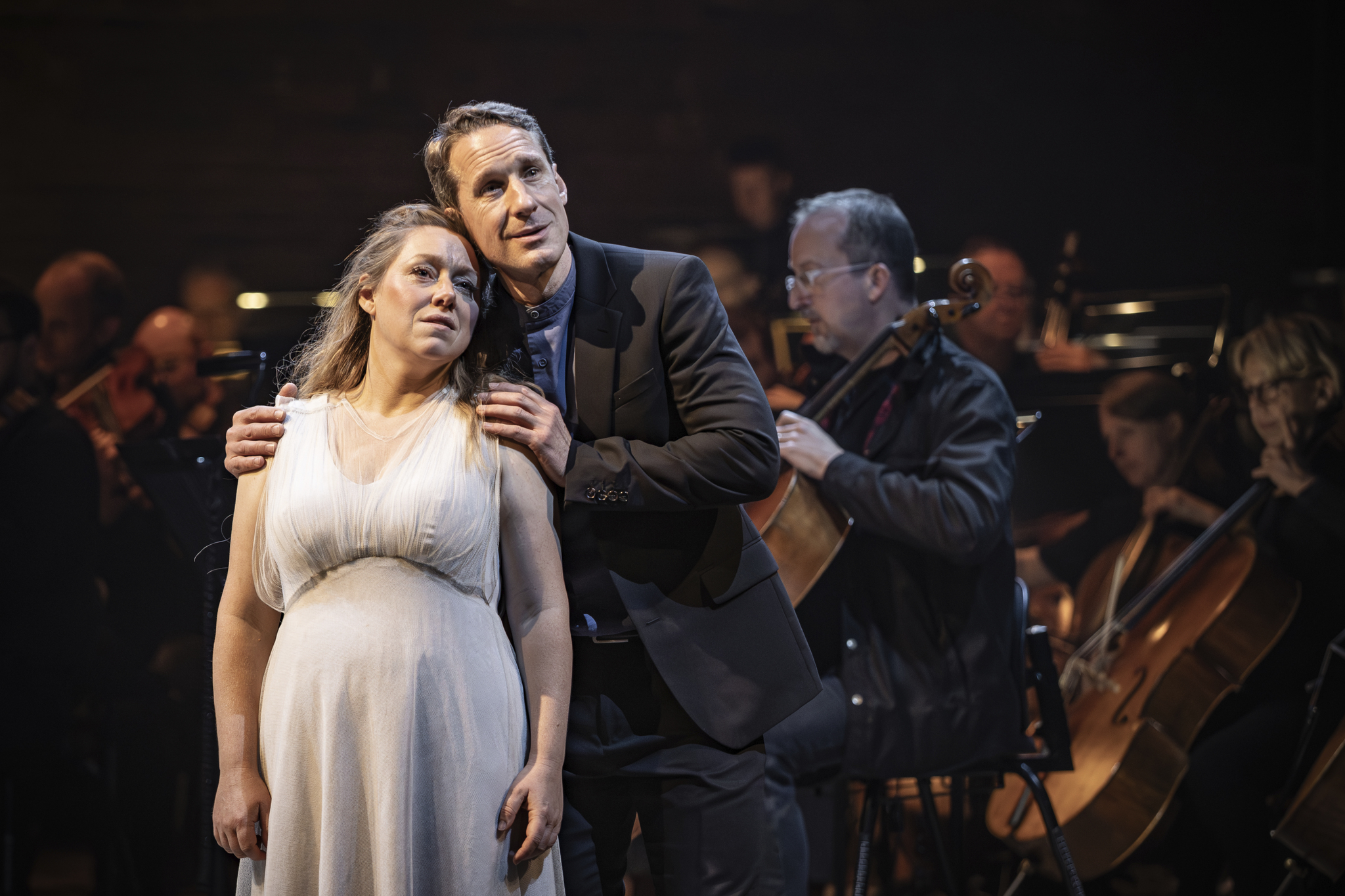
Jon Morrell and Stephen Barlow met that challenge with striking economy, using a single translucent sheet to suggest both comfort and violation. Lowry Probert’s Lucrezia sang with a warmth that humanised the cruelty around her, while Seohygun Go and Marianne Ruel brought crisp precision to their servant roles, making light work of limited material.

Like the orchestra — whose playing sharpened noticeably in the second half — Morrell’s set design felt supercharged: a bold light drenched the interior, a space in which every act of brutality was laid bare. The courtroom setting, all varnished wood and rigid formality, became a stage for judgment — not only of the accused, but of ourselves and our complicity.
A single-voiced attorney-chorus (Hannah Hughes) made its case directly to us, the jury. The male cast commanded Respighi’s burnished score with precision and poise, their ensemble taut, their swagger edged with something darker — a chilling mix of bravado and misogyny that lent the work the bite the music alone struggled to supply.