Edgy enough to say something, conventional enough to hold attention. A gift for Osborne and an invigorating listen for the rest of us.
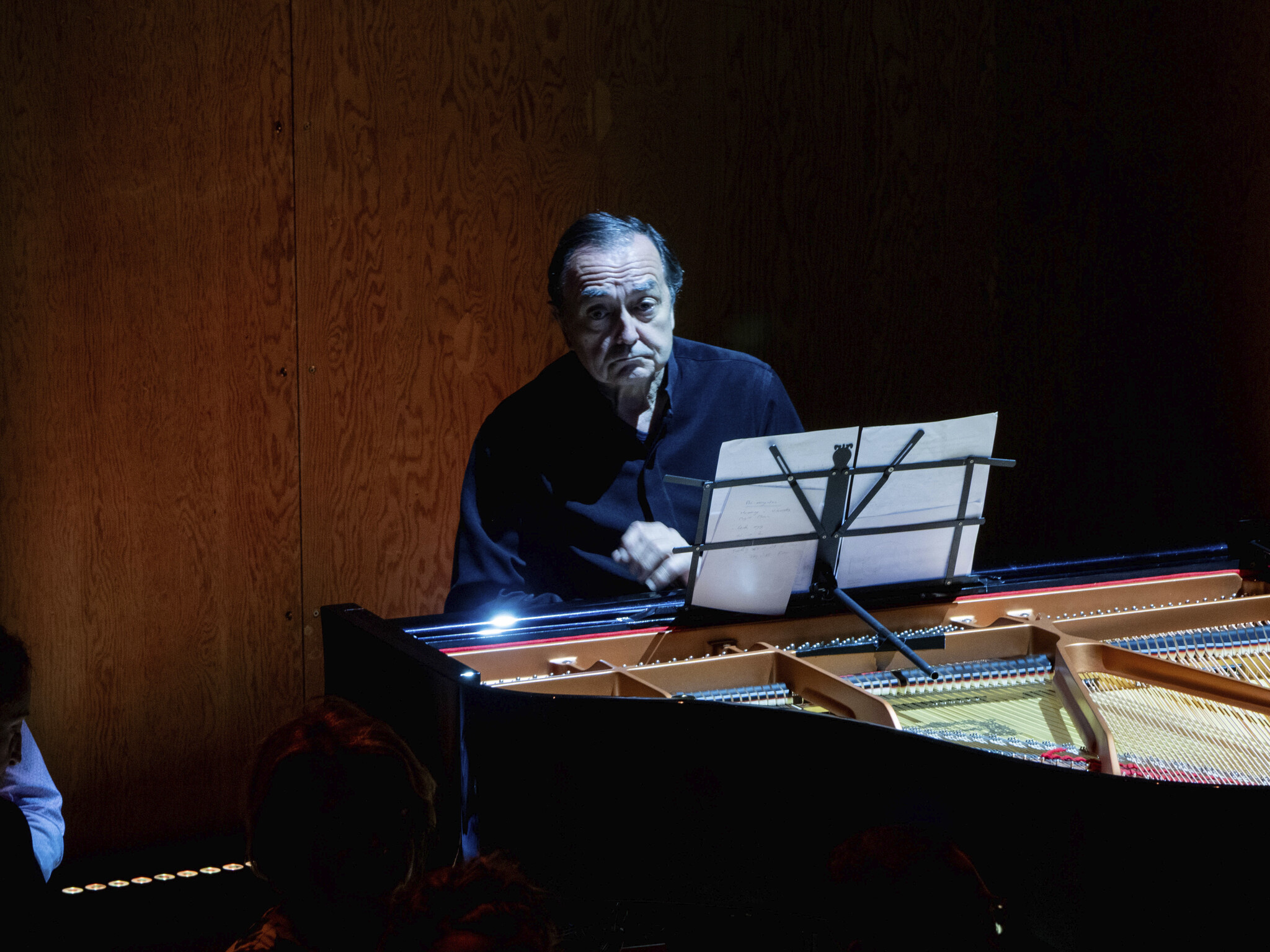
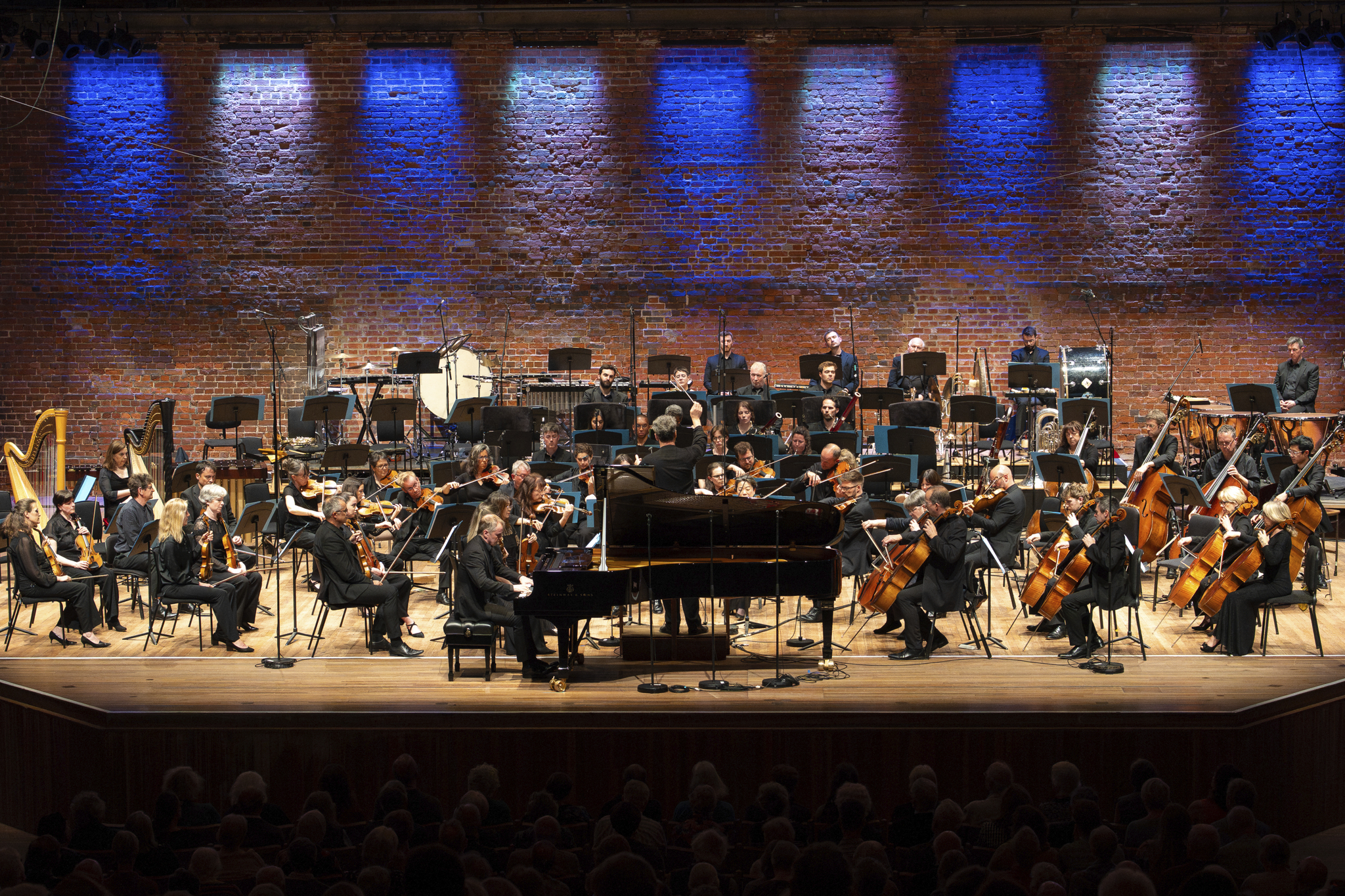
What does a pianist look like when he’s not at the keyboard doing the thing he’s contracted to? Answer, like everyone else. Especially so at the Aldeburgh Festival where public and artists inadvertently share car parks, cafes, bars and performance spaces. Steven Osborne was spotted in the Snape Maltings Car Park around 4.00pm ahead of his BBC Scottish Symphony Orchestra premiere of Ryan Wigglesworth’s piano concerto, score under his arm, as normal as the rest of us. Helpfully the artifice of concerts was stripped away.
This incongruence sets up Osborne’s refreshingly distinctive performance style well. So too the three movement concert opener All These Lighted Things from Elizabeth Ogonek. A percussion rich opening movement prepares for the atmospheric pivot to follow that dramatically lowers the heart rate and focuses attention. The scherzo raises the stakes again with a cascading wind and brass idea that adds a pleasing sensory feel. Ogonek’s obvious ease and love of orchestration is invigorating and speaks to what unifies the rest of the programme: the orchestra as technicolour showboat.
Osborne is an unfussy, unpretentious presence on stage, who could easily be still dressed in the same outfit he was spotted in in the car park earlier. This is far from a problem, because it rightly pulls focus away from the person and onto sound, technique and production. No theatrics. Instead, a dedication to producing a consistently solid sound that maximises the acoustic and, ultimately, lets the music shine. Devoid of the usual distractions some performers inadvertently bring to the stage, Osborne presents a puzzle to be solved: how does he do that?
The pianist’s real moment in the Ravel Piano Concerto comes, really, in the Satie-infused second movement. The elegant tranquility Ravel establishes in the gently melancholic melody builds tension over time until muted strings split the curtain and a sliver of light breaks through. It is a magical moment that seizes my chest. Osborne doesn’t languish the tranquility, doesn’t overwork it. But it is the second movement where this business-like approach is truly tested. The first movement before it is a rumbunctious number, full of noise and bluster, where virtuosic as the pianist is called upon to be, there isn’t much space to establish the sound he wants to create. That what we heard in the first movement — silky smooth glissandos, that strong upper voice with rounded edges — is still present in the solitary opening of the second movement speaks to the craft. There is a consistency found in both the rumbunctious sequences and the wistful hazy lyricism. That consistency is audible precisely because the artifice of concert performance is stripped away as it so reliably is at Snape Maltings.

It’s one thing to review the performance of core repertoire like Ravel’s Piano Concerto, quite another, altogether unsettling challenge to review a premiere, especially when the composer is also the conductor. Who or what are we passing judgment on? Interpretation, orchestration, treatment or the ideas themselves? When you can see the person responsible for the whole thing (even with his back to you) that changes things a bit. It makes me listen for something different.
What’s striking on a first listen is the extent to which Ravel influences Wigglesworth. That is presumably why his work is book-ended by two key Ravel works. At the same time, it’s an invitation to compare and contrast. A risk taken. The composer is asked to create something distinctive so that his creation benefits, but not be so different that the contrast makes us lean more heavily towards that which is familiar. Wigglesworth achieves this with colourful, evocative contrasting movements, in which ideas are developed quickly and attention secured throughout.
The first of four movements opens with a sense that initial ideas need to work their way out of a chrysalis — a motif that needs to be teased out. Consistently, Wigglesworth builds quickly to climaxes, lurches from light to lumbering giant on the turn of a coin. An unsettling eeriness descends in the second movement, with string sounds peering around corners and weaving their way into various cracks and crevices. Here, the piano solo material has both a whiff of Satie about it, and a Ravel nursery rhyme. A pensive mood follows, into which is folded a haunting childlike melody that possesses a dark circus-like menace. The rest of the work is fast-paced, blending ideas at remarkable speed. It’s entertaining, treading the extremely fine line between being edgy and saying something, whilst retaining sufficient convention so as to avoid alienating. At the end, Wigglesworth and Osborne stride on and off the stage smiling, hugging and shaking hands warmly as though they’ve just brokered the deal of their lives. This is a work written for and performed by a man who displays the same pleasing everyday-ness as was displayed in the car park metres away just four hours ago.

There is another intangible element to this premiere worth noting. Lineage. Wigglesworth has readily credited the influence that his inspiration and mentor had on his development (listen to the Aldeburgh podcast for more on this). The conductor-composer is described by Wigglesworth as one who conducted for the music rather than himself, and that this was reflected in his love for composing too. Knussen in turn was inspired and mentored by Britten whose death 50 years ago this year is marked by the Festival.
Osborne is well-known for his reading of Britten’s Piano Concerto (which contains more than a passing reference to Ravel’s sound world), an early work for the young composer who premiered it himself at the age of 24. Nine years after the then 25 year old pianist Steven Osborne secured a recording contract with Hyperion, Osborne performs Britten’s concerto at the Proms, gaining greater recognition for him and the concerto. An award-winning recording of the Britten with the BBC Scottish followed. His association with the orchestra under a different conductor continues to this day.
Both men, like countless other musicians who return to Snape for one reason or another, illustrate the crucial role that lineage plays in not simply the Festival, but the location too. No airs and graces. Craft.
Ryan Wigglesworth’s Piano Concerto with Steven Osborne recorded live at the Aldeburgh Festival 2026 is broadcast on BBC Radio 3 on Monday 22 June 2026.