Spirit in the Coleridge Taylor-Perkinson, and a communal moment of meditation in the Cassie Kinoshi
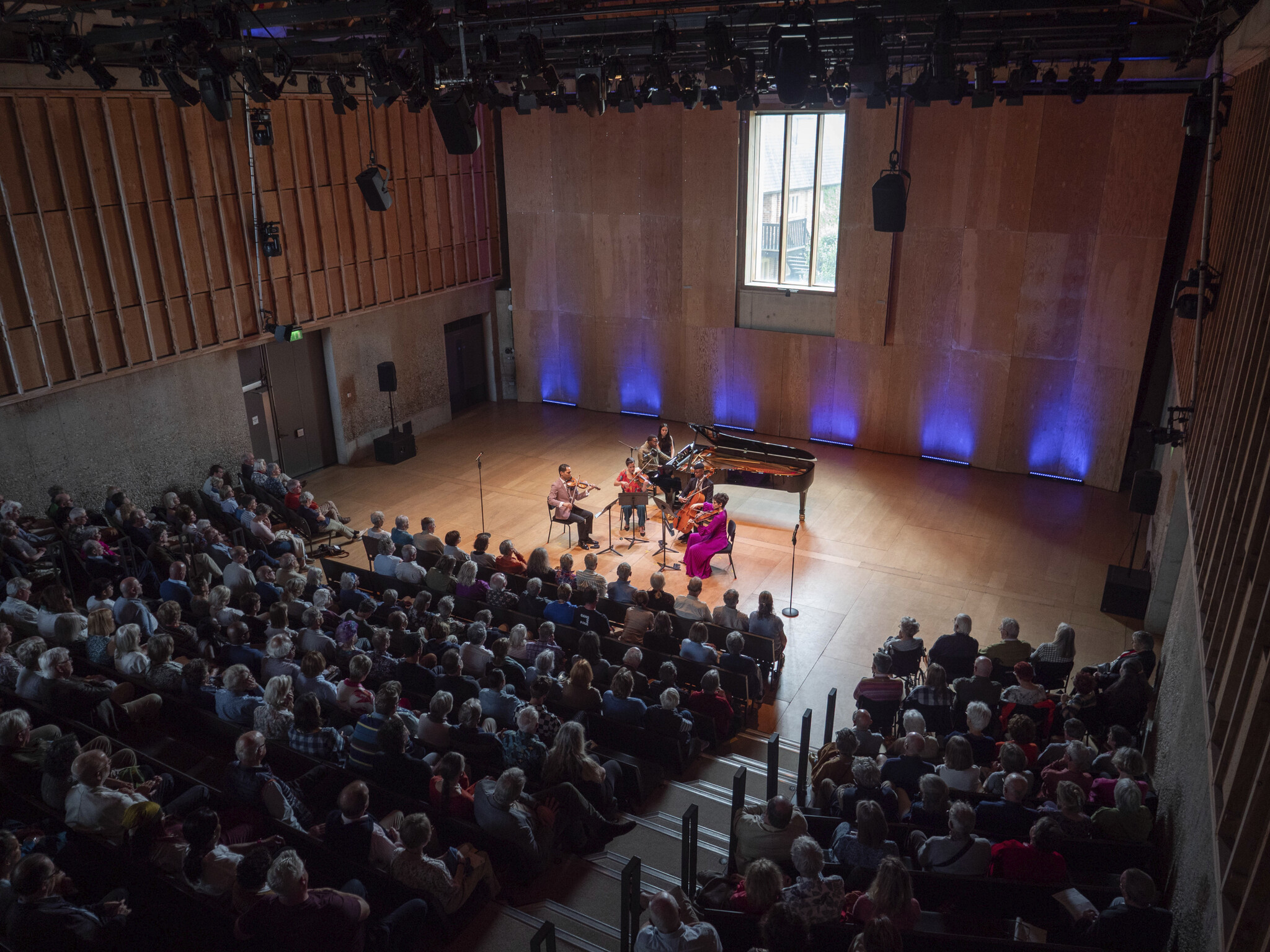
Violinist, Kaleidoscope co-founder and Sphinx Organisation alumni Elena Urioste appears alongside present-day Sphinx beneficiaries: violinist Nathan Amaral, violist Celia Hatton, cellist Sterling Elliott, and pianist Amiri Harewood. The Sphinx Organisation, established in 1997 by the then 25 year old black violinist Aaron Dworkin supports the development of Black and Latino classical musicians. That Sphinx has been doing this work for nearly thirty years and played a part in one of the UK classical music scene’s most active musicians doing what she does — long before inclusion became a sector priority — is worth pausing on.
The first string quartet by Coleridge Taylor-Perkinson opens the afternoon recital with Copland-infused optimism, later contrasted with something pastoral that sits effortlessly well in this uplifting concert opener. The atmospheric second movement underpinned by an insistent though not overpowering pizzicato violin line creates just enough tension in a manageably intimate setting. There is a gentle subversive feel in amongst the melee of dance rhythms and syncopations in the third movement. It’s only eleven minutes, but it’s the most satisfying discovery in the programme.
Elliott plays with attack and occasional verve. Sharp moves and a beady eye make bids for connection clear. In the William Grant Still suite — a transcription for cello and piano — he is assertive and contained, resisting the temptation to overwork the sentimentality in the second movement, letting the music breathe, crawling up the fingerboard with grace and poise. The third movement lost some of the definition promised at the opening, syncopations softening where they needed to bite. In the Frank Bridge Phantasie Piano Quartet, there’s eager connection between all four. Stylish without earnestness.
Harewood is more introverted by comparison. His attention to the skittering motifs in the Bridge is precise and pleasing; some tender octaves towards the end of the andante land well. Throughout, there’s a feeling he could permit himself to play out more — the technique is there, and the commitment to the score is keenly felt. The smiles exchanged with Urioste at the applause, and a hand on the shoulder, suggest something warmer than professional satisfaction.
The concluding Florence Price first string quartet — one of many works recovered from an attic in 2009, prompting renewed attention to her output — is entertaining without being entirely convincing. Urioste draws a pleasing rubato in the first movement that lends character to material that otherwise leans heavily on sentiment. Price’s ideas are stitched together well. It’s pleasing enough but the work as a whole leaves me a little cold. That Bridge’s Phantasie of 1910 already felt retrospective makes Price’s quartet, written twenty-five years later, feel imitative by comparison. The audience disagrees warmly.
Cassie Kinoshi’s two meditations, drawing on Cage but softening his demands, invited the audience into eight minutes of directed meditation with live score. It was unexpectedly restorative — the kind of communal pause that concerts rarely make room for.