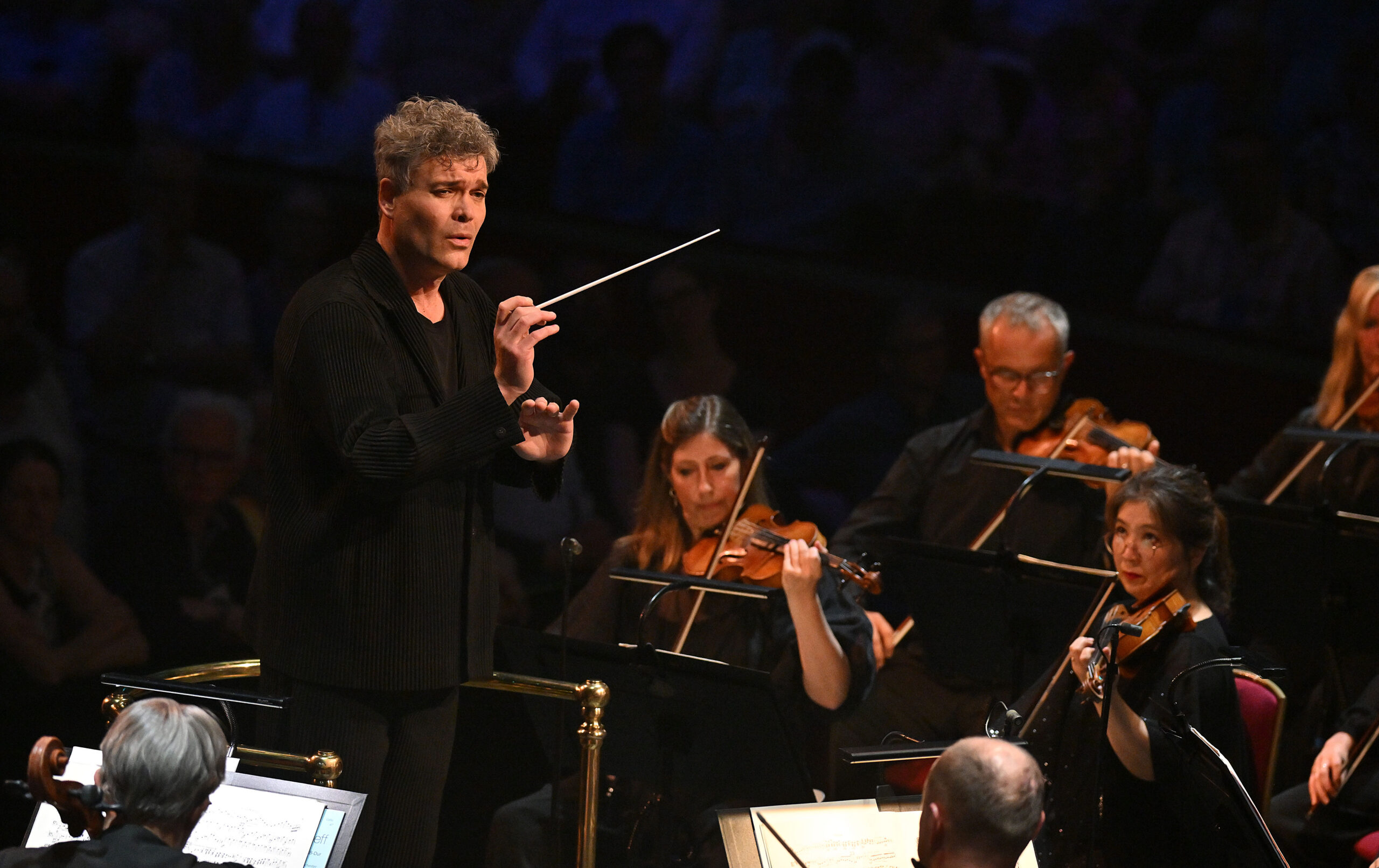
A modern day read of Elgar’s much-loved First Symphony.
Programme
Judith Weir Moon and Star
Brett Dean The World’s Wife (BBC co-commission: world premiere)
Elgar Symphony No. 1 in A flat major
Claire Booth (soprano)
BBC Singers · BBC Scottish Symphony Orchestra
Conductor: Ryan Wigglesworth
Wednesday 29 July 2026 · 7pm–c9.05pm
Royal Albert Hall
Preview
Elgar’s Symphony No. 1 is proper Elgar. The real stuff. Those Pomp and Circumstance marches count, but misrepresent. Right from its opening bars, the material is enigmatic – a beguiling kind of farewell. The concluding movement gives a more defiant, resolute edge. Some call it joy. If it is joy its hard fought. Listen out for the Edwardian sense of resilience in the brass cues — all walking sticks, brass buttons, and handle-bar moustaches.
Review
Catching up on broadcasts fuels a different kind of listening. Attention is still central, and a pleasure, though patience is thinner. Time is of the essence if you’re playing catch-up. Play a familiar work and you’ve got less of my patience. Conductors carry the burden of doing something, saying something or establishing something distinctive and lasting in only the opening bars. If they succeed, then the rest of the work is theirs to lose.
In the BBC Scottish performance of Elgar 1, the enigmatic theme that opens the work is a gift – a precious and valuable invitation for conductor Ryan Wigglesworth, who conjures a modern-day, dryly articulated subject that resolutely avoids the assumed Edwardian pomposity and aloofness others usually rely on in their interpretations.
This tactical decision combined with — I’m just going to say it outright here — the finest broadcast mix I’ve heard this season — means there’s more scope in terms of characterisation, mood and general vibe throughout. More expressive nuance creates a three-dimensional musical narrative in the first movement, which in turn makes this a more satisfying listen. The brass section’s defining contribution is material which is urgent, deployed with sharp teeth and a discerning palette.
The same detail is heard in the scurrying upper strings at the beginning of the second movement. Violins have a maniacal edge, whilst earthy violas anchor proceedings. The contrasting sequence is alive with fresh, sprightly woodwind – the strings tracking the smooth clarinet line have an especially enlivening feel on the skin. When the gruff material reappears, the cellos and bass are adorably menacing. You’d want to be chased by them; they mean no real harm.
The strings put in the work at the beginning of the third movement – papery, breathy. This is hairs on the back of the neck stuff. Eyes water on cue. The moment when the discipline has paid off. Expressive range exploited but never over-egged. Here, more than anywhere else in the performance it feels like a fresh, measured reading.
The highly disciplined attention to tempo, articulation, and balance affords some special moments in the final movement, including one fruity bass trombone cue, and the tautest string playing in the run up to the last five minutes. The pre-cursor to the climax around [check timestamp] has a springiness about it that demonstrates that Wigglesworth hasn’t allowed the romanticism to get too flabby and overly-concerned with itself.
This is a joy to listen to. None of this is a competition of course, but Wigglesworth with the BBC Scottish playing Elgar 1 is a very close second to Sinfonia of London’s Respighi this season.
This review will be updated in due course.
Gallery
Photography will be added once available.