
The 2026 Edinburgh International Festival programme is bold, substantial, and confident. And it poses a big uncomfortable question.
There was much to pay attention to at the Edinburgh International Festival press launch, at the front where the presentation was given, and beside me, glancing the notes of the journalist sat next to me. Festival Director Nicola Benedetti was characteristically direct in her opening remarks that this year’s Festival illustrated how creative risk was ever more important. It was a tempting provocation. The question I saw scribbled down beside me was why is creative risk so important now? My question was what do we even mean by creative risk, who bears it, and who actually benefits?
Edinburgh’s international credentials are reinforced by the 2026 Festival headline figures. Benedetti announced a festival of 147 performances, with over 2000 artists from 44 countries. An American spotlight marks 250 years since independence. This unavoidable anniversary provides a programming opportunity, underpinned by geopolitical tensions brought about by a populist leader. Edinburgh isn’t simply bringing international artists to its International Festival, it’s examining the world through the lens of America at a time when the metaphors unnervingly write themselves.

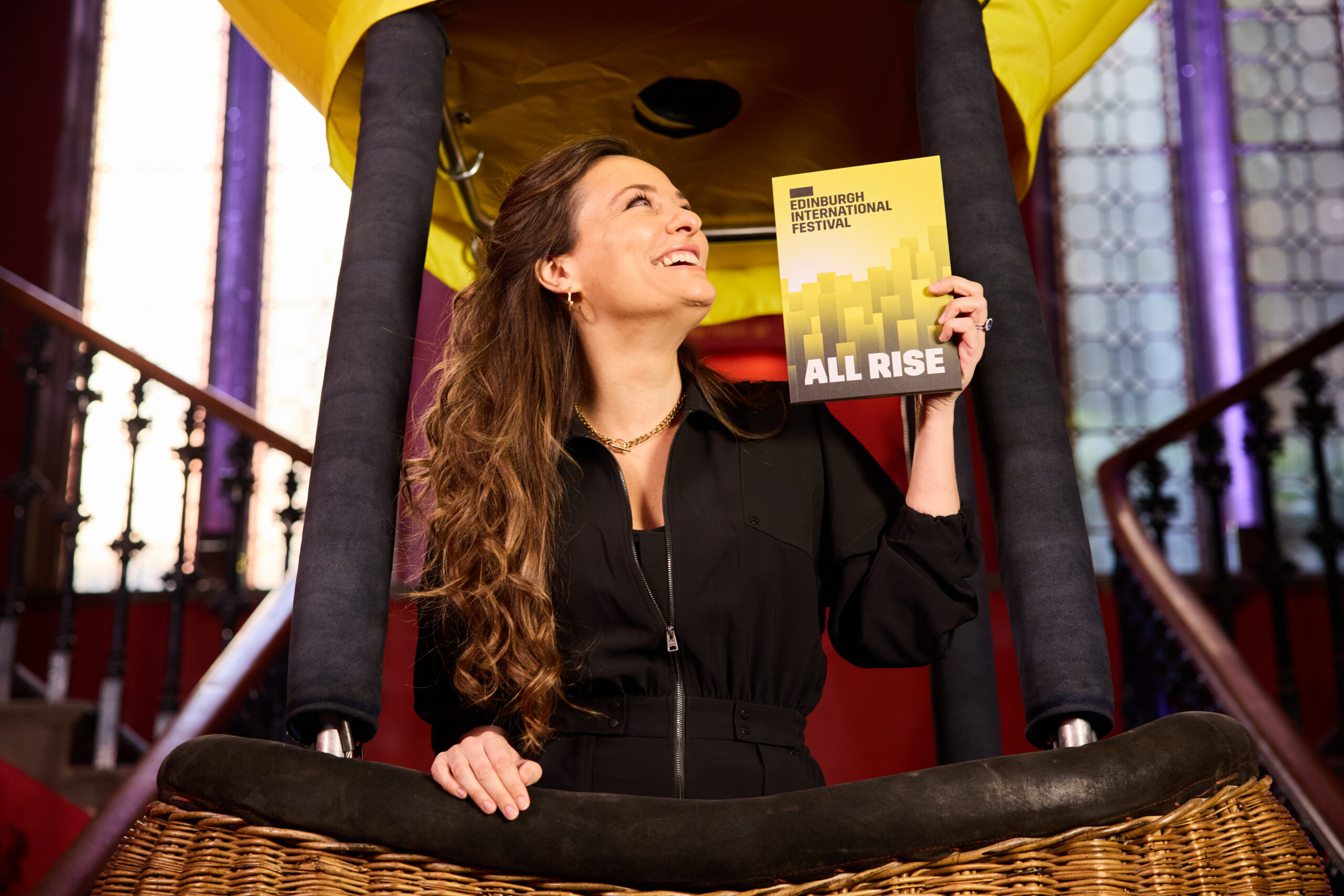
What undoubtedly helps here is the trust we have in Benedetti. She is reliable in her oratory, credible because of her many crafts, models intimacy with a sincere warmth, and yet still succeeds in leaving herself out of the rhetoric. She could read names and addresses from the Electoral Register and I’d still willingly max out my credit card for tickets. This programming doesn’t feel opportunistic so much as the inevitable development over the four years she’s been in the role. The programme book makes the call to action impossible to ignore. All Rise is taken from the title of Wynton Marsalis’ Symphony No. 1 which opens the Festival, incorporating an infectious affirmation to ‘look higher, look beyond’ — a blend of musical influences that explore and celebrate the human condition. It’s a big ask to expect audiences to commit to a work they’ve never heard before for two hours forty minutes. Compelling self-confidence propels this Festival.

Creative risk is located in Missy Mazzoli’s opera The Galloping Cure examining today’s opioid crisis, in dance in Sidi Larbi Cherkaoui’s tribute to a Moroccan gay man murdered in Belgium, and in theatre in Geoff Sobelle’s portrait on present-day America — Clown Show. The inclusion of Palestinian theatre company Khashabi Theatre’s retelling of The Epic of Bani Hilal is a bold statement that brings the world to Edinburgh rather than shying away from it. Flemish signed The Seagull from Toneelhuis and Olympique Dramatique is a confident act of inclusion. Classical line-ups in comparison lean heavily on prestige, familiar repertoire, and bankable names.

Start queuing now for the return of the Berlin Philharmonic (appearing after 20 years), a final appearance for Dudamel with the LA Philharmonic, and music by Brahms, Beethoven, Elgar, and Bach all doing the heavy lifting in print. That might mean that audiences who only look for classical miss out on the uncomfortable boundary-pushing events. Data that might reveal the extent of audience/genre crossover is unsurprisingly sparse. The Festival is unlikely to reveal whether those who are going to Dudamel are also going to The Galloping Cure or Angels in America. This split between comparative classical conservatism and creative risk across the rest of the festival makes the opening rhetorical flourish vulnerable.

Edinburgh is strong on communicating how it sees the relationship between it and its audience, so too making messages clear about affordable ticket prices (there are fifty thousand tickets available at £30 or less). These commitments matter. But how to measure whether a creative risk has paid off? What is the data point for a successful creative risk? Attendance seems an inaccurate measure for something which is in itself intangible, not least because the impact of what might seem risky to a curious newcomer might not be felt for weeks or months after the Festival has ended. In this way the Festival can’t lose the argument on creative risk simply because it’s something that can never be proved. That in itself isn’t a problem: it’s a confident statement that underpins creative programming that isn’t seen in many other places in the UK today. Long may that continue.
Five festivals in, Benedetti has done something rare — she has made the Edinburgh International Festival feel like a personal statement that also happens to be an international institution. What happens when that person moves on? And is the festival asking itself that question yet? Artistic directors who define institutions so completely and irreducibly tend to leave one of two legacies. Either the institution is strong enough to absorb their departure and find a new identity, or it spends years measuring every successor against a standard that was always personal rather than institutional.
Edinburgh’s biggest creative risk might be addressing the colossal question no one dares ask: what happens after Benedetti moves on? Not now. Not soon. But eventually. Every artistic director moves on. The ones worth worrying about are the ones who leave something irreplaceable behind.
Edinburgh International Festival 2026 public booking opens Thursday, 26 March. More information at eif.co.uk.